

Description
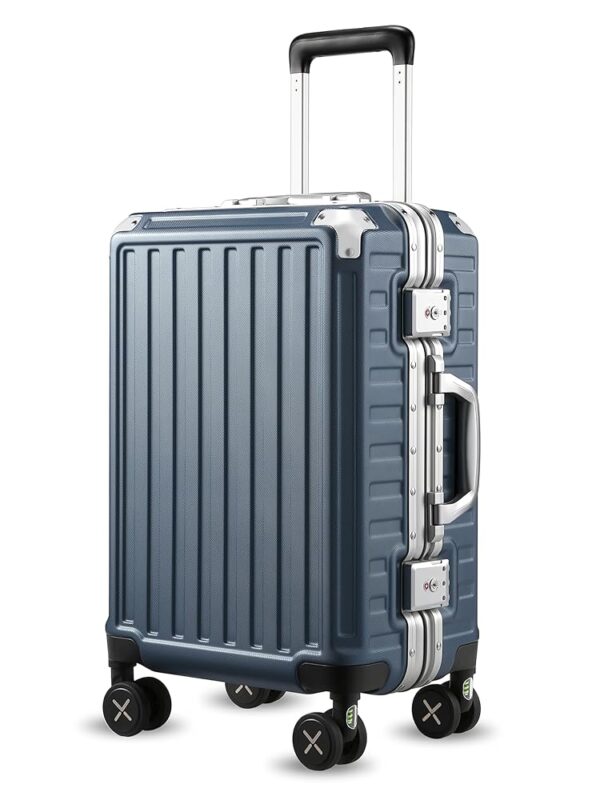
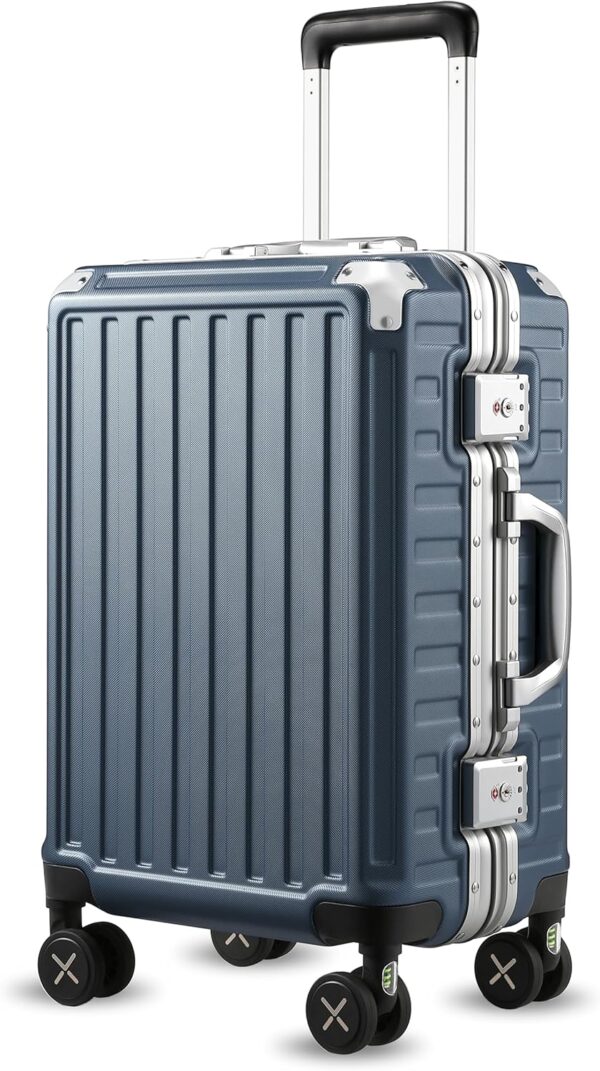
LUGGEX sells this as a 20 inch carry on that opens on latches rather than a zipper, and that single decision shapes everything else about the bag. A zipperless closure removes the failure point that ends most hard shell cases, but it also removes the expansion gusset, fixes the capacity permanently, and moves the entire security story onto a pair of TSA latches. It also creates the first problem a buyer has to deal with, because the listing publishes two sets of dimensions that do not agree with one another, and neither of them is 20 inches on the longest side.
The traveler and the trip this suits
This is a short trip bag for someone who packs the same way every time. The stated capacity is 36 liters, which in practice covers roughly three to four days of clothing for one adult without compression, less if the trip needs shoes or a jacket. Because there is no expansion zipper, the volume you buy is the volume you keep, so it suits a traveler who returns with the same load they left with rather than one who shops. The zipperless format has a second, narrower audience: people who have had a zipper split mid trip and have decided they will not carry one again. That is a legitimate reason to buy this style, and it is the strongest argument the design makes for itself.
It is a poor fit for anyone who needs a bag to stretch. If your packing varies trip to trip, an expandable case such as the LUGGEX expandable carry on gives you the give this one deliberately lacks, at the cost of the zipper you were trying to avoid.
Dimensions, and why the two published figures matter
The Woo attribute block lists the product dimensions as 15 by 9.6 by 21.7 inches. The manufacturer bullet lists the size as 22 by 14.6 by 9.6 inches and states plainly that this figure includes the spinner wheels, the handle and accessories. Those two numbers describe roughly the same object but they are not the same measurement, and the listing never says which one came off a tape measure and which one came off a carton label. Read together, the honest reading is that the case stands somewhere between 21.7 and 22 inches tall with wheels attached, is close to 14.6 inches wide, and is close to 9.6 inches deep.
What that means against a sizer
The commonly cited United States domestic carry on allowance is around 22 by 14 by 9 inches. Every airline sets its own figure, budget and regional carriers are frequently tighter, and many international carriers enforce a cabin bag weight limit on top of the dimensions. On the manufacturer’s own numbers this case is at or over that common allowance on two of the three axes, by a little on the width and by around half an inch on the depth. Airport sizers are rigid boxes and they do not negotiate. LUGGEX does not claim airline approval in the bullets we can read, and we are not going to claim it on their behalf. Publish the numbers, then check them against the specific airline, aircraft and fare you are flying before you commit.
One point in the design’s favor is that the maker states the figure includes wheels and handles, which is the disclosure most listings skip. The most common reason a bag sold as a carry on gets pulled at the gate is that the marketing dimension excluded the wheels that the sizer measures.
Shell, frame, wheels and the latch mechanism
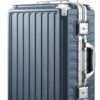
The shell is described as polycarbonate with an aluminum frame and four aluminum corner protectors. Polycarbonate is the better of the common hard shell polymers: it flexes under a crush load and returns, resists water, and does not shatter the way cheaper ABS does. What it does badly is show every scuff, and corners are where it eventually cracks, which is precisely why the aluminum corner guards are on this bag. An aluminum frame closure also behaves differently from a zipper under abuse. It will not split, but it can bend, and a bent frame on a zipperless case is not a field repair.
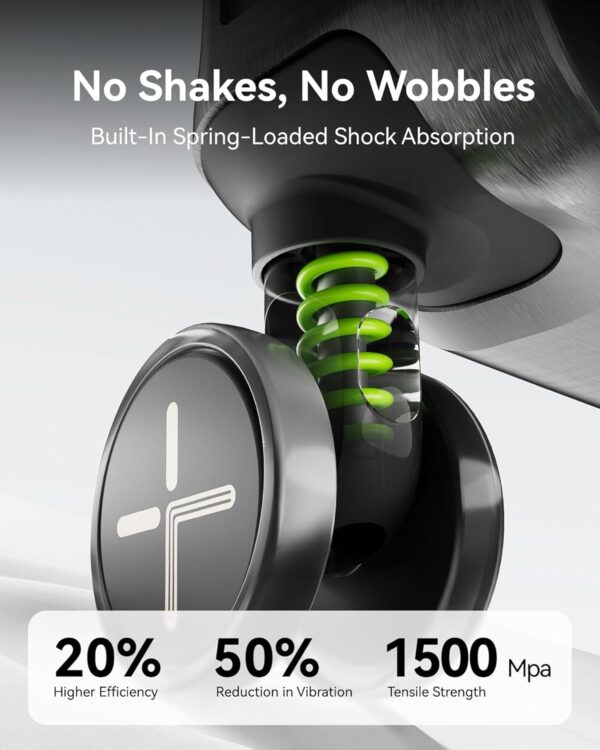
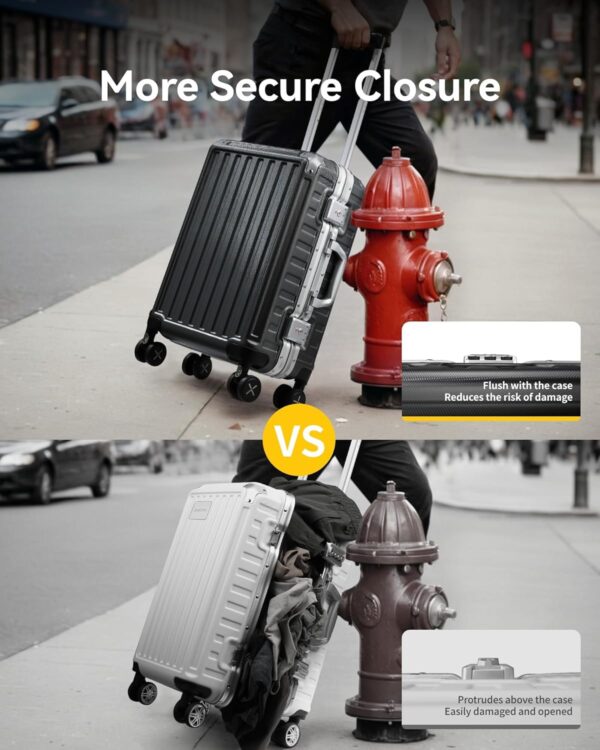
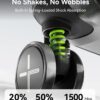
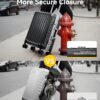
The wheels are spinners with built in springs, which the maker credits with reducing vibration. Spinners roll easily on terminal floors and poorly on broken pavement, and their exposed castors are the most common breakage point on any wheeled bag as well as a contributor to the measured depth. The latch system requires simultaneous pressure on both sides to release, which is a sensible guard against a case popping open on a belt. Treat the TSA function as convenience only. TSA recognized locks and latches open to a universal key held by screeners, so they deter casual tampering and nothing more. Do not put anything you would miss into a checked bag on the strength of that latch, on this case or on the Samsonite Omni PC or any other bag with the same feature.
Capacity, weight and what the numbers leave out
Empty weight is given as 8.6 pounds, and both the attribute block and the bullet agree on that figure, which is more than can be said for the dimensions. That is mid pack for a hard shell 20 inch case: lighter than an aluminum framed competitor, heavier than a stripped down softside such as the Travelpro Maxlite 5. Empty weight matters twice, because on carriers that enforce a cabin weight limit those 8.6 pounds come out of your allowance before you pack anything.
The 36 liter capacity is quoted as including the wheels, handle and accessories, which is unusual and slightly misleading, because volume enclosed by the shell is not the same as volume you can pack. The interior is split into compartments with zippered sections, so the usable figure is lower than 36 liters once the divider and mesh pockets take their share. The listing does not publish an internal packing dimension, and on a zipperless case with a rigid frame there is no slack to recover. If you pack to the edge of your allowance, get a tape measure to the shell before you order.
Warranty, and where else the money could go
LUGGEX offers what it calls a free three year protection plan and a customer service response inside twelve hours. A protection plan is not the same thing as a warranty against defects in materials and workmanship, and the listing does not publish its terms, its claim process, or whether it covers the damage that actually happens to luggage. Airline handling damage is the standard exclusion across the category, and a plan that does not say it covers handling damage should be read as not covering it. Ask for the document before you rely on it.
If the warranty language is what decides the purchase, a Samsonite with a published ten year limited warranty against defects is a clearer contract, and the LEVEL8 Luminous carry on publishes a two year term in plain language. Both of those are zippered cases, so you are trading the closure you wanted for a warranty you can read. More options in the same size class sit in carry on luggage, and the larger hard shells that this case is a scaled down version of are grouped under suitcases.
Who should buy it and who should not
Buy it if you have lost a bag to a split zipper, you pack the same load every trip, and you are prepared to measure the case against your airline’s sizer rather than trusting the 20 inch label. The polycarbonate shell, aluminum frame and corner guards are a coherent set of choices for someone who wants a case that survives handling.
Skip it if your packing varies, if you fly carriers that enforce cabin weight, or if you want a warranty you can read before you buy. And do not read the 20 inch in the name as a compliance statement. On the maker’s own figures this bag stands closer to 22 inches with its wheels on, which is the dimension a gate agent measures.