Description
The traveler this KROSER softside is aimed at
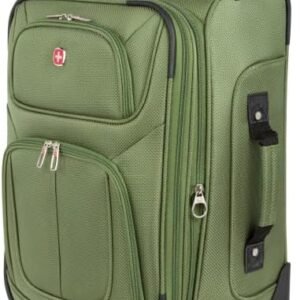
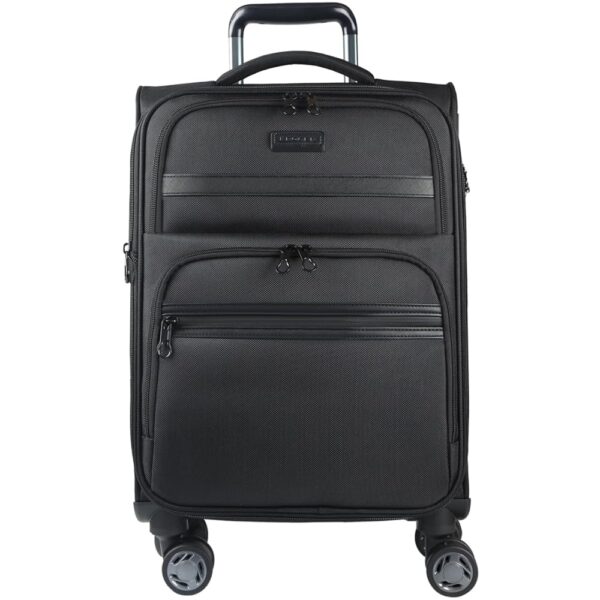
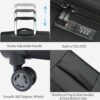
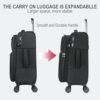
This is a fabric bodied 20 inch cabin case with an expansion zipper, a built in combination lock and a USB port on the shell. That combination points at the traveler who wants outer pockets and a bit of give in the bag rather than a rigid shell, who packs to the limit and needs the expansion on the way home, and who charges a phone from a power bank in transit.
Softside is the right call for a specific set of habits. Fabric absorbs a squeeze into a full overhead bin where a hard shell simply does not fit, it lets you shove a jacket into an outer pocket at the gate, and it survives being scuffed rather than cracking. The costs are water and abrasion, both covered below. If you want the same brand in a rigid shell instead, the KROSER hardside carry on is the direct alternative.
Dimensions, and a maker that says what it measures
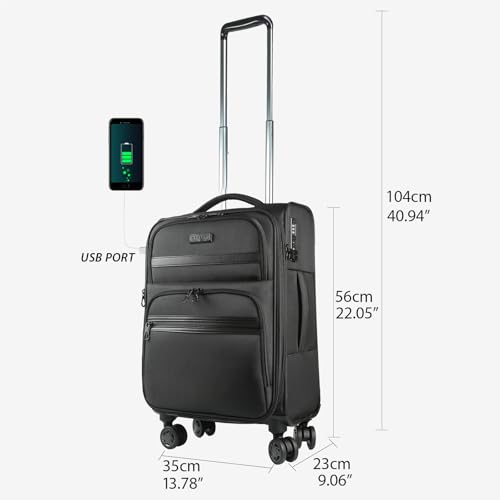
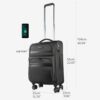
KROSER publishes 22.05 by 13.78 by 9.06 inches, and the feature bullet states explicitly that the figure includes the wheels and handles. That disclosure is worth more than it looks. Most luggage listings publish a shell measurement and leave the wheels out, which is the single most common reason a case that looked compliant on paper gets stopped at the gate. Here the number you are reading is the number an airline sizer would read.
Where it lands against the usual guideline
The size guideline most often cited for United States domestic cabin baggage is roughly 22 by 14 by 9 inches. At 22.05 by 13.78 by 9.06 inches this case is a hair over on height, comfortably inside on width and a hair over on depth. Those margins are hundredths of an inch, and on a softside case they matter less than they would on a rigid shell, because fabric compresses into a sizer where polycarbonate does not.
Less does not mean not at all. We are not going to write that this case is airline approved, and the fact that KROSER’s own bullet uses the phrase does not change that. No airline certifies luggage. Budget and regional carriers are frequently stricter than the majors, several use hard sizers as routine rather than as a spot check, and many international carriers enforce a cabin weight limit on top of the dimensions. Read the allowance published by the carrier you booked, and measure the case yourself when it arrives.
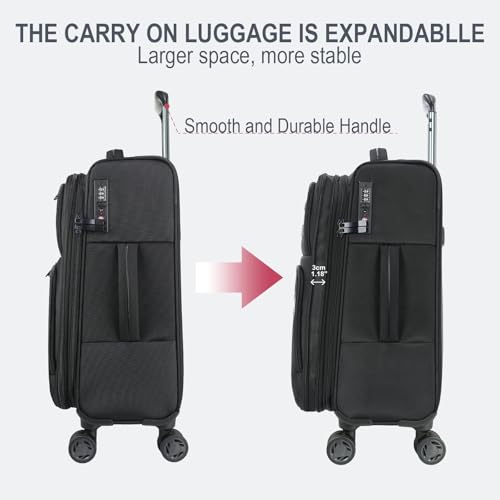
The expansion needs its own warning. Opening it adds depth, and a case published at 9.06 inches closed is over the commonly cited 9 inch depth before you touch the zipper. Expanded, it is further over. Use the expansion for the leg where the case is going in the hold, or for a car trip, not for the flight where you need it in the cabin.
Fabric, wheels, zippers and the lock
The listing never names the fabric. It says durable and it says waterproof of one internal compartment, and that is all. There is no material name and no denier rating, which are the two disclosures that would let you judge a softside body. That gap matters more on fabric than on a shell, because the range between a light polyester and a 1680 denier Oxford or a ballistic nylon is enormous in abrasion resistance and barely visible in a photograph. Ask before ordering if this will be a checked bag.
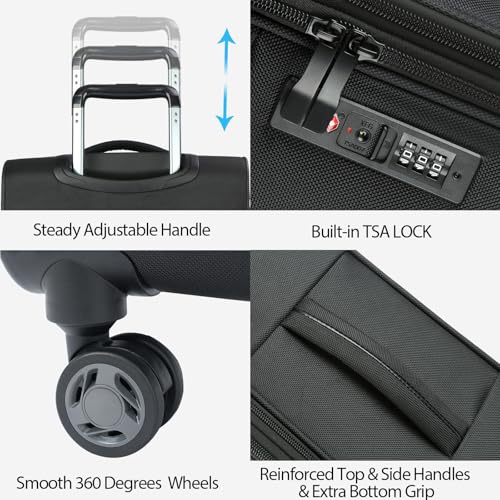
The wheel description is unusually specific for this price bracket. KROSER describes spinner casters built around a precision shaft center with a thickened wheel skin, claims they are wear resistant and quieter, and says they suit cobblestone and carpet. Take the surface claim with care. Spinner casters are inherently worse on cobblestone than inline skate wheels, because a caster that swivels catches on an edge and tips the case, and no amount of tread thickness changes that geometry. What thicker tread does buy you is longer life on smooth surfaces and less noise, which are real if smaller benefits.
The zipper is a reverse coil design that KROSER calls explosion proof, meaning it is built to resist bursting under a full load. Reverse coil is a genuine choice rather than a marketing word: the coil sits on the inside of the tape, which makes it more water resistant and harder to snag. It is still a coil zipper, which means it can be split with a ballpoint pen and closed again by running the sliders across the split, so no zipper lock on it is security.
The lock is a TSA approved combination lock, described on the listing as safe and convenient. It is convenient. It is not safe in the sense buyers usually mean. A TSA lock exists so a screener can open the case with a master key instead of cutting it, and those master keys have circulated widely for years. Keep passports, cash and electronics on your person.
Capacity, weight and the USB port
KROSER publishes no capacity figure at all. There is no liter volume and no cubic inch figure anywhere on the listing, and no interior dimensions either. What you can do is bound it: an exterior of 22.05 by 13.78 by 9.06 inches is roughly 2,750 cubic inches, or about 45 liters of envelope, and a softside case loses less of its envelope to structure than a hard shell does. Somewhere in the high thirties to low forties of usable liters is a reasonable expectation, and the expansion adds to that. It is an estimate, not a published figure.
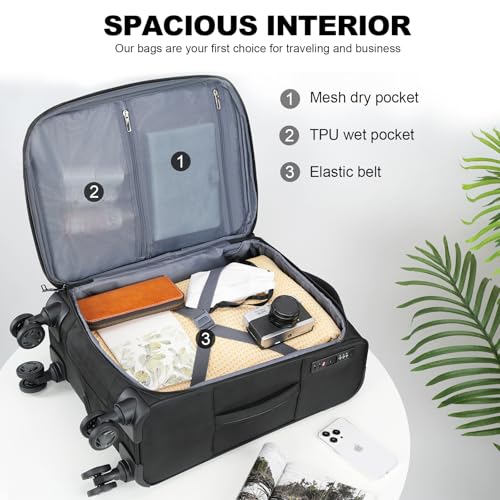
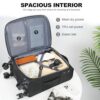
The interior is described as a spacious main compartment with cross straps, a waterproof compartment for toiletries and a separate zippered compartment for privacy. The bag takes a 16 inch laptop and an 11 inch tablet, which is a larger laptop than most cabin cases at this size will swallow.
Weight is 6.16 pounds empty, which is mid pack. It is heavier than the lightest ABS shells and lighter than an aluminum framed case. On United States domestic routes nobody weighs it. On budget European and many Asian carriers, where the cabin allowance is 7 or 8 kilograms and enforced, six pounds of empty case is a meaningful deduction before you pack.
The USB port is wiring only and the listing states that the power bank is not included. That is the arrangement airlines want. Most carriers require lithium batteries and power banks to be removable and carried in the cabin, and bags with sealed in, non removable batteries have been refused at the gate. Here the bank is a loose item you supply, so take it out and keep it with you. Never put a power bank in a checked bag, and check your airline’s watt hour limit before buying one.
Warranty, review data and the alternatives
No warranty term appears on this listing. No period, no coverage description, no exclusions, and nothing about airline handling damage, which is the damage luggage actually suffers. The usual fallback when a maker publishes no coverage is to read the failure reports, and here that fallback is thin as well: the case carries a 4.8 rating from 29 ratings and a rank of 45th in its Amazon category. Twenty nine ratings is a very small base. A high average on a small base tells you the early buyers were happy, not that the wheels survive two years.
KROSER’s other pieces have much larger review bases, including the KROSER underseat suitcase and the KROSER underseat carry on, which are useful proxies for how the brand’s hardware holds up. For a rigid alternative with a stated coverage plan, see the LUGGEX expandable hard shell. Broader options sit in our carry-on luggage and carry-ons sections.
Who should buy it and who should not
Buy it if you want a softside cabin case with a stated wheels included measurement, a 16 inch laptop capacity and an expansion for the return leg, and you fly routes where cabin bags are not weighed. Skip it if you need to know what the fabric is, because the listing never says, and skip it if you need a large body of durability reports before buying, because there are only 29 of them. Do not expand it on a leg where the case has to clear a sizer.