Description
The trip this Samsonite Omni 2 is built for
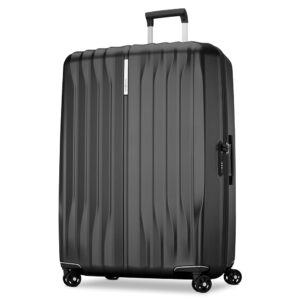
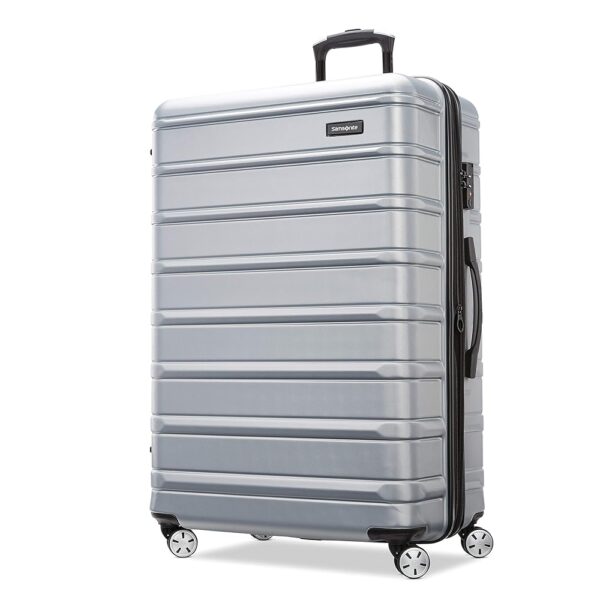
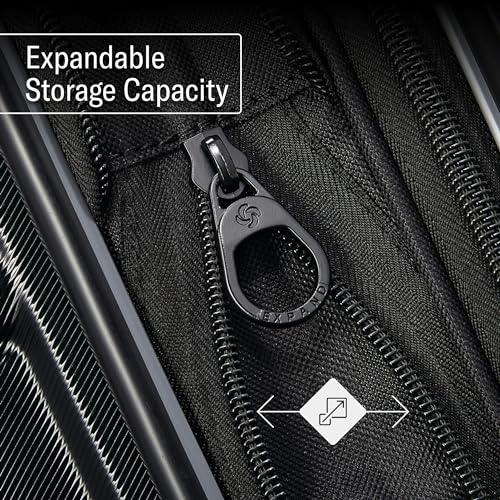
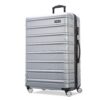
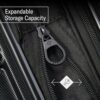
This is a 28 inch checked bag in one hundred percent polycarbonate with a built in TSA lock, an expansion zip and four oversized spinner casters, from the best known name in luggage. At that size the job is long trips, family trips and relocations, and the argument for polycarbonate at 28 inches is a strong one: a bag this big sits at the bottom of a container under a serious load, and polycarbonate deforms under that load and returns to shape where ABS cracks and where fabric simply crushes.
The listing notes that Omni 2 is an Amazon exclusive line, which is worth knowing when you compare it against the Omni PC sold elsewhere. The country of origin is recorded as Myanmar. Samsonite is the parent company of American Tourister, and the Omni 2 sits above that brand’s offerings in materials if not always in price.
The dimensions, and a total that goes over the usual checked limit
The listing publishes 30.4 by 20.9 by 12.4 inches and, to its credit, states plainly in a feature bullet that the figure is with wheels. That is the disclosure most listings in this catalog fail to make, and the specification table agrees with the bullet exactly. So the numbers are trustworthy. The problem is what they add up to.
63.7 linear inches
Most airlines cap a checked bag at around 62 linear inches, meaning length plus width plus depth added together, and charge an oversize fee above it. This bag totals 63.7 linear inches with wheels, which is 1.7 inches over that common cap before you touch the expansion. The same bullet that publishes those measurements also states that the case meets airline restrictions. That is the maker’s claim and we are not going to repeat it, because on the maker’s own published figures it exceeds the limit most carriers apply.
This is not a hypothetical risk. Oversize baggage fees are charged on the linear total, they are commonly a flat fee per bag per leg, and they are assessed at the counter where the bag is measured. The expansion makes it worse: opening it adds depth and pushes the total further past 62. If you buy this bag, check the specific linear limit and oversize fee published by the carrier you are flying, on every leg, and understand that some airlines refuse oversize bags outright on smaller aircraft rather than charging for them. A 26 or 27 inch case is the safer size if you fly carriers that enforce the cap.
Shell, wheels, handle and lock
The shell is named as one hundred percent polycarbonate with a scratch resistant texture, and both parts of that are meaningful. Polycarbonate is the polymer worth having at checked size, for the reasons above. The textured finish addresses polycarbonate’s one real weakness, which is that a smooth shell shows fine scuffing within a trip or two; a texture hides it. The maker’s claim that the bag looks as good on the hundredth trip as the first is optimistic, but the material and finish choices behind it are the right ones.
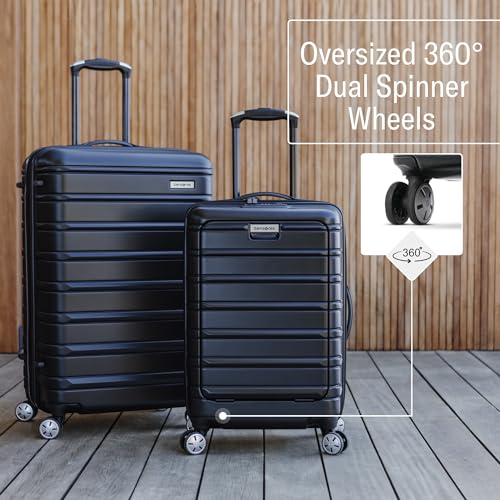
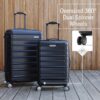
The wheels are four oversized multi directional spinner casters. Oversized is the operative word and it is a genuine advantage: a larger caster rolls over a threshold, a carpet edge or a gap between paving slabs that a small caster catches on, and it distributes load over a bigger bearing. On a bag this heavy that matters. The trade with any spinner is unchanged, though: casters are exposed, they handle broken ground worse than two large inline wheels, and on a fully packed checked bag they carry more load than any other component.
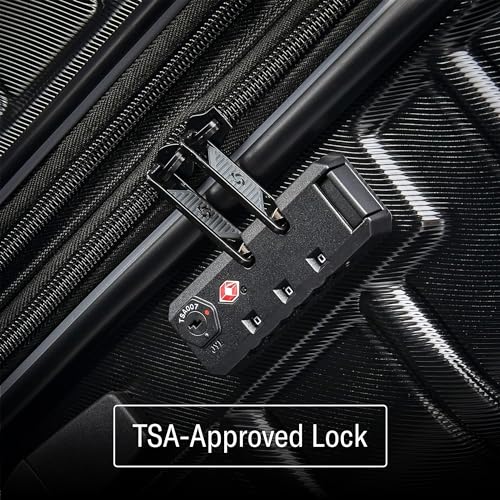
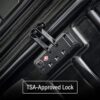
The lock is a built in TSA recognized combination type, set by the user with no keys. Being clear about what that means: it opens to a universal master key held by screeners, so it deters casual interference and stops a zipper being pulled open in transit. It is not security, and nothing of value should be in a checked bag in any case. The maker’s phrasing that it ensures belongings stay safe overstates what any TSA lock does.
Capacity, weight and two fields that cannot both be right
The capacity fields disagree completely. One reads 130 liters and the other reads 45 liters. Those are not two views of the same bag: 45 liters is a cabin sized volume and would be absurd on a 28 inch case, while 130 liters is at the top end of what a 28 inch expandable case could hold. The plausible reading is that 130 is the expanded volume and the 45 belongs to a different product in the range, but the listing does not say, and we are not going to pick one and present it as fact. Ask the seller for the collapsed and expanded capacities.
The weight figures are close but not identical. The specification table gives 11 pounds, restated as 5 kilograms, while a feature bullet gives 10.8 pounds. Take the higher figure. Eleven pounds is reasonable for a polycarbonate 28 inch case and lighter than many softside rivals of the same volume, but the arithmetic still matters: on a typical 50 pound domestic checked allowance an 11 pound empty bag consumes 22 percent of your budget, and on a 23 kilogram international allowance the same applies. A bag that may hold 130 liters will let you pack past 50 pounds long before you run out of room, and that is how most overweight fees get paid. Weigh it before you leave.
Warranty, standing and the alternatives
The listing states a ten year warranty backed by rigorous testing. Ten years is the longest term of any product in this group and one of the strongest in the catalog, and it comes from a company with the size to still be there in ten years, which is not true of every warranty on this shelf. What is not published is the exclusion list. Luggage warranties very commonly exclude damage caused by airline handling, which is the damage a checked bag actually suffers, and a ten year term that excludes conveyor damage is worth much less than it sounds. Ask for the written terms and look for that clause specifically.
The listing shows 4.4 stars from 7,624 ratings and a position of 13th in the suitcases chart, which is a solid score on a good base. Within the same line, the Omni 2 in the 138452 configuration and the Omni 2 as a set are the direct relatives, while the Samsonite UpLIFT and the Winfield 3 DLX are alternatives in the same family. For a polycarbonate checked bag that stays inside 62 linear inches, compare the U.S. Traveler Boren 30 inch. Browse suitcases and luggage sets.
Who should buy it and who should not
Buy it if you want genuine polycarbonate and a ten year warranty from a major maker, you value oversized casters and a built in lock, and you have checked that your carrier tolerates 63.7 linear inches. Do not buy it if your airline enforces the 62 inch cap, because this exceeds it on the maker’s own figures before expansion; if you need a reliable capacity, since the two published figures differ by a factor of nearly three; or if you need a warranty with published exclusions.