Description
The traveler this cabin case is aimed at
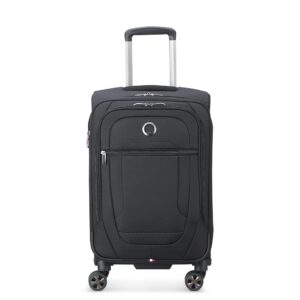
Hanke sells this as a 20 inch hard shell cabin case built specifically to the size most United States carriers publish for a carry-on. At a listed 6.8 pounds empty with 37 liters of stated capacity, it is aimed at the traveler who flies short trips without checking a bag, and who has been caught by a sizer before. Hanke says this is the fourth iteration of its classic series and claims cumulative sales of one million pieces, which is the maker’s own figure and not something we can verify.
The reason to take this listing seriously is that it discloses more than most. It states its dimensions with wheels and handles included, it says outright that the case does not expand, and it publishes a capacity figure that agrees with itself. That is three things a lot of luggage listings will not tell you. Comparable cabin sized hardside cases include the LUGGEX zipperless carry-on and the Level8 Luminous hard shell suitcase.
Two size figures, and which one is the bag
The specification block gives product dimensions of 21.46 by 17.01 by 19.29 inches. A feature bullet gives, and labels clearly, dimensions including wheels and handles of 21.46 inches high by 13.46 long by 8.78 wide. The height matches across both. The other two axes do not, and by a wide margin.
Which set to trust
The 17.01 by 19.29 figures do not describe a 20 inch cabin case. A bag 17 inches wide and 19 inches deep would be a cube, and it would hold far more than 37 liters. Those numbers are almost certainly a shipping carton measurement that landed in the product dimension field, which is a common import fault on this catalog. The bullet figures are internally consistent, they are explicitly labeled as including wheels and handles, and they match a 20 inch nominal case. Use them.
On those figures the case is 21.46 by 13.46 by 8.78 inches with the wheels counted. The commonly cited United States domestic carry-on allowance is around 22 by 14 by 9 inches, and this bag sits inside that on all three axes with roughly half an inch of margin on each. That margin is meaningful, and the reason it holds is that Hanke states the case is not expandable, so there is no panel to unzip that would push the depth past 9 inches. Say the caveat anyway: every airline sets its own allowance, budget and regional carriers are stricter than the majors, and many international carriers enforce a cabin weight limit as well. The product name on this listing asserts approval for cabin use. That is the maker’s claim, not ours, and the reader still has to check the specific carrier.
Shell, wheels, zipper and lock
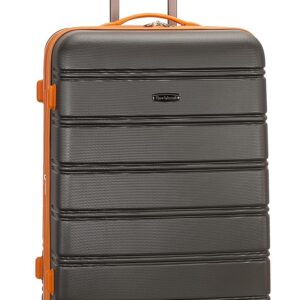
The shell is named as PC, meaning polycarbonate, with a three layer micro diamond textured surface. Naming the polymer is the disclosure that matters. Polycarbonate flexes under impact and returns to shape where ABS cracks at a corner, it is unaffected by water, and its weakness is scuffing and eventual stress whitening. A textured surface is a practical answer to that, because a micro pattern hides scuffs far better than a gloss finish does. The lining is described as OEKO-TEX certified, which is a textile safety certification about what is in the fabric rather than a durability rating.
The wheels are named as SJ TOBOL units with a precision shaft center and a thickened TPE wheel skin. TPE is a softer compound than the hard plastic used on cheap wheels, and it is quieter and grips better on rough surfaces at the cost of wearing faster. Hanke specifically says the wheels suit cobblestone and carpet, which is the usual weak point for spinners. Exposed spinner wheels remain the most commonly broken part on any rolling case and they are part of the measured depth, but naming the wheel supplier and the compound is a genuinely useful disclosure.
The zipper is described as a five strand reinforced reverse coil designed to prevent bursting. A reverse coil closes the teeth against the outside of the tape, which sheds water better and is slightly harder to force. The lock is described as a travel approved combination lock, which on a cabin bag from this category almost always means a TSA accepted lock. Say what that is either way: a TSA accepted lock opens to a universal key held by screeners, so it deters an opportunistic hand and does not secure valuables.
Capacity, interior and the weight equation
Capacity is published as 37 liters in two separate fields and both agree, which puts this listing ahead of most on this site. That figure is credible for the footprint: the external bounding box of a 21.46 by 13.46 by 8.78 inch case is about 2,536 cubic inches or roughly 41.6 liters, so 37 liters of usable interior implies a thin shell and efficient packing rather than a marketing number.
The interior is a spacious main compartment with a cross strap, a toiletry pocket compartment, and a U frame zippered compartment described as offering privacy. A cross strap on one half and a zippered panel on the other is the standard hardside clamshell arrangement, and it is the thing that lets a hard case close flat rather than bulging. Empty weight is 6.8 pounds, which is average for a 20 inch polycarbonate case with a built in lock. On a carrier that weighs cabin baggage, and several international and budget carriers do, that 6.8 pounds comes off the allowance before you pack. Lighter cabin options are on our carry-ons page, including the Sherpani Meridian expandable hardshell, and the wider field is under carry-on luggage.
What passes for a warranty here
Read this part carefully, because the listing does not publish a warranty in the normal sense. What it publishes is a three year maintenance period, with an invitation to contact the seller about any problem and a promise to respond within 24 hours. That is a service commitment, not a warranty. It does not say what is covered, it does not say whether repair or replacement is offered, it does not say who pays for shipping, and it does not say whether damage caused by an airline is included.
The distinction matters. A stated warranty against defects in materials and workmanship gives you something specific to invoke. A maintenance period with a response time attached gives you a support channel and no defined obligation. Neither is worthless and they are not the same thing, and a site excerpt describing the three years as a guarantee would be overstating what the listing actually offers. For a comparison with published terms, the Wrangler hardside spinner carry-on is worth putting alongside it.
Who should buy it, who should not
Buy it if you want a cabin case that publishes its size with the wheels counted, states clearly that it does not expand, and names both the shell polymer and the wheel compound. Those three disclosures put it ahead of most competitors on paper, and the roughly half inch of margin on each axis against a common carry-on allowance is real. Reported customer feedback is 4.5 out of 5 from 1,724 ratings, with the listing placing it ranked 52nd in carry-on luggage.
Skip it if you need expansion, because Hanke states the case does not have it. Skip it if you want a defined warranty rather than a maintenance and support commitment. And ignore the 21.46 by 17.01 by 19.29 inch figure in the specification block entirely, because it is not the shape of this bag.