

Description
What the set contains
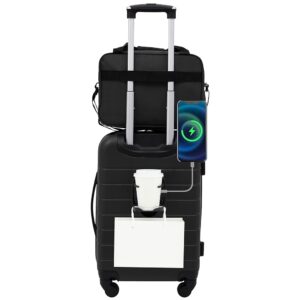
This is a three piece hardside set in 20, 25 and 29 inch sizes, sold under the GinzaTravel brand with PRIMICIA recorded as the manufacturer. Sets like this suit a household replacing everything at once, or a family that nests luggage in a closet between trips. The counter argument is the one that applies to every set: most people use one size for most trips and store the other two.
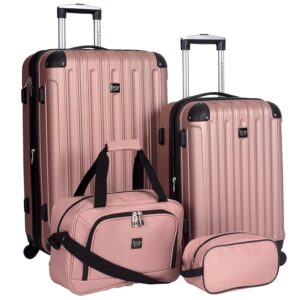
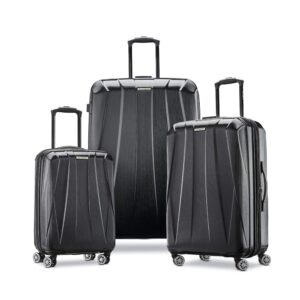
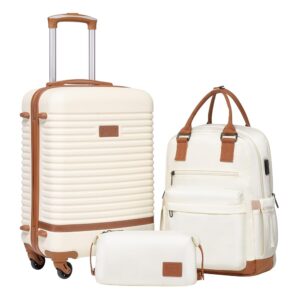
What separates this listing from others in the category is that it publishes real per piece data for two of the three cases, along with capacities. That is more than most sets manage. Other options are on our luggage sets page, including the Coolife YD105 three piece hardside set and the SHOWKOO valise set.
The sizes, and the one that is missing
A feature bullet lists all three. The 25 inch is given as 16.9 by 11.4 by 25.6 inches with a 64 liter capacity. The 29 inch is given as 19.7 by 12.6 by 29.9 inches with a 95 liter capacity. The 20 inch is described only as standard size carry-on, with no dimensions and no capacity at all.
Why the missing cabin figure matters most
The 20 inch is the piece most buyers care about, because it is the one that has to pass a sizer. Standard size carry-on is a description rather than a measurement, and the allowance most commonly cited for a United States domestic carry-on is around 22 by 14 by 9 inches. Without published figures there is no way to check it before ordering, and no way to know whether the wheels and handle are counted. Every airline sets its own allowance, budget and regional carriers are stricter than the majors, and many international carriers enforce a cabin weight limit as well. Measure the case when it arrives and check it against your specific airline.
The checked pieces can be checked on paper. Add the 25 inch figures and you get 53.9 linear inches, comfortably inside the 62 inch limit most United States carriers apply before an oversize fee. Add the 29 inch figures and you get 62.2 linear inches, which is over that limit as published. That is a small margin against the case rather than a large one, and it is enough to attract an oversize fee at a strict counter. Then factor in the expansion: GinzaTravel says expanding adds 15 to 25 percent more volume, which adds depth, so an expanded 29 inch case goes further past 62. Use the expansion on the 25 inch, or on a carrier you know is relaxed.
The weight data is ambiguous in the same way the dimensions are. The specification block gives 7.26 pounds and an attribute field gives 3.3 kilograms, which is the same figure. Seven and a quarter pounds is far too light to be a three piece set and reads as one case, most likely the 20 inch, but the listing never says which. So this page publishes no set weight and no per piece weights either.
Shell, wheels, lock and interior
The material is named as ABS plus PC, a polycarbonate and ABS composite, and described as tough and scratch resistant. That is a middle position between the two pure materials and it is a real disclosure, though the listing does not say which layer is which or in what proportion. In practice a polycarbonate outer over an ABS core is common at this level: the polycarbonate gives some flex and impact recovery, the ABS keeps the cost down, and the result lands between the two on durability. Corners remain the failure point on any hard shell, and no molded corner guards are described.
Each case rolls on four wheels. The listing does not say whether they are single or double, and gives no wheel material. Spinner wheels sit outside the shell, contribute to measured depth, and remain the most commonly broken component on rolling luggage. There is no mention of replaceable wheel modules.
There is a TSA accepted combination lock, which the listing calls standard for international travel. Say what that actually is: a TSA accepted lock opens to a universal key held by screeners, so it deters an opportunistic hand and does not secure valuables. It is a screening convenience, and describing it as more secure protection oversells it. Interior organization is a mesh zip pocket and X straps, which is the standard hardside clamshell arrangement and is what lets the case close flat rather than bulging.
Two year coverage, and what it does not say
One feature bullet states that the products are guaranteed worldwide for two years and invites buyers to contact the seller by email if there is a problem. A stated term is worth more than silence, and two years is a real if modest commitment.
What the bullet does not do is define scope. It does not say whether coverage is limited to defects in materials and workmanship, and it does not say whether damage caused by an airline or another common carrier is excluded. Handling damage is the damage that actually happens to checked luggage and it is very commonly excluded across this whole category, so read the actual terms before treating two years as protection against a broken wheel off a baggage belt. The claims process as published is an email address rather than a defined procedure.
Reported customer feedback is 4.1 out of 5 from 174 ratings, which is a reasonable sample and a middling score, and the listing places it ranked 179th in luggage sets. Country of origin is China. Cabin sized alternatives with proper per unit data are on our carry-on luggage page.
How it compares
Against the Travelers Club Midtown hardside set, this one has the advantage of publishing capacities in liters and dimensions for two of its three cases, which is unusual in this bracket. Against the World Traveler Butterfly four piece set, which publishes dimensions and a weight for every piece, it falls short, because that is the standard a set listing should meet.
The practical summary is that you can plan around the 25 inch and the 29 inch and you cannot plan around the 20 inch, which is the piece you are most likely to carry. The 62.2 linear inch total on the largest case is the other number to weigh, because it is the one that turns into a fee rather than an inconvenience.
Who should buy it, who should not
Buy it if you want three matched hardside cases in a composite shell, you value the published capacities on the two checked pieces, and a stated two year coverage period is worth something to you. The X straps, the mesh pocket and the built in lock are a sound conventional specification.
Skip it if the cabin case is the reason you are buying, because this listing publishes no dimensions, no capacity and no weight for the 20 inch. Skip it if your airline enforces 62 linear inches strictly, since the 29 inch totals 62.2 before expanding. And treat the single 7.26 pound weight figure as one case rather than the set, because it cannot be three.