

Description
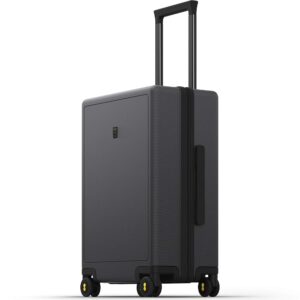
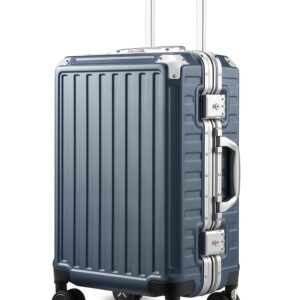
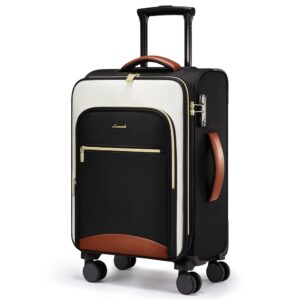
The Traveler’s Choice Pagosa is a polypropylene hard shell carry on with a USB port, a Type C port and an interior power bank compartment, and the manufacturer’s own product name calls it indestructible. Nothing is indestructible, least of all a suitcase, and we are not going to repeat that word in our own voice. What the listing does deliver is an unusually complete specification, including both exterior and interior dimensions, a stated expansion figure and a named shell polymer, which puts it ahead of most of this catalog.
The traveler and the trip
Thirty seven liters closed at 6.3 pounds is a three to four day bag for one adult, and the 47 liter expanded figure takes it to five days or a return leg with shopping. The electrical fittings aim it at travelers who spend time in terminals and want to charge a phone without hunting for an outlet.
Compression straps and multiple zippered pockets suggest someone who packs formal clothing and wants it to arrive flat. It suits domestic business travel and leisure trips on carriers that are relaxed about cabin bag footprint. It does not suit travel over rough ground, and it does not suit anyone who wants a simple case with nothing to go wrong. Simpler options at the same size sit in carry on luggage.
Dimensions, and a small discrepancy
The manufacturer publishes overall dimensions of 22 inches high by 14.25 wide by 9.25 deep, plus a 2 inch expansion, at 6.3 pounds. The attribute block gives 22 by 14.25 by 9.5 inches. Those agree on height and width and differ by a quarter inch on depth, which is minor by the standards of this catalog but still unexplained. The packing dimension is published as 19.5 high by 13.75 wide, with the depth figure garbled in the source data as a string of numbers that does not resolve to a measurement.
Reading the exterior against a sizer
An airport sizer measures the exterior with the castors on. The commonly cited United States domestic carry on allowance is around 22 by 14 by 9 inches. This case matches the height exactly, is a quarter inch over on width, and is a quarter to a half inch over on depth depending on which of the two published figures is right. A polypropylene shell has a little more flex than polycarbonate but it is still a rigid case and it will not compress into a box it does not fit.
Traveler’s Choice makes no explicit compliance claim in the bullets we can read, which is more restrained than several competitors, and we are not going to make one on their behalf. Budget and regional carriers publish tighter allowances than the mainstream figure and enforce them with rigid gauges, and international carriers frequently add a cabin bag weight limit. Take the 22 by 14.25 by 9.25 figure to your specific carrier before you fly it.
The expansion gusset adds up to 2 inches. On a case already over the common allowance on two axes, that puts it clearly outside. Treat the expansion as a feature for a return leg you are prepared to check, exactly as on the Traveler’s Choice 21 inch expandable spinner.
Polypropylene, wheels, handle and zippers
The shell is named as textured polypropylene, described as abrasion, scratch and water resistant. Naming the polymer is exactly what a listing should do and it changes the analysis. Polypropylene sits between polycarbonate and ABS in behavior: it is lighter than both, it is very flexible, and its failure mode is a permanent dent or deformation rather than a crack. That is a real advantage over ABS, which shatters, and a real disadvantage against polycarbonate, which springs back to shape. A dented polypropylene case still works and still looks dented.
Four spinner castors give 360 degree movement. They are effortless on terminal flooring, poor on cobble and gravel, and the most common failure point on any wheeled case. The handle is a multi stage telescoping unit with a push button mechanism, and multi stage means more than two heights, which is useful for travelers of different statures. Top and side rubber carry handles are included, and rubber is the right material there because it grips when your hands are wet.
The detail worth singling out is the zippers. Self mending number 10 coil zippers are a genuine specification rather than a marketing phrase. Number 10 is a heavy gauge, and a self mending coil re engages when you run the slider back down after a separation, which turns the single most common catastrophic luggage failure into an annoyance. Most cases at this price do not tell you the zipper gauge at all.
The USB port, the battery rule and the compartments
The case has a built in USB port, a Type C port and an interior power bank compartment measuring 9 inches wide by 3.5 long by 1 deep. The power bank is not included, which is the important part, because it means the battery is yours and it lifts out.
That matters for boarding. Most airlines require lithium batteries and power banks to be carried in the cabin rather than in the hold, and they require any battery inside a piece of luggage to be removable. Bags with batteries built permanently into the shell have been refused at check in and at the gate by multiple carriers. This case is on the right side of that rule because the power bank comes out, and the obligation transfers to you: remove it before the case is checked and carry it on your person or in a cabin bag. The same applies to the Samsonite Omni 2 with a charging system and every other case with a port.
Capacity, packing and weight
Capacity is given as 37 liters closed and 47.23 liters expanded, which is a ten liter gain and consistent with a 2 inch gusset. Thirty seven liters is a little modest for a case with a 22 inch exterior, and the likely explanation is the power bank compartment and the port wiring taking interior volume.
The interior has multiple zippered pockets and compression straps. Compression straps are what keep a folded stack flat across a flight, and on a hard shell that opens as two halves they stop the packed side migrating. The packing dimension in the source data is partly unreadable, so the usable interior depth cannot be confirmed from the listing.
At 6.3 pounds this is light for a rigid case with electrical fittings, and lighter than the 9 pound LEVEL8 Grace at a similar size. Polypropylene is part of that, since it is the lightest of the three common shell polymers.
Warranty, the name and the alternatives
No warranty term appears anywhere in the source data. That is a notable gap on a case whose product name promises indestructibility, because a durability claim with no warranty behind it is a claim with nothing to enforce. Get the term and the exclusions in writing before ordering. Airline handling damage is excluded across essentially this entire category, and that is the damage that actually happens.
The word indestructible deserves one more sentence. It is the manufacturer’s word and it is not achievable. Polypropylene dents, castors shear, zippers fail and handles bend, and no shell material prevents any of that. Judge the case on the polymer, the zipper gauge and the wheel format, all of which this listing publishes honestly, rather than on the adjective in the name. Larger cases in the same construction sit under suitcases.
Who should buy it and who should not
Buy it if you want a named shell polymer, self mending number 10 zippers, a multi stage handle and charging ports in one case at 6.3 pounds. This is one of the better documented listings in the category and the specification is genuinely good.
Skip it if your carrier uses a rigid gate sizer, because at 22 by 14.25 by 9.25 inches the case is over the common 22 by 14 by 9 allowance on two axes before the expansion is used. Skip it too if you want a stated warranty, because there is none. And do not read indestructible as anything other than marketing.