
Description
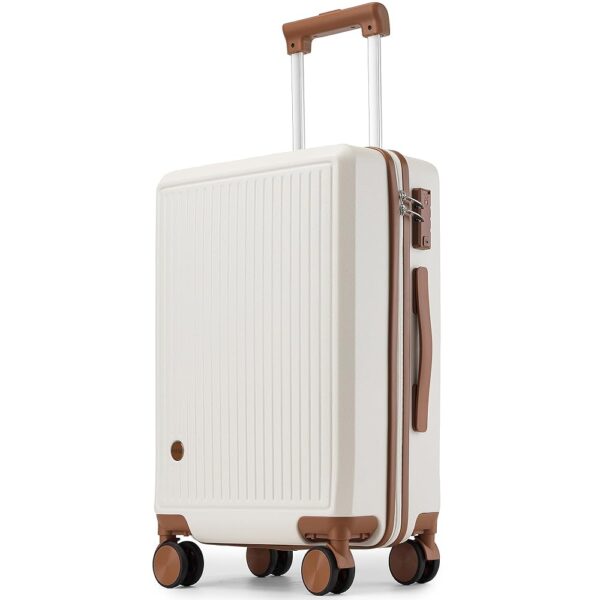
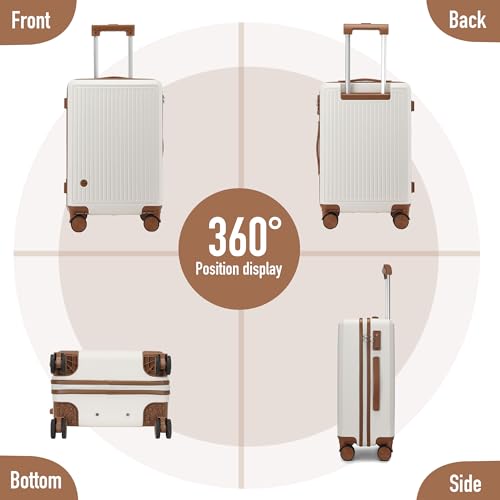
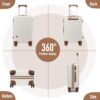
The Hulsin HXXB02 is a 20 inch hard shell carry on with four swivel castors and a built in TSA lock, sold at the value end of the market. Its listing has a specific problem worth settling first. The product name and a manufacturer bullet both state the case measures 22 by 14 by 9 inches, while the specification block on the same page gives 21 by 14 by 9 inches. Those are not the same case, and the difference is a full inch on the axis that decides whether a bag boards.
The traveler and the trip
Thirty five liters at 6 pounds is a three to four day bag for one adult. There is no expansion gusset, and the capacity fields confirm it by giving the same 35 liters twice. On a cabin bag that is a feature rather than an omission, because an expandable carry on is a carry on with a setting that makes it non compliant, and a fixed volume case cannot be talked into that mistake at a gate.
The buyer is the occasional flyer who wants a rigid shell and a lock without paying for a brand name. It is not a bag for someone who flies weekly, for reasons covered below, and it is not a bag for anyone who needs exterior pockets, since no hard shell has any. If pocket access matters, the softside cases in carry on luggage make the opposite trade.
Dimensions, and the inch that is in dispute
The attribute block gives 14 by 9 by 21 inches. Reordered, that is 21 inches on the longest side, 14 wide and 9 deep. The manufacturer bullet says the case has 22 by 14 by 9 dimensions and describes those as in line with airline carry on regulations. The product name repeats 22x14x9. Neither source says whether the castors and the retracted handle are counted.
Which figure to plan around
The commonly cited United States domestic carry on allowance is around 22 by 14 by 9 inches, measured with the wheels on. If the attribute figure of 21 inches is the case standing on its castors, this bag has a genuine inch of margin on height and sits exactly at the limit on width and depth, which is a decent position. If 21 inches is the shell alone, the standing height with castors is closer to 22.5 to 23 inches and the case is over.
The 22 by 14 by 9 figure in the product name is the airline’s allowance rather than a measurement of the bag, a pattern that runs through this whole catalog. Putting an allowance into a product name reads as a specification when it is a target. We are not going to write that this bag is airline approved, whatever the listing says, because approval is a property of the airline and not of the suitcase, budget and regional carriers publish tighter allowances than the mainstream figure, and international carriers frequently add a cabin bag weight limit. Measure the case standing on its wheels when it arrives and compare it to your carrier.
Shell, wheels, handle and lock
The listing never names the shell polymer. It says high quality hard shell material and durable and robust hardside, which tells you nothing. That is the most consequential omission on any hard shell, because the difference between ABS and polycarbonate is the difference between a shell that cracks under impact and one that flexes and springs back. At 6 pounds for a 20 inch case with a lock, ABS is the likely answer, but the listing does not say so and we are not going to assert it. Ask the seller before buying, particularly if the case will ever be checked. Cases that do name the material, such as the polycarbonate BAGSMART BM0105017AN, let you predict how they will fail.
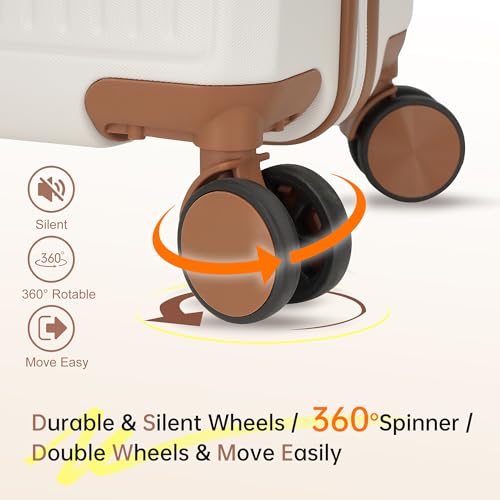
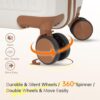
The wheels are described only as smooth spinning and able to move in any direction. There is no wheel count, no statement of whether the castors are single or dual wheeled, and no bearing description. Dual castors roll more smoothly under a full load and are more stable on a sloped floor, so that omission matters. What is certain is that castors are the most common failure point on wheeled luggage, that they are poor on cobble and gravel, and that their exposed profile adds to the depth an airport gauge measures.
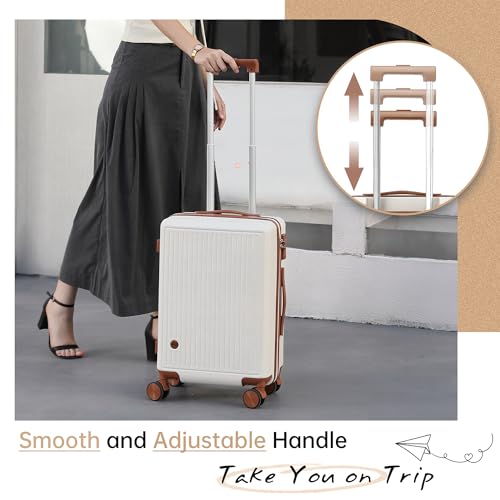
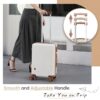
The telescoping handle is not described at all. No material, no number of stop heights, nothing. Handle failure at full extension is a common way cheap cases die, so this is a real gap.
There is a built in TSA lock. Be precise about what it does. A TSA recognized lock opens to a universal key held by screeners, so it deters an opportunist and stops a zipper being pulled open in transit. It secures nothing of value. The listing describes it as keeping items protected from unauthorized access, which overstates it, and the same caution applies to the lock on the OLIXIS XLX-20IN and every other case with the feature.
Capacity, packing and the weight claim
Capacity is given as 35 liters in both the capacity and total capacity fields, consistent with a case that does not expand. Thirty five liters is modest for a 20 inch shell. For comparison, cases of similar exterior size in this catalog publish between 35 and 45 liters, so this sits at the bottom of that range. The listing publishes no packing dimension, so you cannot tell how much of the exterior is shell wall and retracted handle housing.
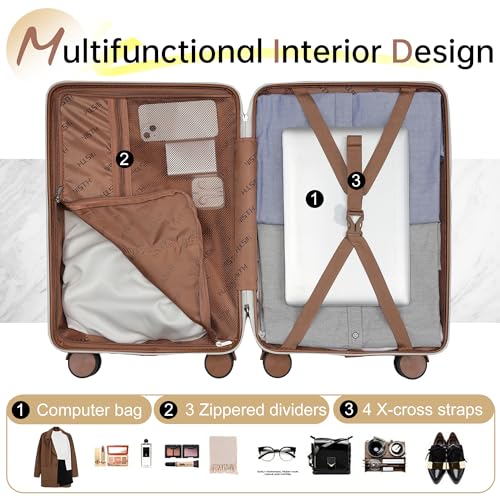
The interior is not described in any specific way. There is no mention of a divider, compression straps, a mesh pocket or a wet pouch. On a hard shell that opens as two halves, whether the divider zips closed changes how the case behaves when you open it flat, and this listing does not say.
Empty weight is 6 pounds, which is competitive for the size and one of the more useful numbers on the page. A manufacturer bullet describes the case as weighing only a fraction, which is not a unit of anything. Six pounds is the figure to use. Empty weight counts twice on carriers that enforce a cabin bag weight limit, because the case eats your allowance before you pack.
Warranty and the comparison set
No warranty term appears anywhere in the source data. On a case whose shell material is also unnamed, that is a compounding problem: you do not know what the shell is made of and you do not know what happens if it breaks. Get both in writing before ordering.
Expect airline handling damage to be excluded whatever term you are quoted, as it is across essentially this entire category. A defects warranty covers a shell cracked by a manufacturing fault, not one cracked by a baggage belt, and handling damage is the great majority of what happens to a checked bag. If a published warranty is what decides the purchase, the Samsonite Omni PC states ten years on defects and names its polymer, which is the standard this listing is being measured against. Other cabin bags at this size sit in carry-ons.
Who should buy it and who should not
Buy it if you want a light, fixed volume hard shell with a lock at the bottom of the price range, you fly occasionally, and you are prepared to measure the case yourself on arrival. Six pounds and a 35 liter fixed capacity are honest numbers and the absence of an expansion gusset is quietly in the buyer’s favor.
Skip it if you need to know what you are buying before it arrives. The shell polymer is never named, the wheel count is never given, the handle is never described, no warranty is published, and the two dimension figures on the page differ by an inch on the height. And treat the 22x14x9 in the product name as an airline’s allowance rather than a measurement of this bag.