
Description
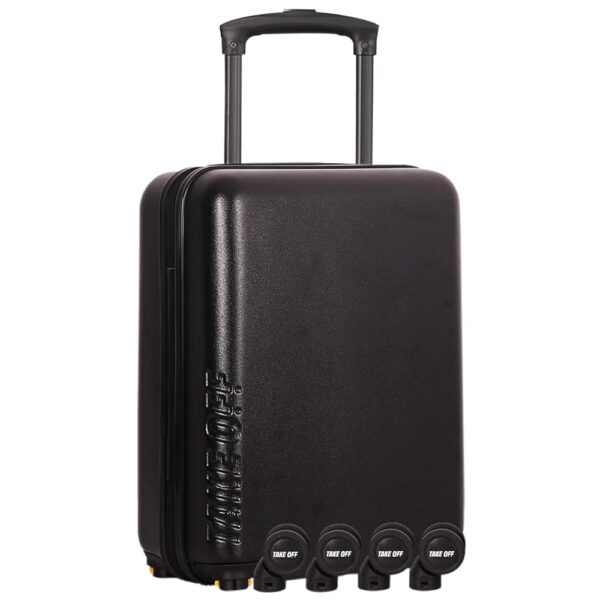
The Take OFF Luggage 3.0 is a hard shell personal item case whose defining feature is that its wheels come off. Detach them and the bag becomes smaller, which is the maker’s answer to the fact that a personal item allowance is measured, not negotiated. It is a clever idea. The listing selling it, however, publishes a package dimension rather than a product dimension, and that distinction matters more here than almost anywhere else.
The trip and the traveler this suits
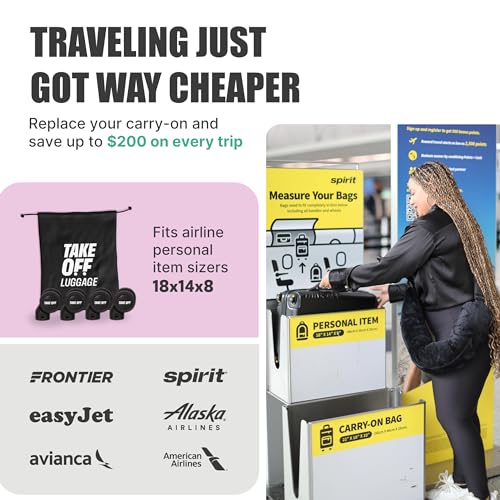
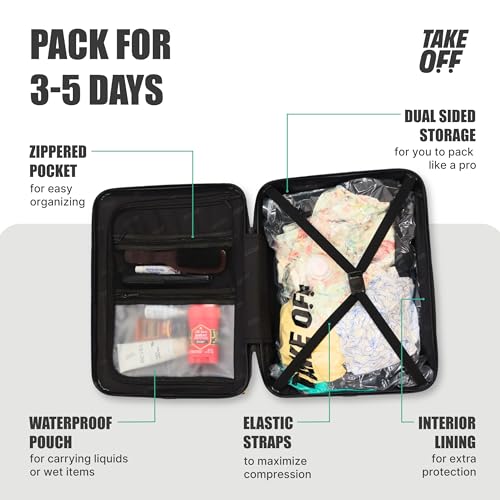
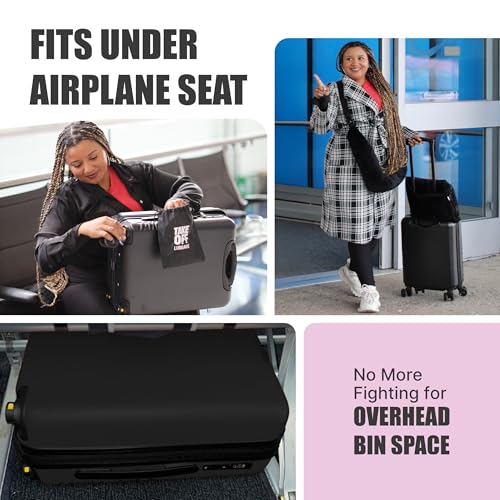
This is built for the traveler flying a fare that includes a personal item and charges for a full carry-on. The maker says so directly, framing the bag as a way to avoid carry-on fees. An overnight or a weekend is the realistic range, with a built in waterproof toiletry pouch and a dual sided interior for keeping wet items away from clothes.
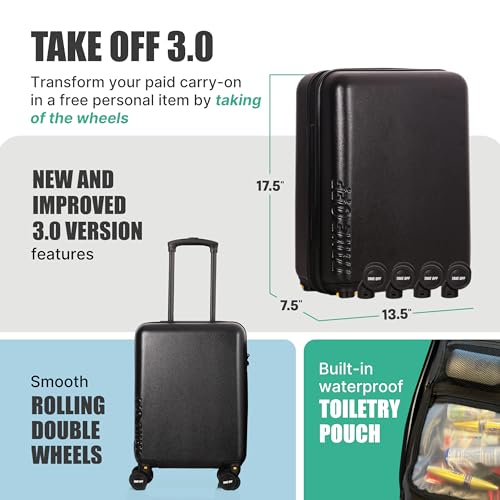
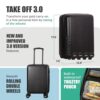
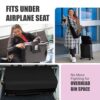
The removable wheels are the reason to consider it over a conventional underseat bag. Wheels are what push a personal item over an allowance, and being able to take them off before you present the bag at a gate, then put them back on for the concourse, is a genuinely useful piece of design rather than a marketing line. It also means the bag has a second life as a plain hard shell tote.
Dimensions, and the word the listing uses
This is the section to read twice. The product title states 18 by 14 by 8 inches and the maker’s own bullet repeats an 18 by 14 by 8 inch travel bag. The specification block, however, does not give a product dimension at all. It gives a package dimension of 19.2 by 14.4 by 8 inches.
A package dimension is the shipping carton, not the bag. It is normally larger than the product, which is consistent with what we see here: the carton is 1.2 inches taller and 0.4 inches wider than the stated bag. So the two figures are not in conflict so much as measuring different objects, and the practical problem is that the only dimension this listing publishes in structured form is the one that does not describe the product. The 18 by 14 by 8 inch figure exists only in marketing text, and the listing never states whether it includes the wheels, which on a bag whose whole selling point is removable wheels is the omission that matters most.
Two sizes, and the one you must measure
Because the wheels detach, this bag has two dimensions rather than one, and the listing publishes neither pair clearly. There is a rolling height with the wheels on and a smaller height with them off, and the difference between them is the entire value proposition. Neither is stated. Measure the bag yourself in both configurations when it arrives, and compare the wheels off figure against your carrier’s published personal item allowance, since that is the number you would actually present at a gate.
The title also says TSA approved, and a bullet describes a TSA approved lock. Read that carefully: TSA approved describes the lock, meaning a screener can open it with a master key rather than cutting it. It says nothing about the size of the bag and it is not an airline compliance statement. We are not going to write that this bag is airline approved. Personal item allowances are set carrier by carrier and vary considerably, underseat clearance varies again by aircraft, and no listing can promise either. The maker’s no more fees claim is its own, and it depends entirely on your airline and your measurement.
Shell, wheels, lock and organization
The shell is described as durable hard shell material with no polymer named. That is a real gap. Polycarbonate flexes under load and returns, ABS is cheaper and more brittle and cracks rather than flexing, and the two age very differently. A listing that says only hard shell has told you the bag is rigid and nothing else, and a buyer choosing on durability has nothing to work with.
The wheels are described as double multi directional wheels, so spinner style casters in pairs, and they detach to convert the case. Spinners are effortless on terminal flooring and poor on cobbles, gravel and curbs, and their exposed casters are the most common physical failure on any wheeled bag. Here that ordinary weakness is compounded slightly: a wheel that is designed to come off is by definition attached by a mechanism rather than fixed, and a mechanism is one more thing that can wear, jam or be lost in a hotel room. The upside is that a broken caster on this design is in principle replaceable rather than terminal, which is not true of most sealed shells.
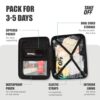
The lock is a TSA approved combination lock. It keeps the case shut and lets a screener inspect without cutting anything, and it opens to a universal key held by many people, so it is a convenience rather than security. Inside, the case is dual sided with a built in waterproof toiletry pouch, which is a sensible answer to the one thing that reliably ruins packed clothes.
Weight, capacity and what is not published
Weight is published as 6.29 pounds in one field and 2.86 kilograms in another. Those agree, since 2.86 kilograms is 6.30 pounds, so the only issue is the mixed units. Six and a quarter pounds is heavy for a personal item, and heavier than several softside bags at this size, which is the price of a rigid shell and a wheel mounting system. On carriers that weigh cabin baggage, and many outside the United States do, the personal item is often weighed too. Note also that a package weight and a product weight are different things, and given that this listing publishes a package dimension rather than a product dimension, the weight may well be the shipped weight rather than the bag.
No capacity is published at all. No liters, no cubic inches, nothing. On a bag sold on the promise of being surprisingly roomy, that absence is conspicuous, and it makes direct comparison against cases such as the BAGSMART underseat carry-on, which publishes a consistent 28 liters, impossible. No warranty is published either: no term, no coverage, no exclusions.
Alternatives and the standing of this listing
With no published warranty, a buyer here is relying on the retailer’s return window. That is worth weighing against a reasonably deep feedback pool: 936 ratings at an average of 4.4 out of 5, with the bag ranked 55th in Carry-On Luggage and 39,158th in Clothing, Shoes and Jewelry. Country of origin is China and the manufacturer is given as Take OFF Luggage.
Within the same brand, the earlier Take OFF personal item case is the direct predecessor. For conventional alternatives, the KROSER underseater is a softside answer to the same brief and the Samsonite underseat spinner adds a USB pass through. The wider field sits in the carry-on luggage category and the carry-ons category.
Who should buy it, and who should not
Buy it if the removable wheels solve a problem you actually have, meaning you fly carriers whose personal item allowance you have measured against and narrowly miss, and if you want a rigid shell and a built in wet pouch. Do not buy it if you need a stated capacity, a named shell material or a written warranty, because none of the three is published. And do not plan around the 19.2 by 14.4 by 8 inch figure in the specification block, because that is the shipping carton rather than the bag. Measure the case yourself with the wheels on and with them off, then check your carrier.