
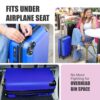
Description
The traveler this bag is designed to beat the fee for
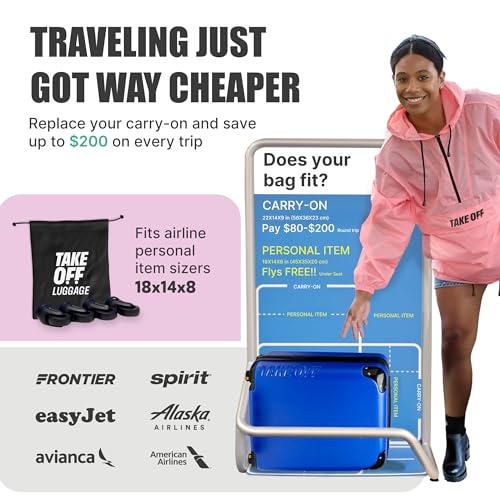
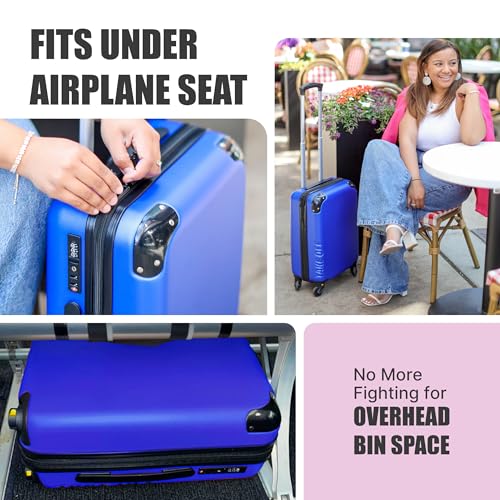
Take OFF Luggage built this around a single financial calculation. Budget carriers charge for a carry-on but include a personal item that fits under the seat, so a hard shell case built to the personal item box lets you travel without paying the bin fee. The maker names Frontier and Spirit directly in its own copy, which tells you exactly the traveler it is chasing: a domestic passenger on a low fare, traveling light, unwilling to pay extra.
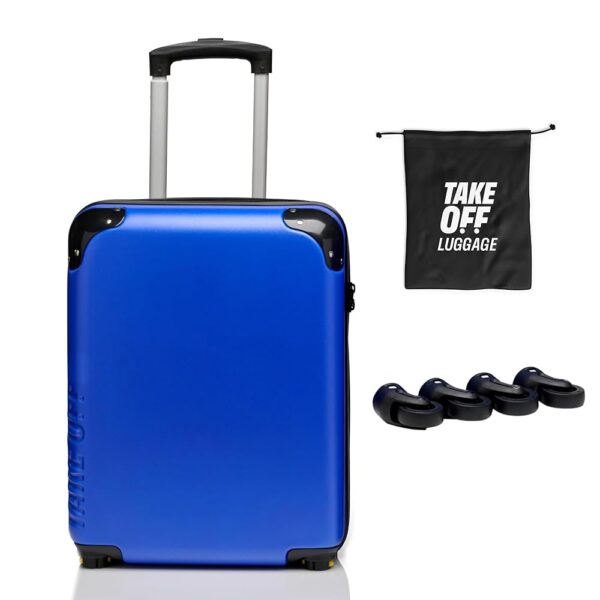
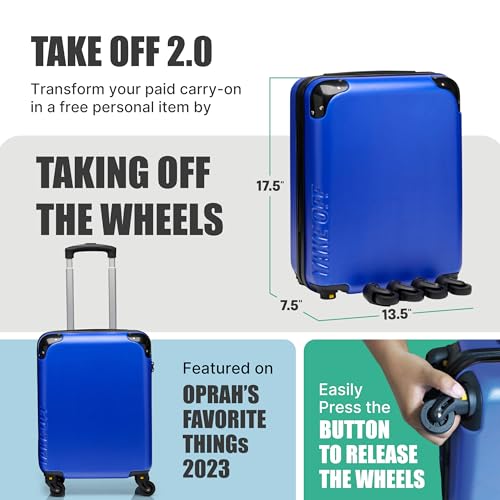
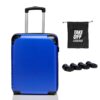
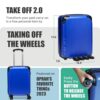
The removable wheels are the clever part of the concept. Wheels are what push a bag past a sizer, so a case that lets you take them off gives you a second chance if the first attempt fails. That is a genuinely thoughtful answer to a real problem, and it is rare. For comparison in the same size class without the trick, look at the KROSER underseat carry-on and the Travelers Club smart underseater.
The size claim, and the number that contradicts it
The product name ends in 18x14x8, which is the figure many United States carriers publish for a personal item. The specification block gives product dimensions of 14 by 7.5 by 18 inches. Those are not the same. The name says eight inches of depth and the specification says seven and a half. Half an inch is not a rounding error on a bag whose entire purpose is clearing a fixed box, and the listing does not say which figure is the bag and which is aspiration.
Whether the wheels are inside the number
Worse, the listing never states whether either figure includes the wheels. On a case with removable wheels that is the one thing you would want disclosed, and it is absent. If 7.5 inches is the bare shell and the wheels add to it, the bag exceeds eight inches with wheels attached. If 7.5 inches is measured with wheels on, then the shell alone is thinner and the concept works better than advertised. The data does not say. Ask the seller, and be aware that the maker calls this an airline personal item that fits 18 by 14 by 8 sizers, which is the maker’s claim and not ours. Airlines set their own allowances individually, budget and regional carriers are stricter than the national ones, and international carriers frequently add a weight limit as well.
There is a second oddity in the numbers. The listing states a capacity of 1890 cubic inches and a total capacity of 31 liters. Those two agree with each other, and they also happen to equal 18 multiplied by 14 multiplied by 7.5 exactly. In other words the published capacity is the external bounding box of the case, not usable interior volume. Real packing space inside a hard shell is always less than that, because the shell has thickness and the lid takes depth. Treat 31 liters as an upper bound that cannot be reached rather than as a packing figure.
Shell, wheels, closure and lock
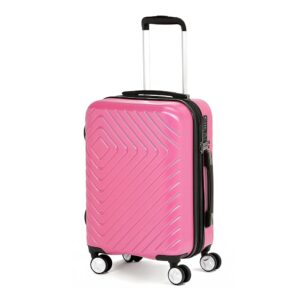
The listing calls the construction a hard case in lightweight yet highly durable materials, and never names the polymer. That omission matters more than it sounds. Polycarbonate flexes under impact and returns to shape, while ABS is cheaper, stiffer and more likely to crack at a corner, and the two behave completely differently when a bag gets dropped or wedged into a bin. A listing that says only hard shell is telling you it does not want to say ABS. Assume the cheaper material until the seller confirms otherwise.
The removable wheels are the defining feature and also the obvious wear point. Anything that detaches can loosen, and a wheel mount designed to come off by hand is under more stress than a riveted one. The listing gives no detail on the mechanism, the wheel count, or whether spares are available. On a case that lives under a seat and gets kicked, that is a fair question to raise before ordering. The upside is real: with the wheels off, the bag becomes a hand carried hard case with a smaller footprint, and on a carrier with a tight sizer that flexibility is the whole product.
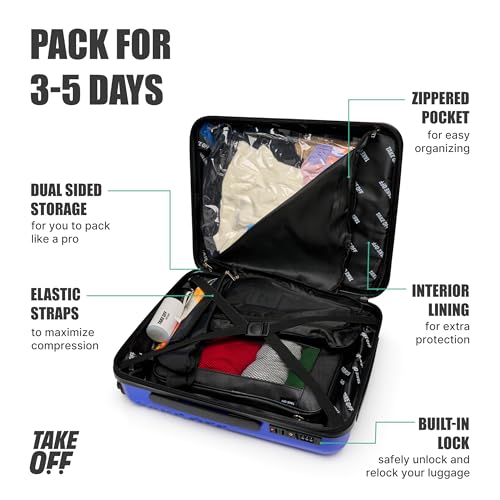
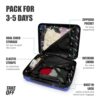
The interior is described as dual sided storage with a zippered pouch and a buckle closure. The listing includes a lock that it describes as TSA approved. That is a screening convenience and not security. TSA accepted locks open to a universal key carried by screeners, so the lock stops a curious hand and nothing more. Never put anything you would mind losing behind one, in this case or any other.
Weight, packing and the trade against a soft bag
The listed empty weight is 6 pounds. That is heavy for a personal item, and it is the price of the hard shell plus the wheels. On a domestic budget carrier that does not weigh personal items, this costs you nothing. On an international or regional carrier that does weigh cabin baggage, six pounds of the allowance is gone before you pack, and several carriers set the whole cabin allowance at fifteen or twenty pounds. That is the single strongest argument for a soft frameless bag instead, and it is worth weighing honestly against the fee saving that motivated the purchase.
Hard shells also pack differently. They do not compress, so a hard personal item is either full or carrying air, and there is no squeezing an extra layer in at the gate. What you get in exchange is crush protection for a laptop or a camera and a case that will not slump into an awkward shape under a seat. That is a real trade rather than a clear win. If crush protection is not why you are buying, a zipperless soft option like the LUGGEX zipperless carry-on is a different route to the same trip, and the Travelpro Maxlite 5 rolling underseat bag covers the soft wheeled version of this idea with published warranty terms.
Warranty, support and the gaps in the record
No warranty term is published on this listing. There is no lifetime claim, no limited period, no defect coverage statement. For a product whose main mechanical feature is a detachable wheel assembly, that absence is the most important thing missing from the page. A wheel mount that fails on a bag with no stated coverage is a bag you replace.
The listing is also thin elsewhere. The description field is empty, the model number is recorded simply as 1, and there is no material specification, no wheel count and no statement about whether the quoted depth includes the wheels. What the record does show is volume of feedback: 4.4 out of 5 from 957 ratings, and a position ranked 80th in carry-on luggage, which is a strong showing for a small maker. Buyers clearly like the idea. That is not the same as the listing being complete, and on luggage the specification is the purchase. Broader options sit on our carry-ons and carry-on luggage pages.
Who should buy it, who should not
Buy it if you fly United States budget carriers regularly, you want hard shell protection in a personal item, and the removable wheel design solves the sizer problem you actually have. The concept is sound and the feedback volume suggests it works for a lot of people.
Skip it if your carrier weighs cabin baggage, because six pounds empty is a lot to give away. Skip it if you need to know the polymer before you buy, or if you need a published warranty on the wheel mechanism. And do not order it assuming the eight inch figure in the name is the measured depth, because the specification block says seven and a half and the listing never reconciles the two or says whether wheels are counted.