Description
The trip this U.S. Traveler Boren is built for
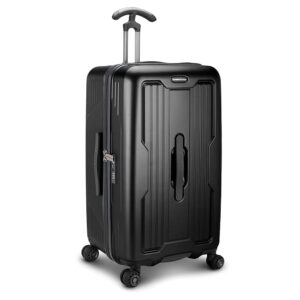
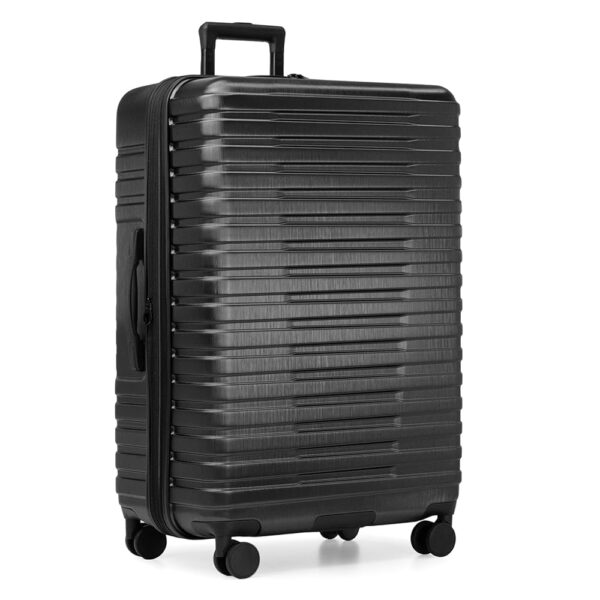
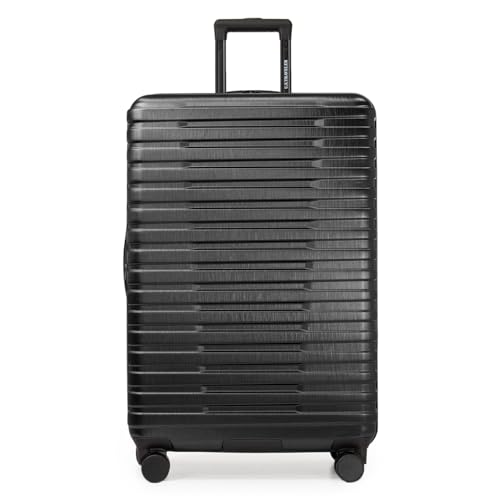
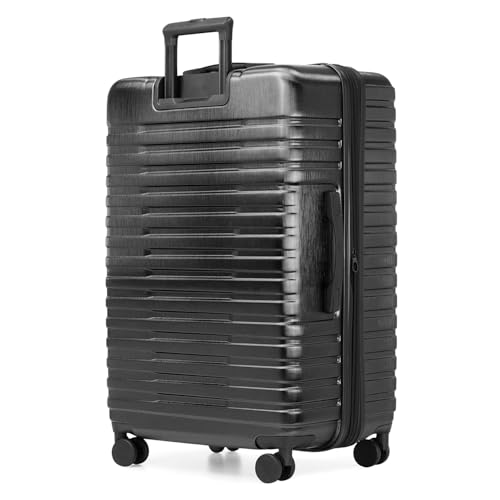
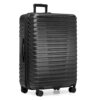
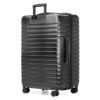
This is a 30 inch polycarbonate checked bag, and at that size the purpose is obvious: long trips, family trips, relocations, and any journey where the constraint is how much you can fit rather than how little you can carry. It is the piece you check at the start and collect at the end, not something you handle repeatedly through a terminal.
What distinguishes it from most bags this size is the material. Polycarbonate at 30 inches is less common than polyester or ABS, and it is the right choice for the job, because a bag this big sits at the bottom of a container under a substantial load. Polycarbonate flexes under that load and returns to shape where ABS cracks and where fabric simply crushes. The trade is cosmetic: polycarbonate scuffs and shows scratching within a few trips.
Dimensions, and this listing gets the disclosure right
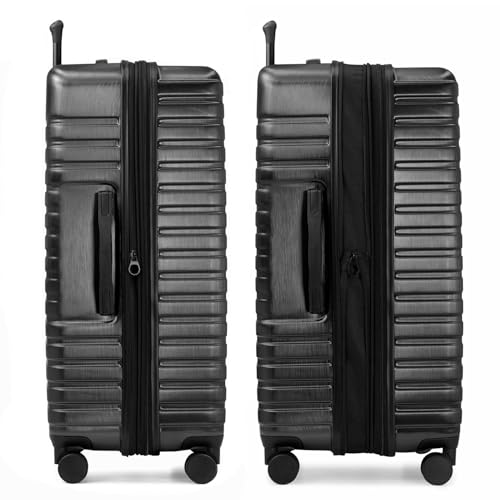
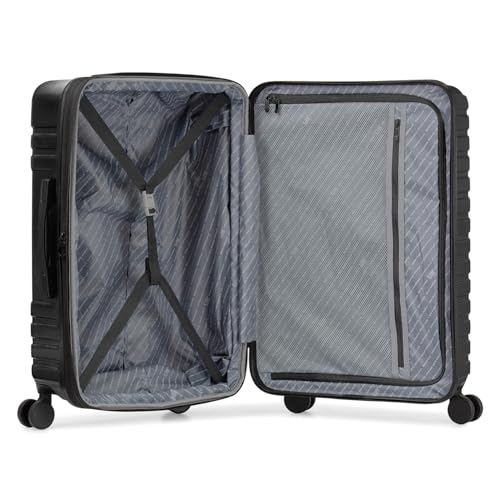
The specification table gives 29.5 by 19.25 by 12 inches. A feature bullet gives the same exterior figure of 29.5 high by 19.25 wide by 12 deep at 9.23 pounds, and separately gives an interior of 27 high by 18.75 wide by 11.5 deep. Those figures are internally consistent, the interior is smaller than the exterior on every axis as it must be, and the weight matches the specification table exactly. That is the best dimension disclosure of any bag in this group and it deserves saying, because most listings in this catalog cannot manage it.
Linear inches are the limit that matters here
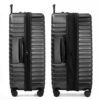
Most airlines cap a checked bag at around 62 linear inches, meaning length plus width plus depth added together, and charge an oversize fee above it. This bag totals 60.75 linear inches, which is inside the usual limit by just over an inch. That is real margin but not much of it, and the listing does not state whether the 29.5 inch figure includes the wheels. If it does not, the true total will be higher and the margin may vanish. The maker does describe recessed handles and wheels, which is the design choice that keeps the external measurement down, so the figure may well already account for them, but the listing never says so. Check your own carrier’s published linear limit and its oversize fee.
One claim needs correcting rather than repeating. The description says the recessed handle and wheels maximize carrying capacity while meeting FFA size requirements. That appears to be a misspelling of FAA, and either way it is wrong: the Federal Aviation Administration does not set baggage size limits. Airlines set their own, individually, and they differ. We never write that a bag meets airline requirements in our own voice, and a claim attributed to a regulator that does not make the rule is worth flagging plainly.
Shell, wheels, handle and interior
The shell is polycarbonate, named clearly, which is more than most listings offer. The maker describes it as waterproof, and that word needs qualifying. A molded polycarbonate shell is indeed impervious to water, but this is a zippered clamshell, and a coil zipper is not a water seal. Rain running down a shell will find its way through a zipper track given time on a wet ramp. Treat the bag as highly water resistant, which is a genuine advantage over polyester at this size, and do not treat it as waterproof for anything that must stay dry.
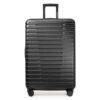
The wheels are described as eight spinner wheels, which on a four caster base means paired wheels per caster. On a bag this large the spinner arrangement is the more defensible choice, because a fully packed 30 inch case is heavy and pushing it upright beside you is far easier than towing it tilted. The trade is unchanged: casters handle broken pavement, gravel and curbs badly, they are exposed, and on a heavy checked bag they are under more load than any other component. Recessing them, as the maker describes, is the sensible mitigation. The handle is aluminum and retractable, with top and side grab handles for lifting.
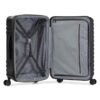
Inside there is a fully lined clamshell with a zippered center divider and tie down straps, which is the standard and correct arrangement for a bag this size. No lock of any kind is described anywhere on this listing, TSA recognized or otherwise. On a bag that will always be checked, that is worth stating plainly rather than assuming.
Capacity, weight and a figure that cannot be right
The capacity fields both read 30 liters. A 30 inch checked case with an interior of 27 by 18.75 by 11.5 inches has an internal volume of roughly 5,800 cubic inches, which is in the region of 95 liters. Thirty liters is about the size of a school backpack. The figure is almost certainly the 30 inch size designation captured into the capacity field with the wrong unit attached, and it cannot be used for anything. We are not going to publish our own estimate as though it were a specification, but the arithmetic above is available to anyone who wants to sanity check it.
The empty weight is 9.23 pounds, published consistently, and that is genuinely good for a 30 inch case. Softside bags of similar volume commonly run eleven pounds or more. The arithmetic still deserves attention: on a typical 50 pound domestic checked allowance, 9.23 pounds of empty bag is 18 percent of your budget, and on a 23 kilogram international allowance the same applies. A bag with roughly 95 liters of usable space will let you pack past 50 pounds long before you run out of room, which is how most overweight fees get paid. A luggage scale costs very little.
Warranty, standing and the alternatives
No warranty term appears anywhere in the source data. No length, no coverage, no exclusions. On a checked bag that is the gap that matters most, because the damage checked luggage actually suffers is handling damage, and handling damage is the exclusion luggage warranties most commonly carry. Ask for the written terms and look for that clause specifically.
The listing shows 4.0 stars from 4,392 ratings and a position of third in the suitcases chart. That combination is worth reading carefully: a strong sales position with the lowest average rating of any bag in this group. Four thousand ratings at 4.0 suggests a meaningful minority of buyers had a problem, and on a bag this size the usual candidates are caster failure and cracked shells after rough handling. Weigh that against the good material and the honest measurements. Among alternatives, the U.S. Traveler Anzio softside 30 inch is the fabric equivalent from the same brand, the Samsonite Omni 2 in 28 inch is the better known hardside, the SwissGear Sion 29 inch is the softside benchmark, the Amazon Basics 30 inch hardside is the budget option and the Travelers Choice 30 inch hardside spinner is another. Browse suitcases and luggage and travel gear.
Who should buy it and who should not
Buy it if you want a genuine polycarbonate shell at maximum checked size, you value that the maker published matching interior and exterior figures, and 9.23 pounds appeals against heavier softside rivals. Do not buy it if you need a lock, since none is described; if you need a usable capacity figure, because the published one is off by roughly a factor of three; or if a 4.0 average across four thousand buyers gives you pause.