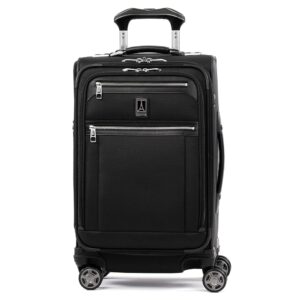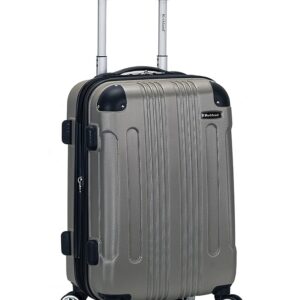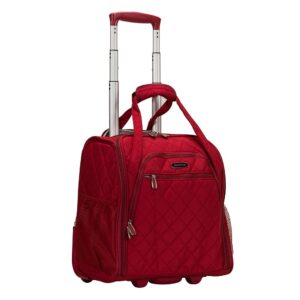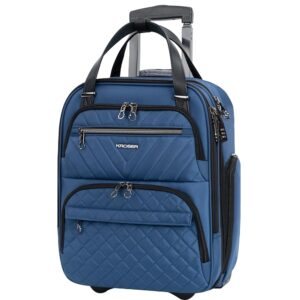


Description
The traveler this BAGSMART cabin case suits
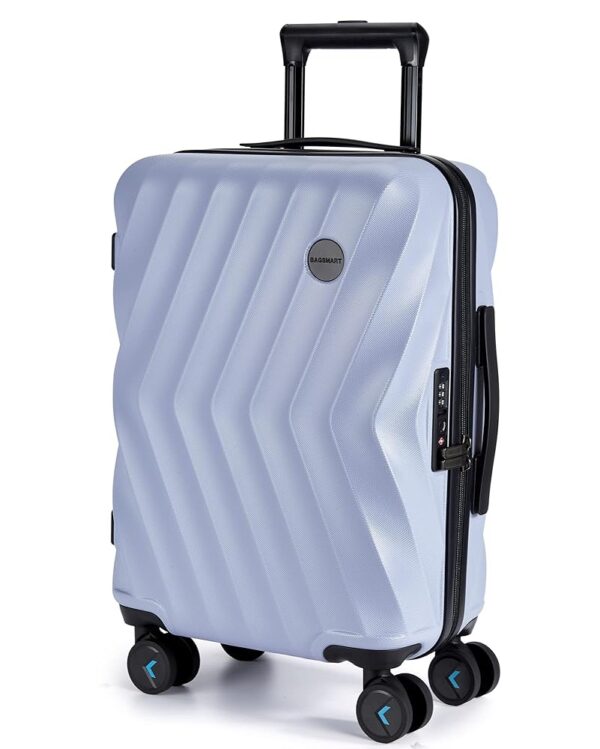
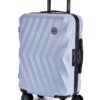
This is a 20 inch polycarbonate hardside on dual spinner wheels, with a four stage aluminum handle and a recognized TSA lock. The traveler it fits is someone taking three to five day trips who wants a rigid shell from a specific named polymer rather than a vague hardside label, and who values a handle that adjusts through more positions than the usual three. The maker suggests three to five day trips, which is an honest framing at 35 liters.
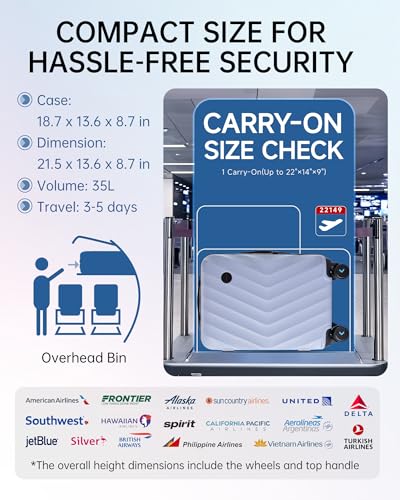
What separates this listing from most of its neighbors is that it publishes two dimension sets and labels both. That is rare enough to lead with, because it means you can actually work out whether the case will clear a sizer.
Dimensions, published two ways and labeled
The specification table gives 21.7 by 14 by 8.7 inches. A feature bullet gives a case exterior of 18.7 by 13.6 by 8.7 inches and states explicitly that the figure excludes wheels and handle. Read together, the 21.7 by 14 by 8.7 figure is the overall measurement including the casters and the retracted handle, and the smaller figure is the shell alone. That is exactly the disclosure a buyer needs and almost nothing else in this catalog provides it.
How it sits against the usual benchmark
The commonly quoted United States domestic cabin allowance is around 22 by 14 by 9 inches with wheels and handles counted. On the overall figure of 21.7 by 14 by 8.7, this case is inside on length by three tenths of an inch, inside on depth by three tenths, and exactly at the limit on width at 14.0 with no margin at all. That is a case that will pass a correctly built sizer and has nothing to spare if a sizer is built tight or the bag is overpacked enough to bow the shell. The manufacturer title prints the words airline approved. That is the maker’s claim and we will not repeat it in our own voice, because compliance belongs to the airline: budget and regional carriers publish tighter limits, many international carriers add a cabin weight cap, and published figures change. Check your carrier and compare it against 21.7 by 14 by 8.7.
Nothing on the listing describes an expansion feature, which is a quiet advantage. A case with no expansion cannot be accidentally taken out of compliance by a traveler who zips it open on the way home.
Shell, wheels, handle and lock
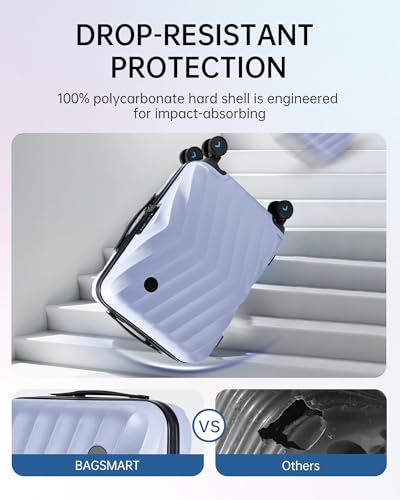
The shell is named as polycarbonate, and the maker’s description of it as strong, resilient and light is the correct characterization. Polycarbonate deforms under load and returns to shape, which is what keeps a case alive when it is crushed at the bottom of a bin or a container, and it is the meaningful upgrade over the ABS used on cheaper cases at this size. The cost is cosmetic: polycarbonate scuffs and a smooth finish shows scratching within a few trips. The previous short description on this page claimed the case remains scratch and dent free after tough handling, which is not what polycarbonate does, and we have removed that claim rather than repeat it.
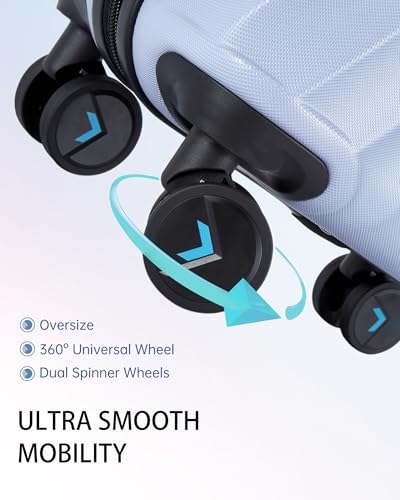
The wheels are 360 degree dual spinner casters, which means paired wheels on each of four casters. The maker claims they roll well on carpet, rougher terrain and gravel, which overstates the case: spinner casters are the weaker arrangement on broken ground compared with two large inline wheels, they are exposed, and they are the most common single failure point on hardside luggage. Paired wheels do at least spread the load across two contact points per caster, which helps.
The handle is a four stage aluminum tube. Four stages rather than three genuinely matters if you are notably tall or short, since it gives more height positions, and it is a detail usually found further up the price ladder. The trade is more joints and therefore more places for lateral play to develop with age. The lock is a recognized TSA combination type, which opens to a universal master key held by screeners: treat it as a deterrent against casual opening and never as security for valuables. Inside there are two main compartments with a compression pad and cross straps, a compression panel with a zipped mesh pocket and a built in small pocket, plus soft silicone grip handles.
Capacity, weight and how it packs
Capacity is published consistently as 35 liters in both fields. For a 20 inch clamshell that is a normal figure and works out at roughly three to four days of clothing for one person packed without compression, which matches the maker’s own three to five day suggestion if you use the compression straps properly.
The empty weight is 6.39 pounds, restated as 6.4, so the listing agrees with itself. That is middling for a polycarbonate cabin case: heavier than the lightest ABS shells, lighter than many polycarbonate rivals. On a carrier with a 7 kilogram cabin allowance, a 6.4 pound empty case takes about 41 percent of the allowance before you pack, which is the constraint that catches travelers out on international and low cost tickets far more often than the linear dimensions do. On United States domestic tickets where cabin bags are not weighed, it costs you only effort.
The clamshell layout is the standard hardside arrangement: everything lies flat in two halves, there are no external pockets, and anything you want in flight has to come out before the case goes in the bin. If external access matters, the LUGGEX PCF-20BK has the same limitation, and a softside case solves it in a way no shell can.
Warranty, standing and the alternatives
BAGSMART states a five year manufacturer warranty, along with a claim of rigorous pre shipment testing. Five years is a strong term for this price band and better than the two and three year promises common on the shelf. No exclusion list is published, and that is the part to chase, because luggage warranties very commonly exclude damage caused by airline handling, which is the damage suitcases actually suffer. A five year term that excludes conveyor damage is worth much less than it sounds. Ask for the written terms and look for that clause.
The listing shows 4.4 stars from 762 ratings and a position of 132nd in the carry-on luggage chart, which is a reasonable score on a moderate base. Within the same brand, the BAGSMART BM01050294N551 is the closest sibling, though it measures over the common benchmark where this one does not, and the BAGSMART B0DHX81VXV configuration is another. For longer established polycarbonate cabin cases, compare the Samsonite Omni PC and the LEVEL8 carry-on. Browse carry-ons and carry-on luggage for the field.
Who should buy it and who should not
Buy it if you want a named polycarbonate shell that measures inside the common cabin benchmark, a four stage handle, and a five year stated warranty. Do not buy it if you fly carriers whose sizers are built tight, since the width sits exactly at 14 inches with no margin; if 6.4 pounds is too much of a 7 kilogram cabin allowance; or if you want a review base larger than 762 ratings to judge long term durability.