
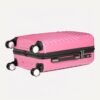
Description
Who this Amazon Basics cabin case is for
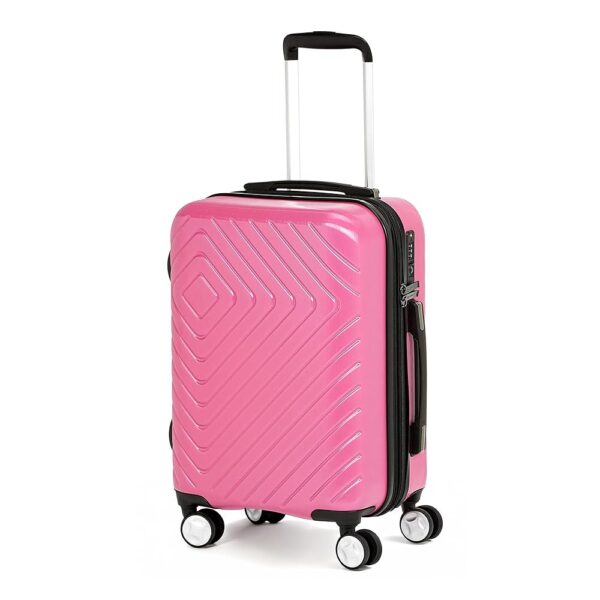
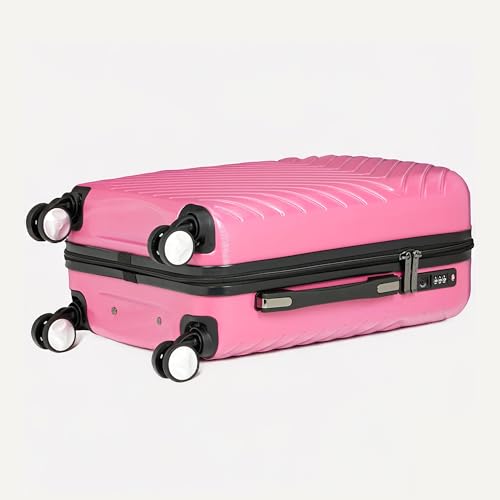
This is the mainstream budget hardside: an expandable spinner with a recessed TSA recognized lock, a geometric textured shell and four multi directional wheels, sold under Amazon’s own label. The traveler it suits is someone who wants a rigid cabin case that works, from a seller with a straightforward returns process, without researching brands. The maker frames it as a one to five day bag, which at 34 litres is honest at the lower end and optimistic at the upper.
Buying an own label product involves a specific trade worth naming. You get consistent quality control and easy returns, and you give up a named manufacturer to pursue if something fails later. The listing itself says the product may originate from China or Cambodia, and the specification table records Cambodia, so even the production location is not fixed.
Dimensions, stated with wheels included
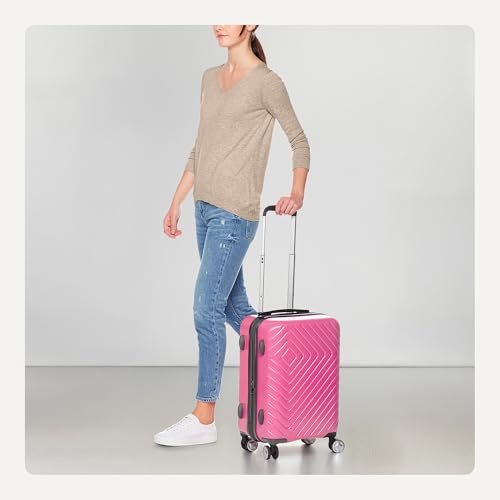
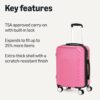
Credit first: a feature bullet gives 15 by 10 by 21.7 inches and states explicitly that the figure includes wheels. That is the disclosure most listings in this catalog fail to make, and the specification table records the same numbers. There is no ambiguity about what is being measured.
The problem is what those numbers are. The commonly quoted United States domestic cabin allowance is around 22 by 14 by 9 inches with wheels and handles counted. This case is inside on length at 21.7, one inch over on width at 15, and one inch over on depth at 10. A sizer is a box and a bag must clear every dimension, so being inside on length does not compensate for being over on two axes. It will not go into a correctly built frame.
And the expansion figure appears twice
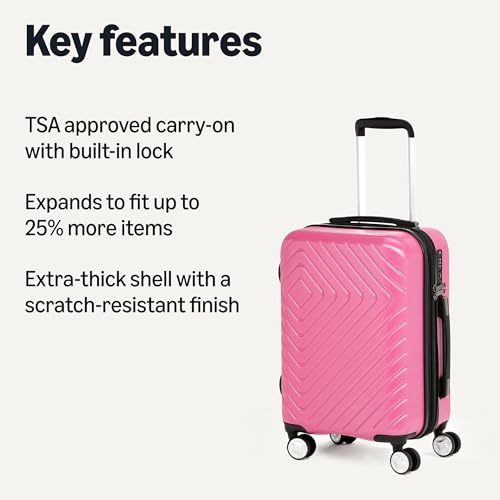
The manufacturer title says the case expands for 25 percent more capacity. A feature bullet says the expansion increases packing space up to 15 percent. That is a substantial difference between two lines on the same page, and neither is labeled. Take the lower figure when planning. More importantly, on a case already over the common benchmark on two axes, using any expansion makes the situation worse rather than better. We never write that a bag is airline approved, because the limit belongs to the airline, and here the maker’s own wheel inclusive numbers put it outside the usual figure. Check your carrier and decide with the real measurement in front of you.
Shell, wheels, lock and interior
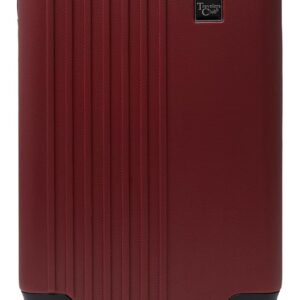
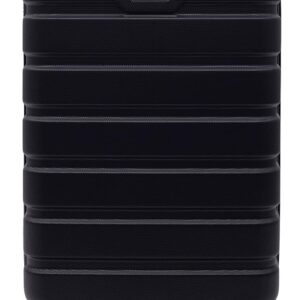
The shell is described as an extra thick hard shell with a scratch resistant geometric surface. No polymer is named anywhere on the listing, which is the substantive gap here: ABS, polycarbonate and polypropylene behave very differently under load, and a listing that says only hard shell is telling you nothing about durability. The geometric surface is a real practical benefit rather than styling, because a faceted or textured finish hides the fine scuffing a smooth gloss shell shows within a trip or two. Ask the seller about the polymer, because that answer changes what the case is worth.
The wheels are four multi directional casters. Spinners are easier across smooth terminal floors and worse on cobbles, gravel and curb cuts, they are exposed, they add to the measured depth at a sizer, and they are the most common single failure point on hardside luggage. The handle is a telescoping tube with a short lift handle for getting the case into a bin.
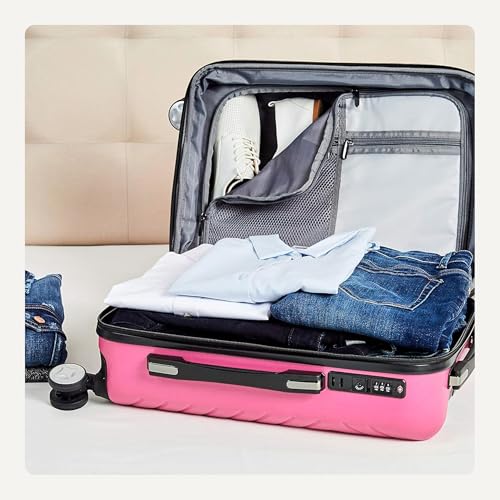
The lock is a recessed TSA recognized type. The recessing matters for the same reason it matters on a handle: a lock that sits flush has nothing to catch or shear off on a conveyor. Being clear about what a TSA lock is, though: it opens to a universal master key held by screeners, so it deters casual interference and stops a zipper being pulled open in transit. It is not security, and nothing of value should be in a checked bag in any case. Inside there is a divider and three zippered pockets, which is a better published interior specification than most competitors offer.
Capacity, weight and how it packs
Capacity is published consistently as 34 litres in both fields. For a case with these external dimensions that is on the modest side, and it is the number that undercuts the maker’s suggestion of trips up to five days. Thirty four litres is realistically three days of clothing for one person packed without compression, or four if you are disciplined. Note the tension in the listing’s own claims: a case that is over the common cabin benchmark on two axes but holds only 34 litres is not making efficient use of its external size, which usually means thick shell walls or intrusive handle hardware.
The empty weight is 6.78 pounds, restated as 6.8. That is middling for a rigid cabin case. On a carrier that caps cabin baggage at 7 kilograms, an empty case at 6.8 pounds consumes about 44 percent of the allowance before you pack a shirt, which is the constraint that catches travelers out on international and low cost tickets. On United States domestic tickets where cabin bags are not weighed, it matters only to your shoulder.
The listing data also carries visible import damage: the product description contains stray letter n characters where line breaks were stripped out, leaving fragments such as PRODUCT DESCRIPTION n and FROM THE MANUFACTURER n. That is cosmetic rather than substantive, but it is a signal of how much of the entry was assembled rather than written.
Warranty, standing and the alternatives
No warranty term appears anywhere in the source data. No length, no coverage description, no exclusion list. Own label products often carry a limited warranty administered through the retailer rather than a manufacturer, which in practice can be easier to claim against, but nothing here states a term. Ask before ordering, and ask specifically whether damage caused by airline handling is covered.
The listing shows 4.6 stars from 1,109 ratings, with chart positions of 53rd in suitcases and 73rd in carry-on luggage. That is a strong satisfaction score on a reasonable base. Within the same label, the Amazon Basics 30 inch hardside and the 26 inch hardside are the checked sizes, and the Amazon Basics 15 inch under seat bag covers the personal item. For a cabin case that measures inside the common benchmark, compare the BAGSMART 20 inch polycarbonate spinner, and for the cheapest alternative the Rockland Melbourne in mint. Browse carry-ons and suitcases.
Who should buy it and who should not
Buy it if you want a simple own label hardside with a recessed lock, a scuff hiding finish and a documented interior, and you fly carriers that rarely measure. Do not buy it if your airline enforces its sizer, since the maker’s own wheel inclusive figures are over on two axes; if you need to know the shell polymer, because none is named; or if the two different expansion percentages on the same page concern you.