
Description
Who this Rockland Melbourne cabin case suits
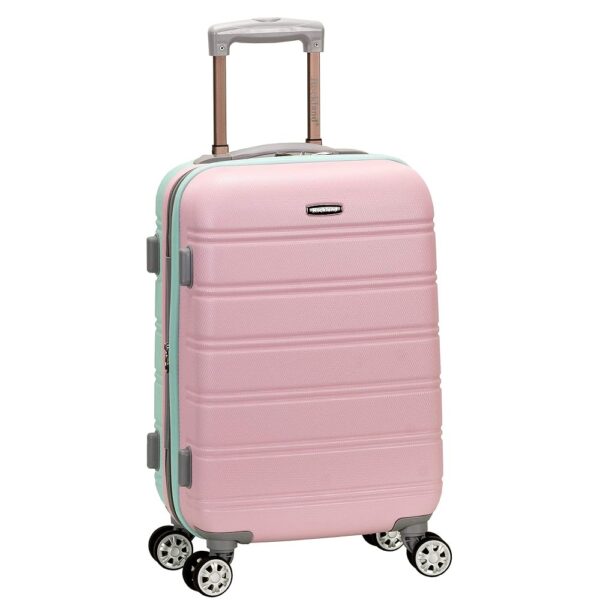
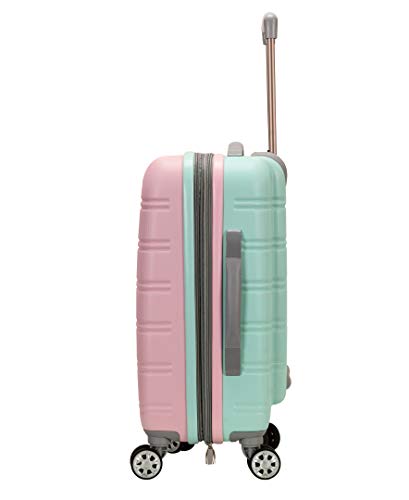
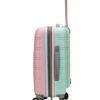
With more than twenty one thousand ratings behind it, this is among the most bought cabin cases anywhere in this category. It is a 20 inch hardside upright in ABS on double spinner casters, finished in mint, and it sells in the volume it does because it is cheap, brightly colored and adequate. The traveler it fits is the occasional flier taking two to six trips a year who wants a rigid shell without paying for one, and who values a color that is findable on a carousel and hard to collect by mistake.
It is not built for weekly travel and does not claim to be. Note that the manufacturer field on this particular entry reads Rockland, while the near identical two tone green version of the same F145 model records Fox Luggage, the parent company. Same product family, two different manufacturer names in the data.
Three different sizes on one listing
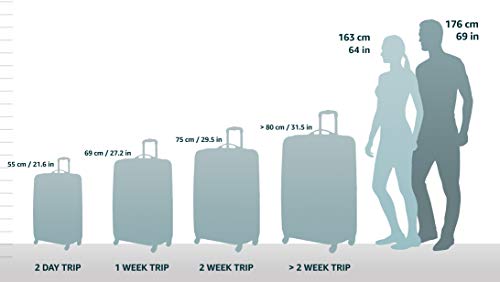
This listing cannot agree with itself about how big the bag is, and the differences are not trivial. The product description says it measures 20 inches by 13 inches by 9 inches. A feature bullet says 22 by 13.5 by 9 inches and states that the figure is with wheels. The specification table says 13 by 9 by 22 inches.
The bullet and the specification table reconcile: both describe a 22 inch overall height, and the bullet adds the useful detail that wheels are included. The description’s 20 inch figure is the case body without wheels or with the handle housing disregarded. That two inch gap between the body and the overall height is precisely the reason bags sold as carry-ons get gate checked, and it is worth understanding rather than glossing over.
Against the usual limits
The commonly quoted United States domestic cabin allowance is in the region of 22 by 14 by 9 inches with wheels and handles counted. On the wheel inclusive figure of 22 by 13.5 by 9, this case sits exactly at the limit on two of three axes with half an inch of margin on the third. There is essentially no room. A bag at exactly the limit passes a generously built sizer and fails a tight one, and gate agents measure more often on full flights than on empty ones.
The maker’s second bullet names five specific carriers whose size restrictions it says the bag meets. That is the maker’s claim about those five airlines, not a certification, and we will not restate it as fact. Published limits change, they differ by fare class and aircraft, budget and regional carriers set tighter figures, and many international carriers add a cabin weight cap. Look up your own airline’s current published figure.
There is one further conflict. The manufacturer title calls this an expandable spinner, but both capacity fields read 38 liters with no expanded figure at all, where the two tone green version of the same model publishes 38.3 collapsed and 46.9 expanded. Either the expansion exists and is undocumented here, or this variant does not have one. If you are counting on expanding it, confirm before ordering, and remember that using an expansion takes any bag outside the size it was measured at.
Shell, wheels, handle and a warning in the small print
The shell is named as ABS, without a polycarbonate component. ABS is the cheapest of the common suitcase polymers: stiff, light, good at holding a molded shape and a color, and inclined to crack rather than flex when a corner takes a heavy impact under load. Polycarbonate is the polymer that deforms and returns. On a cabin bag that lives in an overhead bin rather than under a container load, that is a defensible economy, and it is the honest reason this case costs what it does.
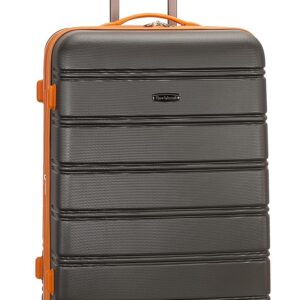
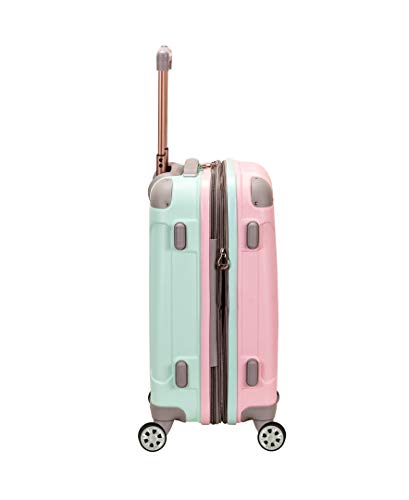
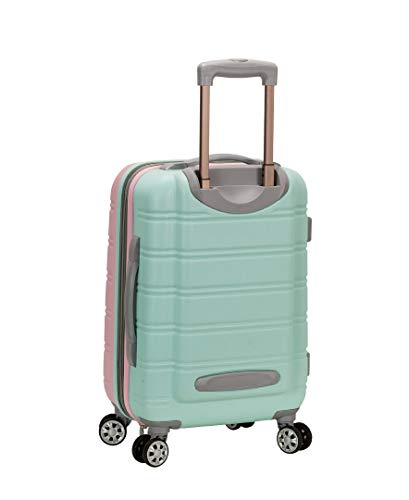
The wheels are described as four multi directional double spinner casters, and the description carries a line worth quoting the sense of: wheel design may vary between units. That is unusual candor and a genuine caution. It means the casters you receive may not match the casters in the product images, which matters if you are buying on the strength of a specific wheel design or expecting to source a matching replacement later. Spinner casters generally are easier across smooth terminal floors and worse on cobbles, gravel and curb cuts, they are exposed, they add to the measured depth, and they are the most common single failure point on hardside luggage at this price.
The handle has the same conflict that runs through this range: the description calls it an internal chrome telescoping tube with a push button, while a feature bullet calls it aluminum. Chrome is a plating and aluminum is a substrate, so the two are reconcilable, but the listing never says so. Inside there is a mesh zip pocket and an elasticated pocket. No lock of any kind is described anywhere, TSA recognized or otherwise.
Capacity, weight and the figures that do agree
Capacity is published as 38 liters in both fields. For a 20 inch clamshell that is a normal and reasonable figure, roughly three to four days of clothing for one person packed without compression.
The weight figures are consistent for once: 7.48 pounds in the specification table, 3.4 kilograms in the attribute data, which is the same number, and 7.5 lbs in the description. That is heavy for a 20 inch cabin case. On a carrier that caps cabin baggage at 7 kilograms, an empty case at 7.5 pounds consumes about 49 percent of the allowance before you pack a shirt, which is the constraint that catches travelers out on international and low cost tickets far more often than the linear dimensions do. On United States domestic tickets where cabin bags are not weighed, it costs you only effort. Compare it with the Rockland Safari at 6.5 pounds or the Rockland Vision at six.
Warranty, standing and the alternatives
No warranty statement survives on this listing at all, not even the truncated five year fragment that appears on the sibling models in this range. That means no length, no coverage and no exclusions are published. On luggage the specific question is whether damage caused by airline handling is covered, since that is the damage that occurs and the exclusion most luggage warranties carry. Ask for the terms in writing.
The listing shows 4.4 stars from 21,140 ratings and a position of 12th in the carry-on luggage chart. That is one of the largest review bases in this catalog and the strongest argument for the bag. Among relatives, the Rockland Melbourne 28 inch is the checked size in the same line and the Rockland F1901 in mint is a similar case in a different shell. Browse carry-ons and carry-on luggage for the field.
Who should buy it and who should not
Buy it if you want a cheap, bright, heavily reviewed cabin case, you fly domestic carriers that do not weigh cabin bags, and you are working from the 22 by 13.5 by 9 wheel inclusive figure rather than the 20 inch one. Do not buy it if you fly with a 7 kilogram cabin weight cap, because 7.5 pounds empty is nearly half of it; if you need a lock, since none is described; or if you are relying on an expansion, because this entry publishes no expanded capacity.