Description
The Trip and the Traveler
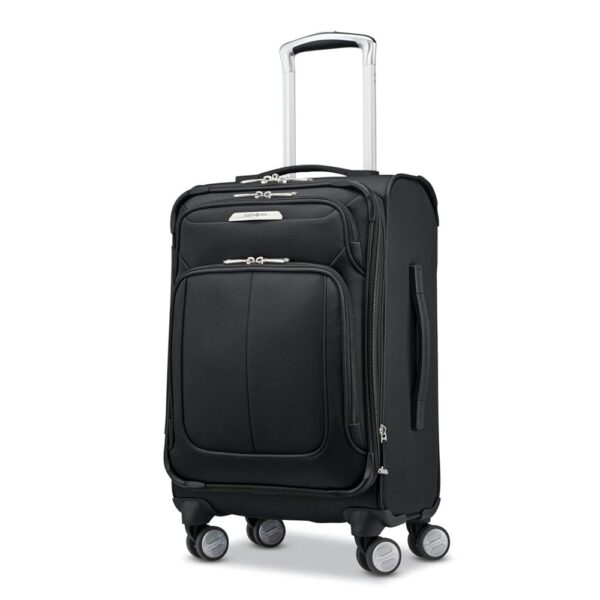
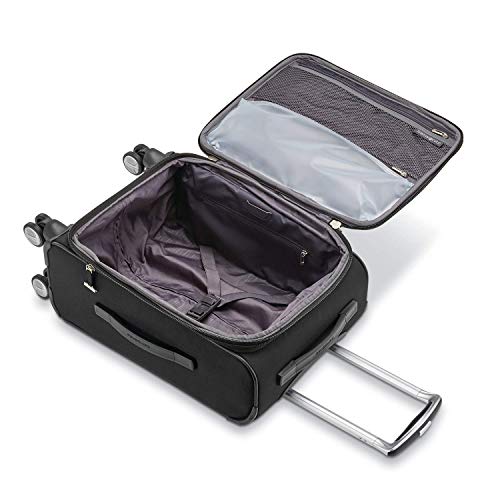
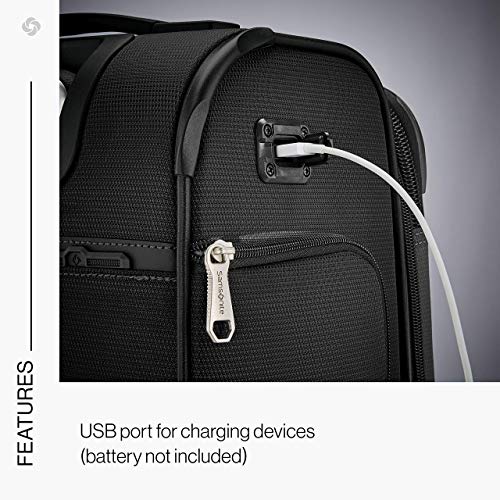
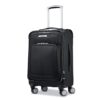
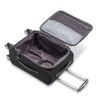
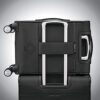
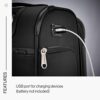
The Solyte DLX is Samsonite’s softside cabin bag for the domestic business traveler, and its defining feature is a USB port on the outside of the case. Samsonite’s own pitch is that you charge your phone while walking through the airport. Inside there is a WetPak pocket to isolate damp items, a zippered mesh pocket, and Smart Fix buckles that hold the tie down straps out of the way while you pack, which is a small detail that solves a genuinely annoying problem.
The traveler it fits is on two to four night domestic trips, never checks a bag, and wants exterior organization plus the charging convenience. Softside buys outer pockets and the ability to compress into a tight bin. What you give up against a shell is water resistance and crush protection. If those matter more, a hardside cabin case such as the Samsonite Winfield 3 DLX is the in house alternative.
Packing Size, Overall Size and the 20 Inch Label
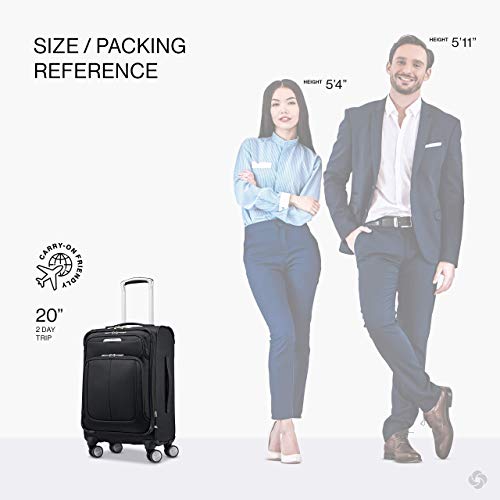
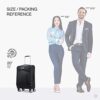
Samsonite publishes both figures and labels them, which is exactly the disclosure this category usually withholds. Packing dimensions are 19.0 by 13.5 by 7.75 inches. Overall dimensions are 22.0 by 14.0 by 9.5 inches. The specification block agrees with the overall figure, listing 9.5 by 14 by 22 inches. The gap between the two tells you what the wheels and handle add: three inches of height, half an inch of width and 1.75 inches of depth.
Note that the case is sold as a 20 inch carry-on and neither published figure is 20. The packing height is 19 inches and the overall height is 22. Twenty is a nominal category label, not a measurement, and that catches travelers out constantly.
The Half Inch That Matters
An airline sizer measures the whole object, so the 22 by 14 by 9.5 inch figure is the relevant one. Against the commonly cited United States domestic cabin allowance of roughly 22 by 14 by 9 inches, the height matches exactly, the width matches exactly, and the depth is half an inch over. That is close, and half an inch is the kind of margin that passes on a relaxed carrier and fails on a strict one, particularly when a soft case is packed hard and bulges.
Samsonite says the case meets most carry-on size restrictions for domestic travel. That is the maker’s claim with its own qualifier, and the qualifier is doing honest work. Every carrier sets its own rule, budget and regional airlines are stricter, and international carriers commonly add a cabin weight limit. Check your specific airline before you rely on it.
One gap worth naming: the product name calls this softside expandable, but no feature bullet describes the expansion and no expanded depth is published anywhere. Since the unexpanded depth is already half an inch over the reference, an expansion of any size puts it clearly outside. Assume an expanded bag is a checked bag.
Spinner Wheels, the USB Port and the Battery Question
The bag rolls on spinner wheels, which give 360 degree upright rolling so no weight rests on your arm. On smooth terminal flooring that is the correct choice for a bag of this weight. On gravel, cobbles or a broken sidewalk they are worse than inline wheels because small exposed casters catch, and exposed casters are the most common failure point on any wheeled case. They also account for the 1.75 inches of depth the overall figure adds over the packing figure.
What the USB Port Does and Does Not Include
The fourth bullet is unambiguous and worth quoting in substance: there is a USB port for charging devices, and the battery is not included. That distinction matters enormously for air travel. Airlines require lithium batteries and power banks to travel in the cabin rather than in checked baggage, and where a bag has a battery built into it, most carriers require that battery to be removable. Bags with non removable batteries have been refused at the gate.
Because this case ships with no battery in it, none of that is a problem in itself. The port is a pass through: you supply a power bank, put it in the case, and connect it. If you do, carry the bag in the cabin, keep the power bank accessible, and check your airline’s watt hour limit. If you check the bag, take the power bank out first. The port alone does nothing.
The listing publishes no shell fabric, no denier figure and no coating, and it does not describe the telescoping handle at all: no material, no stage count, no extended height. Both are gaps, and the handle omission is the more significant since handle tubes are the second most common failure point after wheels.
Capacity, Weight and a Field That Contains the Wrong Unit
The capacity data is partly usable and partly broken. The capacity total field reads 1,987.87 cubic inches, which works out to roughly 32.6 liters, and it matches the published packing dimensions of 19 by 13.5 by 7.75 inches almost exactly. That internal consistency is a good sign. The separate capacity field, however, reads 7.1 Pounds, which is a weight sitting in a volume field. Disregard it.
Weight itself is published twice and disagrees. The specification block says 6.54 pounds. The second feature bullet says 7.1 pounds, which explains where the stray figure in the capacity field came from. That is more than half a pound of difference with no way to tell which is the empty case. Plan on 7.1 pounds. For a cabin bag with roughly 32.6 liters of packing volume that is heavy: the Delsey Helium DLX carries about 36 liters at 6.7 pounds and the Travelpro Maxlite 5 carries 52 liters at 5.4 pounds. On any carrier enforcing a cabin weight limit, that difference comes straight out of what you can pack.
The Warranty, Which Says What It Covers
Samsonite states a 10 year limited warranty covering defects in materials and workmanship. That phrasing is more useful than most in this category because it names the covered failure mode rather than leaving it open. It also tells you what is not covered: damage that is not a defect. Airline handling damage, which is the damage that actually happens to a checked or gate checked bag, is a different thing from a manufacturing defect, and a warranty written this way generally will not cover it. Read the full terms before assuming otherwise. Compare with the Travelpro Maxlite 5, which publishes a separate one year term specifically for carrier damage.
The feedback record is the strongest thing on this listing: 4.3 across 2,997 ratings, ranked 49th in Carry-On Luggage and 36,566th in Clothing, Shoes and Jewelry. That is a large sample and a good category placement. For a softside comparison, the Delsey Helium DLX softside carry-on is the closest rival, and the Travelers Club Cosmo 20 inch spinner covers the budget end. The carry-ons category holds the rest.
Who Should Buy It and Who Should Not
Buy it if you fly domestically, want a softside cabin bag from a maker that publishes both packing and overall dimensions honestly, and will actually use the USB pass through with your own power bank. The 4.3 rating on nearly 3,000 ratings is a strong signal. Do not buy it if your carrier measures strictly, because the overall depth of 9.5 inches is half an inch over the usual reference before packing. Do not rely on the expansion, which is named but never specified. And do not read the ten year term as covering airline damage, because it is written against defects.