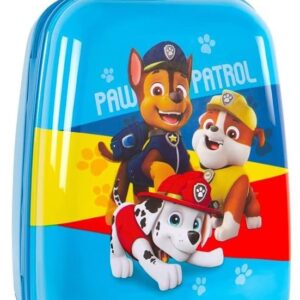


Description
What this product actually is
This is a folding kick scooter with an 18 inch hard case built into it, sold under a licensed character design. Folded, it locks and rolls like a small upright. Unfolded, a child stands on a deck and scoots while the case travels underneath. That means it has to answer scooter questions as well as luggage questions, and the scooter half is where the real risks sit.
Fast Forward publishes the safety guidance properly, which is more than most of this shelf manages. Age is recommended at five years and older. The standing deck measures 14 inches long by 4 inches wide. The handle has a two button release to bring it down, and the maker advises adult supervision when folding and unfolding, states the scooter is not designed for efficient turning, and says plainly that this is luggage featuring a scooter rather than a scooter for tricks. Comparable ride on options are on our kids’ luggage page, including the Fast Forward Disney Princess ride on suitcase scooter and the Kiddietotes scooter ride on suitcase.
Three different sizes, and no product weight
The dimension data does not agree with itself. The product dimensions field gives 13 inches long by 10.5 inches wide by 20 inches high, and a separate item dimensions field repeats 13 by 10.5 by 20. A feature bullet gives luggage dimensions of 18 inches high by 13 inches wide by 9 inches deep, and adds that the handle extends to 31 inches. A third field gives item package dimensions of 20.4 by 13 by 11.25 inches, which is the shipping carton.
Which figure would be measured
Those sets disagree on every axis. Height is 20 in one place and 18 in another. Width is 10.5 in one and 13 in another. Depth appears as 9 only in the bullet. The most likely reading is that 18 by 13 by 9 is the case body and 20 by 13 by 10.5 is closer to the folded overall size with the scooter mechanism and wheels included, but the listing never labels either set, so this is inference rather than data.
Then compare against the allowance most commonly cited for a United States domestic carry-on, around 22 by 14 by 9 inches. On the bullet figures the case fits with margin. On the larger set the depth is 10.5 inches, which is over. A bullet on this listing claims the case meets all domestic and international carry-on size requirements and attributes that to the security administration. That is wrong twice over. The Transportation Security Administration screens baggage and does not set or approve cabin size limits; airlines set their own, individually, and they differ. No single case can satisfy every international carrier at once because those allowances contradict each other. Treat the claim as marketing, measure the folded product yourself, and check your specific airline.
There is also no product weight anywhere. The only weight published is a package weight of 4.17 kilograms, about 9.19 pounds, which includes the carton. On an item a child lifts into a car or onto a train, the unloaded weight is a genuine usability figure and it is absent. Unlike the Disney Princess version of this design, this listing also publishes no maximum packing weight and no rider weight limit, which are the two numbers that matter most on a ride on case.
Frame, wheels, brake and the LED question
The frame is named as aluminum, which is the right material: light, stiff, and it dents rather than snapping. The handle is a telescoping aluminum unit with rubber grips extending to 31 inches, with a two button release. A folding mechanism that collapses under a standing child is the failure you are designing out, so a deliberate two button action is a real safety feature rather than a marketing one.
The wheel count is given as three, in an inline skate configuration with rubber tread and a rigid unsprung frame. Three wheels on a ride on case is the usual arrangement: two at the back of the deck, one at the front under the steering column. Rubber tread is quieter and grips better than hard plastic and wears faster. The brake style field says handbrake, while the description talks about a strong braking system without describing it. A handbrake on a child’s scooter is a different skill from a rear fender brake, and it is worth knowing which is fitted before a five year old is standing on it.
The LED light up wheels need a plain note. The listing never says how they are powered. Many scooter LED wheels are self powered by an induction hub and contain no battery at all, which is the good outcome. Some contain a small cell. Airlines require lithium batteries and power banks to travel in the cabin and to be removable, and bags with sealed non removable batteries have been refused at check in and at the gate. Confirm with the seller whether these wheels contain a cell before you check this item into a hold.
Shell, interior and a material contradiction
The material fields contradict each other. One reads Ethylene Vinyl Acetate, which is a soft closed cell foam. Another reads Hardside as the outer material. Those describe different constructions, and the feature text says only durable scratch resistant thick exterior with strong anti dent material, naming no polymer. EVA is used for molded protective shells on some children’s cases and behaves nothing like ABS or polycarbonate: it absorbs impact and deforms rather than cracking, and it scuffs easily. If shell material matters to your decision, this listing cannot answer it.
The interior is better documented: a large fully lined compartment with cross straps and a zippered pocket with a net panel. Cross straps matter more in a child’s case than an adult’s, because a case that gets tipped, dropped and scooted arrives as a heap on one side without them.
The style field records the license as Stitch, which our product title does not mention, so confirm the character variant before ordering. The warranty field reads Limited and nothing else: no term length, no scope, no claims process. On a product with a folding mechanism, a brake and a load bearing frame, one word is not a warranty you can weigh. Plain wheeled alternatives without the scooter mechanism are on our carry-on luggage page and include the Marvel 18 inch kids spinner and the Kiddietotes hardshell kids luggage.
The feedback record
Reported customer feedback is 3.5 out of 5 from six ratings. Six is not a sample you can conclude anything from, and a 3.5 average on six ratings tells you only that opinion was mixed among a handful of buyers. Set against that, the listing places it ranked 6th in kids’ luggage, which is a very high sales position and suggests the product moves in volume even though few buyers have reviewed it.
Those two signals point in different directions and we are not going to resolve them. What they mean practically is that this is a popular item with almost no published feedback behind it, so the specification and the safety guidance are what you have to judge on. The listing first appeared in January 2024.
Who should buy it, who should not
Buy it if your child is five or older, will actually ride it, and you want the published safety guidance that comes with this design: the age recommendation, the deck size, the two button handle release and the explicit warning against turning and tricks. The aluminum frame, rubber inline wheels and lined interior with cross straps are the right specifications for the job.
Skip it if you need a product weight or a packing weight limit, because neither is published and the only weight on the page includes the carton. Skip it if you cannot get the shell material confirmed, since the listing says both EVA and hardside. And treat the claim about meeting domestic and international carry-on requirements with caution: the security administration does not set those limits, carriers do, and the larger of the two published dimension sets is 10.5 inches deep against a commonly cited 9 inch allowance.