
Description
The traveler this rolling trunk suits
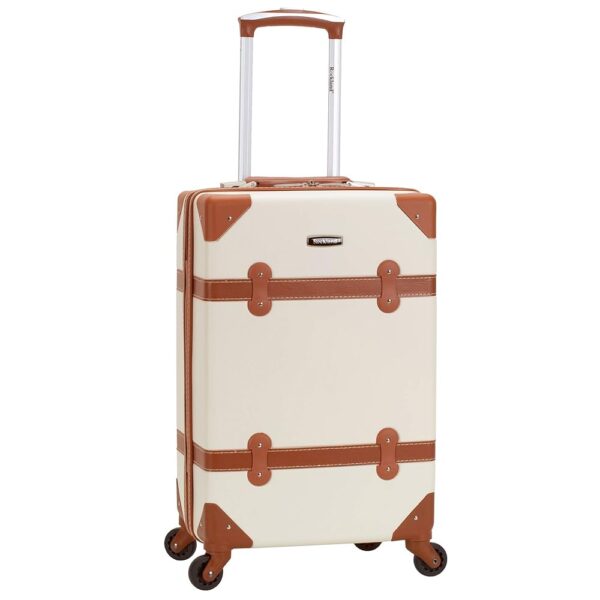
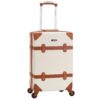
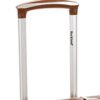
Rockland’s Stage Coach is a 20 inch rolling trunk, and trunk is the operative word. A trunk shape is squarer and flatter fronted than a conventional tapered upright, which gives you a more usable rectangle inside and a distinctly old fashioned silhouette outside. Rockland leans into that, describing it as a vintage look updated with modern features.
The buyer is someone who wants the styling and a light case at a modest outlay. At a listed 6.49 pounds with 34 liters of stated capacity, the practical numbers are reasonable for a small case. Comparable cabin sized options from the same manufacturer are on our carry-ons page, including the Rockland F145 carry-on and the Fox Luggage F1901 carry-on.
Two heights, and the one an airline measures
This listing publishes both figures, which is good practice, and it buries the important one in the description. The specification block gives 13 by 9 by 20 inches. The description gives 13 inches long by 9 inches wide by 23 inches high, and states in words that the 23 inch figure is with wheels.
What the three inch difference means
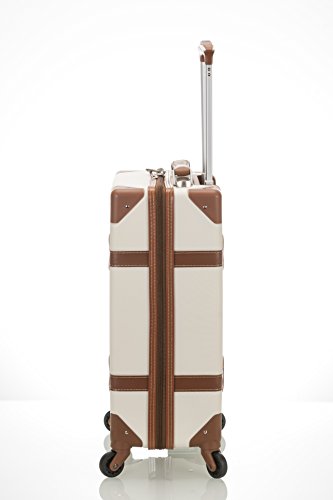
Twenty inches is the case body. Twenty three inches is the outside of the bag including the wheels and the handle housing, and that is the number a gate agent’s sizer measures. Publishing both and labeling which is which is better than most listings manage, and the labeled figure is the one that decides whether you board with it.
Now compare against the allowance most commonly cited for a United States domestic carry-on, around 22 by 14 by 9 inches. At 23 inches tall with the wheels counted, this case is an inch over on height. Width at 13 inches and depth at 9 inches are both inside. So on the maker’s own overall measurement this is over the commonly cited cabin limit on one axis, despite being sold and ranked as carry-on luggage and despite a 20 inch nominal name. Some carriers publish 23 or 24 inches of height and this case would clear those. Every airline sets its own figures, budget and regional carriers are stricter than the majors, and many international carriers enforce a cabin weight limit as well, so check the specific carrier against 23 by 13 by 9 rather than against the name. A hard shell does not compress, so there is no persuading a 22 inch sizer to take it.
Shell, corners, wheels and interior
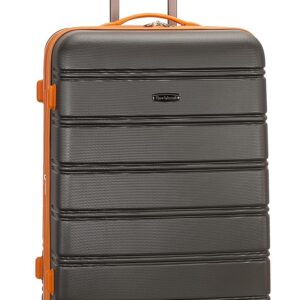
The material is named as ABS, which is a real disclosure and a fair one at this level. Rockland describes it as providing impact resistance and toughness, and the honest reading is that ABS is the cheaper of the two common hardside polymers: light, rigid, and prone to cracking at a corner rather than flexing and recovering the way polycarbonate does. It stiffens in cold as well.
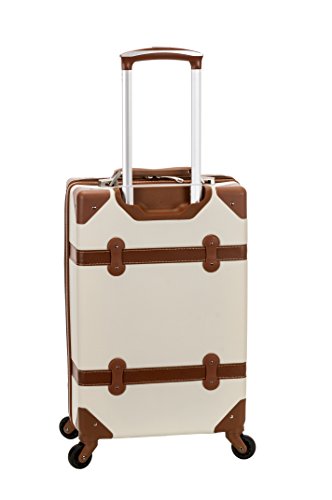
What partly answers that weakness is the one genuinely thoughtful detail on the case. The corners are wrapped in PVC for additional protection. Hard shells almost never fail in the middle of a panel; they fail at the corners, where a drop concentrates all the force into one point. A wrapped corner spreads that load and takes the abrasion. On an ABS case that is the right place to spend money, and it is more than several more expensive cases in this catalog offer.
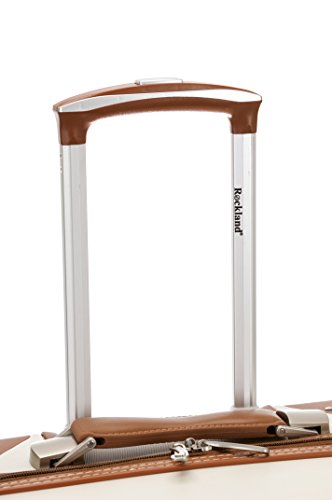
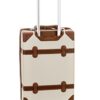
Four full rotation wheels carry it, which is a four wheel spinner arrangement. Spinners are easier on smooth terminal floors and worse on rough ground, and their exposed position on all four corners makes them the most commonly broken component on any rolling case. They are also part of why the overall height is three inches above the case body. There is a telescoping handle and a top carry handle. Inside there is a mesh zip pocket and elasticated pocket storage, with no compression strap or divider described, which on a hard shell clamshell means contents will shift more than they would in a strapped case.
Capacity, weight and the arithmetic that works
The capacity data is consistent, which is worth noting on a catalog where most listings contradict themselves. The specification fields give 34 liters twice, and the single feature bullet gives 2,052 cubic inches and 34 liters. Check the conversion: 2,052 cubic inches is 33.6 liters. Those agree.
The figure is also credible for the footprint. The bounding box of a 20 by 13 by 9 inch case body is 2,340 cubic inches, or about 38 liters, so 34 liters of usable interior implies a thin shell and efficient packing rather than a marketing number. Thirty four liters is three or four days of clothing packed sensibly.
The weight is consistent too: 6.49 pounds in the specification block, 2.95 kilograms in an attribute field, which is 6.5 pounds, and 6.5 pounds again in the description. That is a genuinely light case for a hardside at this size, and it is the strongest practical number on the page. On a carrier that weighs cabin baggage, and several international and budget carriers set the entire cabin allowance at fifteen or twenty pounds, a light empty case leaves you more to pack. For comparison the Pelican ATX carry on weighs more than twice this, and the Hanke 20 inch carry on sits between the two with a named polycarbonate shell. The wider cabin range is on our carry-on luggage page.
What is missing from the record
No lock of any kind is mentioned. There is no TSA accepted combination lock and no padlock loop described, so the zippers ship unsecured and you will be adding your own if you want them closed. It is worth restating that a TSA accepted padlock opens to a universal key held by screeners, so it deters an opportunistic hand rather than securing valuables.
No warranty term is published either. There is no lifetime claim, no limited period, no defect coverage statement and no airline damage provision. On a case with four spinner wheels and a telescoping handle, the two components most likely to fail, that absence is the most significant gap on the page.
The feature bullet list is also almost empty. There is exactly one bullet on this listing and it contains nothing but the capacity figure. Everything else about the product comes from the description paragraph, which is unusual and means the structured data most buyers skim tells them almost nothing. One further identity note: the brand on the product is Rockland while the manufacturer field records Fox Luggage. Fox Luggage is the parent company behind the Rockland brand, so both are correct and the listing does not explain the relationship.
Who should buy it, who should not
Buy it if you want the trunk styling, you value a genuinely light hardside case, and PVC wrapped corners on an ABS shell is the trade you are happy to make. The capacity and weight figures are consistent and credible, and publishing the overall height with the wheels included is better disclosure than most competitors offer. Reported customer feedback is 4.0 out of 5 from 238 ratings, which is a reasonable sample, and the listing places it ranked 795th in carry-on luggage.
Skip it if your airline enforces 22 inches of height, because the maker’s own with wheels figure is 23. Skip it if you need a lock or a published warranty, since neither exists here. And be aware that the interior has pockets but no compression straps, so packed contents will move.