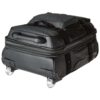
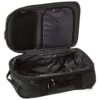
Description
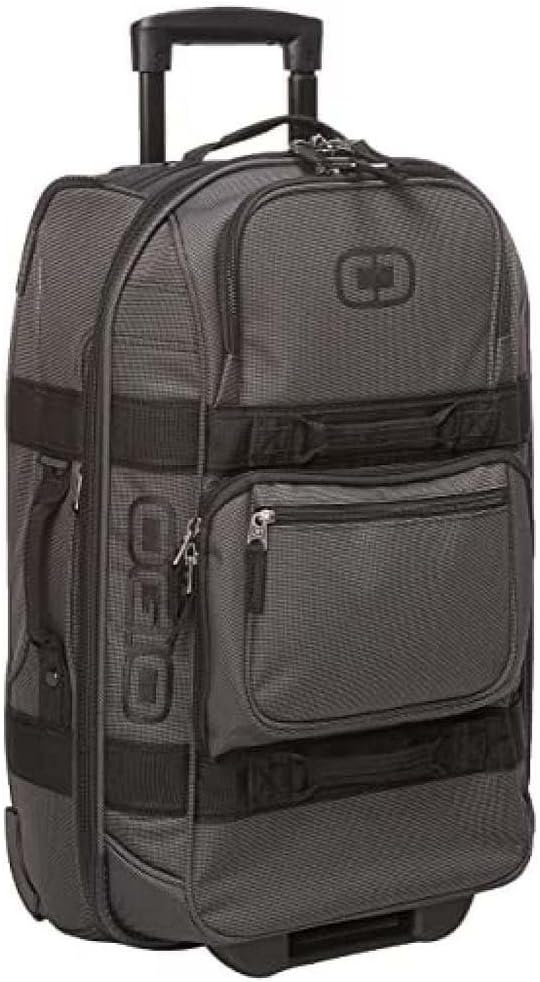
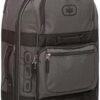
The OGIO Layover in graphite, model 108227, is a soft sided cabin case sold on organization and a large expander. Its listing opens with the phrase airline regulation carry-on size, which is a claim that needs taking apart before anything else, because there is no such thing as an airline regulation carry-on size.
The traveler and the trip this suits
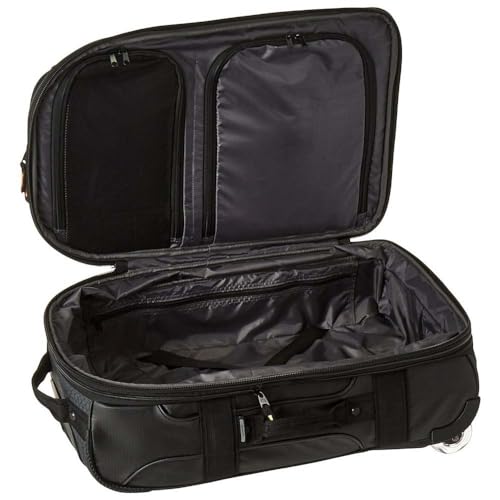
This is a three to five day cabin bag for someone who wants a wide opening and real internal organization rather than a plain cavity. The wide mouth main compartment, dual mesh compartments, side accessory pockets and compression straps together describe a bag meant to be packed deliberately and lived out of.
At 7.99 pounds empty it is mid to heavy for the class, which matters on carriers that weigh hand luggage. Readers comparing organized cabin bags should read the Samsonite Freeform carry-on, and the same maker’s wheeled gear bag is covered in the OGIO Rig 9800 review.
The size claim, and why it cannot mean what it sounds like
The first feature bullet reads airline regulation carry-on size when unexpanded. That phrasing implies a regulator somewhere sets a cabin bag size. None does.
Who actually sets the limit
In the United States the Federal Aviation Administration regulates what may be carried and how it must be stowed for safety. It does not set a carry-on size in inches. Each airline publishes its own cabin allowance as a commercial policy, which is why the commonly cited figure of roughly 22 by 14 by 9 inches is a convention rather than a rule, and why budget and regional carriers publish smaller ones. International carriers frequently add a cabin weight limit on top. So airline regulation size means the maker has built to the common convention, and that is the most it can mean. It is the maker’s claim, repeated here as the maker’s claim, and we will not write that this bag is approved by anyone.
The specification block gives Product Dimensions of 9 by 14 by 22 inches. That matches the common convention exactly on all three axes, which means there is no margin at all. It also does not say whether the figure includes the wheels and the retracted handle, and on a case sized exactly to a limit that omission is the whole question. A castor that sits proud, a packed soft bag that bulges, or a gate agent with a tight sizer are each enough to make an exact fit fail.
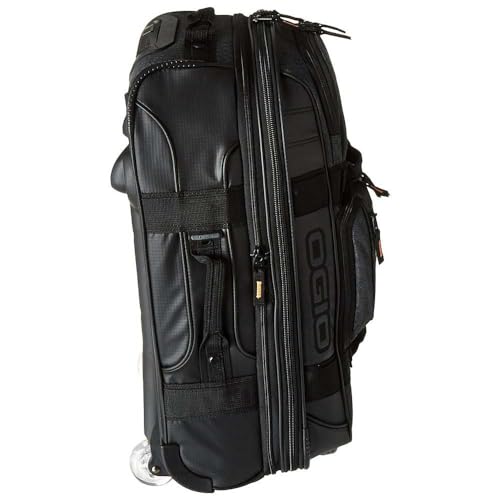
The expander is the bigger issue. This case has a 3 inch expansion zipper, which is unusually large. Used, it takes the depth from 9 inches to 12, which is a third over the common allowance and outside any cabin rule anywhere. The maker is careful to say the size claim applies when unexpanded, and that qualification is doing a great deal of work. An expanded Layover is a checked bag.
Capacity, and what the number describes
Capacity is published as 46 liters in one field and 2,800 cubic inches in another. Those convert to each other correctly, 2,800 cubic inches being about 45.9 liters, so the listing is internally consistent.
The cross check is less flattering. The outer envelope of 22 by 14 by 9 inches is 2,772 cubic inches, or about 45.4 liters. The published capacity is marginally larger than the entire outside of the bag. That tells you the figure is a geometric calculation from the exterior dimensions rather than a measured interior, so real usable volume will be less once the lining, the handle channels and the wheel housings are subtracted. On a soft bag that gap is smaller than on a hard case, but it is not zero and it is certainly not negative.
The material the listing never names
Nowhere does this listing say what the bag is made of. Not a fiber, not a denier, not a weave, not a coating. The compression straps and expansion zipper imply a soft sided construction and nothing states it.
That is the most serious gap here. On soft luggage the fabric weight determines whether a bag lasts five years or five trips, and abrasion at the bottom corners is the failure that arrives first. A listing that describes the chassis as heavy duty without naming a single fabric specification is describing an impression rather than a product.
Wheels, handle and organization
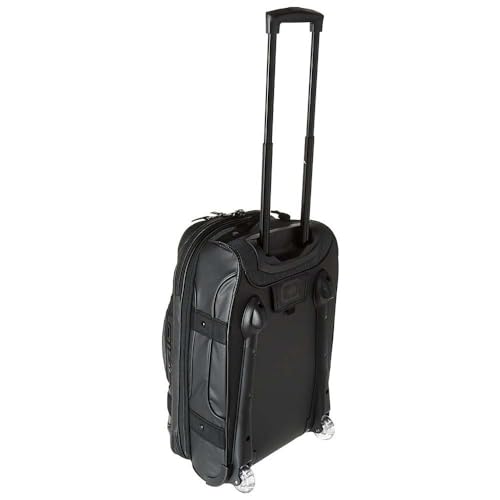
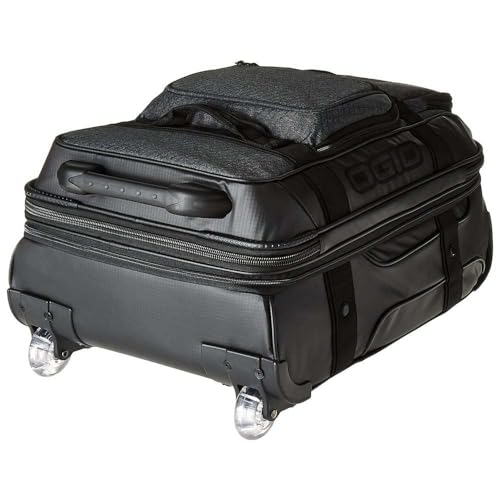
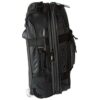
The wheels are described as smooth ride urethane wheels on a heavy duty chassis, with no count, diameter or type published. Urethane is the softer wheel material, which is where quiet rolling comes from, and softer wheels wear faster on rough surfaces than harder ones. Whether these are two in line wheels or four spinner castors is not stated, and that is a fundamental difference in how the bag behaves: in line wheels recess into the body and handle rough ground, spinners let the bag be pushed upright and add to the measured depth.
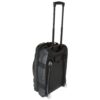
The handle is a telescoping pull handle with no stage count, extended height or material published.
Organization is where the listing is strongest. A wide mouth main compartment means the bag opens properly rather than through a slot, which matters on a soft case with no rigid lid. Dual internal mesh zippered compartments keep the contents visible and separated, internal side accessory pockets take the small items that otherwise migrate to the bottom, and compression straps hold the load still so it does not consolidate into a lump. Buyers comparing at this level should read the Travelpro Bold Rollaboard and the Kenneth Cole Reaction Renegade carry-on.
Warranty, a brand oddity and the demand picture
No warranty term is published anywhere in this listing. No period, no scope, no exclusions. Where luggage warranties are published, lifetime and limited lifetime terms commonly exclude damage caused by airline handling.
One data point worth flagging: the Manufacturer field reads Callaway Golf while the product is branded OGIO. Callaway owns OGIO, so this is a corporate parent appearing where a brand name belongs rather than a mismatch to worry about, and it explains why this product’s URL on this site carries the Callaway name.
The listing shows a 4.6 star average across 269 ratings and ranks 321st in Carry-On Luggage and 249,388th in Clothing, Shoes and Jewelry. Country of origin is China. The contents field reads simply Product, which is a placeholder rather than a contents list. More cabin options sit across the carry-ons category and the carry-on luggage category.
Who should buy it, and who should not
Buy it if you want a well organized soft cabin bag with a wide opening, mesh compartments and compression straps, you value a large expander for the return leg, and you fly carriers that are relaxed about a bag sitting exactly on the common figure.
Skip it if you need dimensional margin at a strict gate, because at 22 by 14 by 9 inches there is none. Skip it too if you want to know what the bag is made of, how many wheels it has, or what the warranty covers, because none of the three is published.