




Description
Who this BAGSMART expandable carry on suits
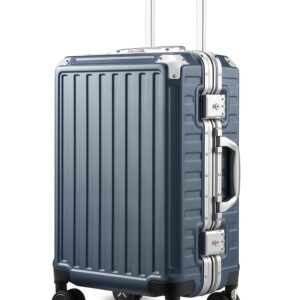
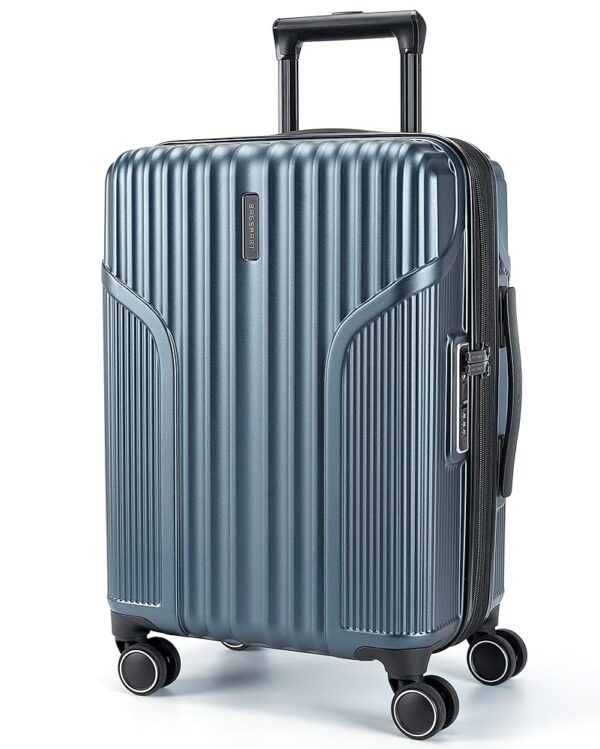
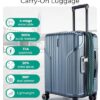
This is a polycarbonate cabin case with a TSA lock, an aluminum handle, TPE surfaced spinner casters and an unusually large expansion. The buyer is the traveler who packs light going out and heavy coming back, and who wants a rigid shell with a stated multi year term behind it without paying branded prices.
The trip is three to five nights closed, or a return leg with room for what you bought. Within the same brand the BAGSMART hardside carry on is the non expandable sibling and the BAGSMART 16 inch underseat carry on is the personal item companion.
Dimensions, and a bullet that argues with itself
The first feature bullet publishes overall dimensions of 21.5 by 14 by 9.3 inches and states explicitly that the figure includes the wheels and handle. The specification block gives the same three numbers. Two sources agreeing, with a wheels included note attached, is about as good as source data gets in this catalog.
The three tenths of an inch
The same bullet also leads with the phrase 22x14x9 airline approved, and the product name repeats it. Set that against the maker’s own figure of 9.3 inches deep. Nine point three is more than nine. The listing states a compliance claim and, in the same sentence, publishes a number that contradicts it on the depth axis.
Height and width are fine: 21.5 inches is inside 22 with half an inch to spare, and 14 inches is exactly at the commonly cited width. The depth is the problem, and on a rigid polycarbonate shell three tenths of an inch does not compress away the way it would on a soft bag.
We will not write that this case is airline approved, because no airline certifies luggage and because the listing’s own numbers do not support its own claim. Check the allowance published by the carrier and fare you booked, note that budget and regional carriers are frequently stricter than the majors and that many international carriers add a cabin weight limit, and measure the case on arrival.
The expansion, and why its direction matters
This is the most interesting and the most consequential feature on the case, and it deserves its own section because the listing describes it precisely.
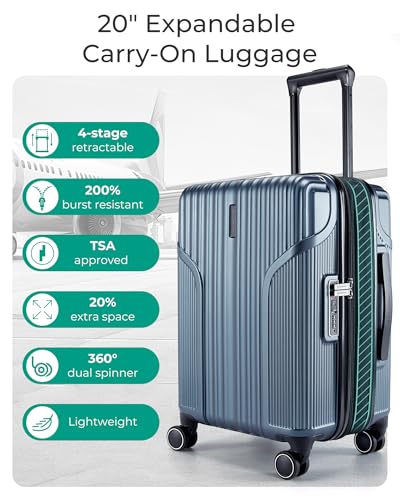
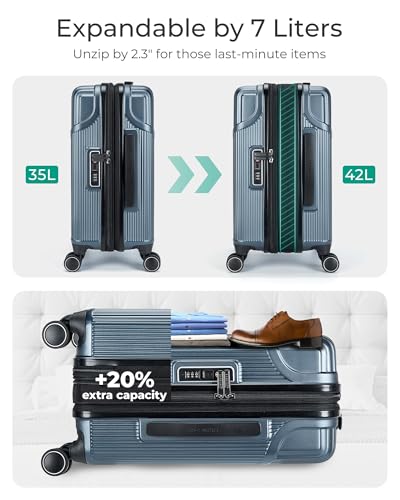
The expansion adds 20 percent, taking capacity from 35 liters to 42 liters, and the maker states that it works by a width extension of 2.3 inches. That is a significant departure from the category norm. Almost every expandable case in this catalog grows on the depth axis, which is the dimension most likely to be over already. This one grows on the width.
The practical arithmetic: a case published at 14 inches wide becomes roughly 16.3 inches wide when expanded. Against a commonly cited 14 inch width limit, that is more than two inches over, and it will not go into a sizer of any kind. Expanded, this is emphatically a hold bag.
Whether that is better or worse than a depth expansion depends on your route. A depth expansion of 1.5 to 2 inches often keeps a case borderline; a 2.3 inch width expansion does not. On the other hand, growing on the width means the case does not become awkwardly deep and tip prone, and the extra volume is genuinely usable rather than a bulge. Treat the expansion as a one way trip: use it on the return leg only, and only where a checked bag is acceptable.
Shell, wheels, handle and lock
The shell is 100 percent polycarbonate, named plainly, with a scratch resistant finish. Naming the polymer is the disclosure that matters: polycarbonate flexes under an impact and returns to shape where ABS stars and cracks at a corner, and it sheds water where fabric absorbs it. The scratch resistant treatment addresses the universal cosmetic failure of hard shells, which is that a bare gloss shell picks up visible marks on its first trip.
The wheels are 360 degree spinner casters with a TPE surface, and naming the tread material is a rare and useful disclosure. TPE is a thermoplastic elastomer, which is softer than a hard nylon wheel: it grips better, runs quieter and absorbs some vibration, at the cost of wearing faster on abrasive surfaces. The general spinner trade still applies. Casters roll sideways easily on smooth terminal floors, catch and tip on curbs and cobblestone, and are the most common failure point on any wheeled case.
The zipper is described as explosion proof, meaning built to resist bursting under a full load. On a case with a 20 percent expansion, the zipper is exactly where a full bag fails, so the attention is well aimed. No coil type or brand is named. It remains a zipper, and a coil zipper can be split with a ballpoint pen and closed again by running the sliders across the split.
A TSA approved lock is fitted. That means a screener can open the case with a master key rather than cutting it. It is not security: those master keys have circulated widely for years, and the lock sits on a zipper that can be bypassed without touching it. Keep passports, cash and electronics on your person.
The handle is an aluminum telescopic design, height adjustable, with no stop count or extended heights published. The interior is a main compartment with cross straps, a U shaped full zipper for the divided half, a large mesh pocket and a small pocket.
Capacity, weight and the review base
The capacity figures are unusually well documented: 35 liters closed and 42 liters expanded, with the 7 litre difference explained by the 2.3 inch width extension. Run the closed figure against the exterior envelope of 21.5 by 14 by 9.3 inches, roughly 2,799 cubic inches or about 45.9 liters, and 35 usable liters after the shell walls, the handle channel and the internal wheel wells is credible. Both numbers survive a check, which several higher priced cases in this batch do not manage.
Weight is 6.72 pounds in one field and 6.7 in another, which is a rounding. Just under seven pounds is mid pack for a polycarbonate case with a lock, an aluminum handle and an expansion mechanism. On United States domestic routes cabin bags are not weighed. On budget European and many Asian carriers, where the allowance is 7 or 8 kilograms and enforced at check in, seven empty pounds takes roughly half of it before you pack.
The review base is the weak point: 4.6 from 39 ratings with a rank of 117th in its Amazon carry on luggage category. Thirty nine ratings is a very small pool. A high average across that few buyers tells you the first thirty nine were pleased, not that the TPE tread or the expansion zipper survive two years. If you need confidence about longevity, the same brand’s non expandable case has a larger base, or wait for this one to grow.
Warranty and the alternatives
BAGSMART states a five year manufacturer protection on this listing. That is the longest stated term from this brand in this catalog, and it is worth flagging that a sibling BAGSMART listing publishes only two years. So the coverage is described inconsistently across the range. Ask the seller to confirm which applies to the exact case you order, in writing.
What the five year statement does not do is describe what is covered beyond quality issues, and it says nothing about airline handling damage. That is the standard exclusion across luggage warranties and it is the one that matters, because handling damage is how cases actually break. Read the document rather than the bullet, and expect a manufacturing defect remedy rather than damage cover. The listing also says the case undergoes rigorous testing to withstand any journey, with no test, standard or result published.
For a polycarbonate case at a similar price with a wheels included measurement and a much larger review base, the KROSER hardside carry on is the comparison. The wider field is in our carry-on luggage and suitcases sections.
Who should buy it and who should not
Buy it if you want a named polycarbonate shell with a genuinely documented expansion, a TPE tread and a stated five year term, and you accept three tenths of an inch over on depth. The dimension honesty and the capacity breakdown are the best in this batch. Skip it if your carrier uses a hard sizer, because a rigid shell at 9.3 inches has no give, and skip it if you need a large body of durability reports, because there are 39 of them. Never expand this case on a leg where it has to clear a sizer: it grows on the width, by 2.3 inches.