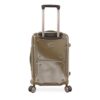
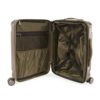
Description
The traveler this ARMOR case is aimed at
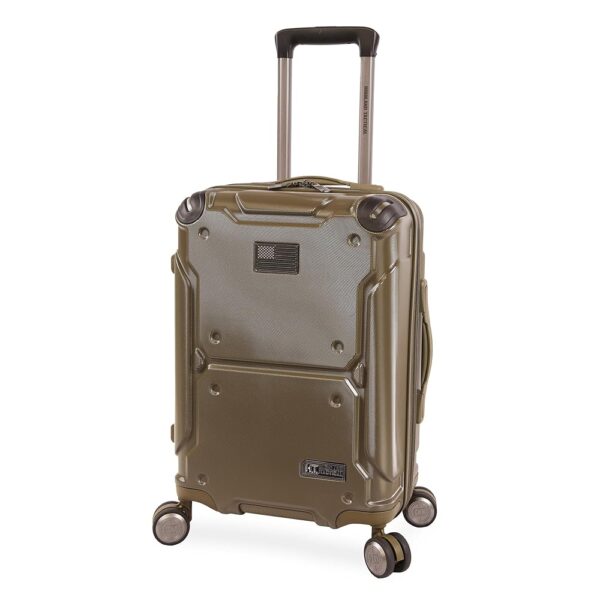
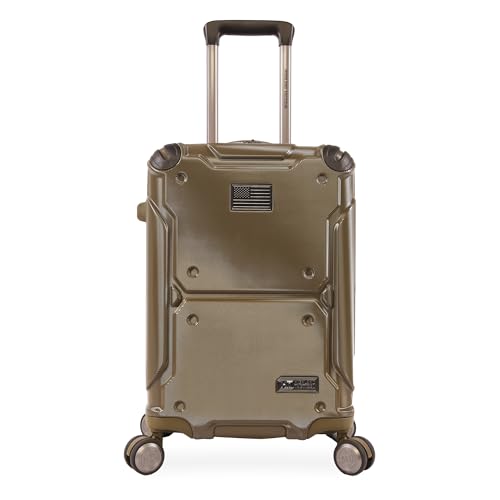
Highland Tactical’s ARMOR line is styled after tactical gear and sold as a hardside cabin case at 21 inches. The pitch is toughness: a shell the maker calls super ABS, an inner lining for extra protection, and an eight wheel spinner arrangement. The buyer is someone who wants the look and expects the bag to take punishment, and the specification is worth reading on its merits rather than on the styling.
At a listed 8.38 pounds empty, this is a heavy cabin case. That is the first thing to weigh. Comparable 20 and 21 inch hardside options sit on our carry-ons page, and the Hanke 20 inch carry on covers the same job at 6.8 pounds with more published data behind it.
Dimensions, and the two questions the listing leaves open
The specification block gives 9.5 by 14 by 21 inches. The product name calls it a 21 inch case, and 21 appears in the dimension set, which is the first thing to notice. On most luggage the nominal name refers to the case body and the published overall figure is one to two inches larger because it includes the wheels and the handle housing. Here they are the same number.
Are the wheels in the figure or not
That means one of two things. Either the published set is the case body and the real overall height with eight spinner wheels underneath it is closer to 22 or 23 inches, or Highland Tactical is publishing an overall figure and calling a case with a 19 inch body a 21 inch case, which would be unusual. The listing does not say, and on a cabin bag that is the question that decides whether you get on the plane with it.
Now compare against the allowance most commonly cited for a United States domestic carry-on, around 22 by 14 by 9 inches. The published width of 14 inches is exactly at the limit with no margin. The published depth of 9.5 inches is half an inch over. The published height of 21 inches has an inch in hand if it includes the wheels and no margin at all if it does not. That is a case sitting on or over the line on two of three axes before the undisclosed wheel height is even considered. Every airline sets its own figures, budget and regional carriers are stricter, and many international carriers enforce a cabin weight limit as well, so check yours. On these published numbers this is not a case you should assume will clear a sizer.
Then the expansion. Highland Tactical says the case is expandable and offers 25 percent additional capacity. Expansion on a hardside case adds depth, and this case is already at 9.5 inches. Using the expansion takes it well past any cabin allowance. State the rule plainly: expanded, this is not a carry-on. Use the expansion for a checked leg or for the drive home.
Shell, wheels and handles
The material is described as durable super ABS hardshell technology. Super ABS is a marketing term rather than a polymer specification, and the underlying material is ABS. That matters, because ABS is the cheaper of the two common hardside plastics: light, rigid, good value, and prone to cracking at a corner rather than flexing and recovering the way polycarbonate does. The listing also names an inner lining for additional protection without describing it. For a bag sold on toughness, naming ABS and then dressing it as super ABS is worth reading plainly.
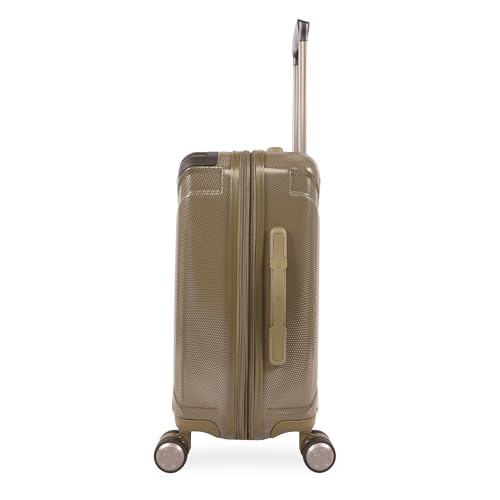
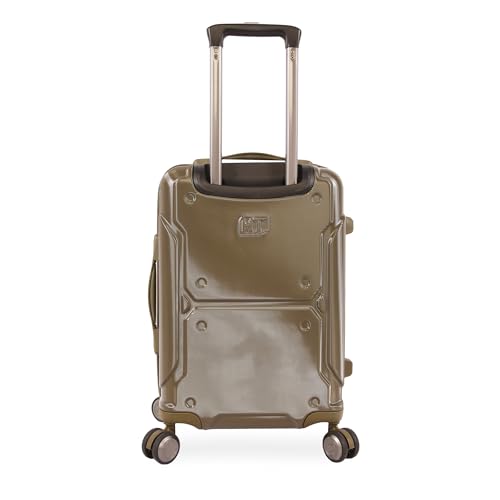
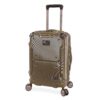
The wheel arrangement is the most interesting specification here: eight wheels in a 360 degree spinner configuration, meaning four housings each carrying a double wheel. Double wheels roll more smoothly under load, spread wear across two contact patches, and are noticeably more stable when a heavy case is pushed upright. That is a genuine upgrade over the single spinner wheels fitted to most cases in this price bracket. The usual caveats still apply: spinner wheels sit outside the shell, they add to the measured depth, and they remain the most commonly broken component on any rolling case. Eight wheels also means eight things to break rather than four, though each carries less load.
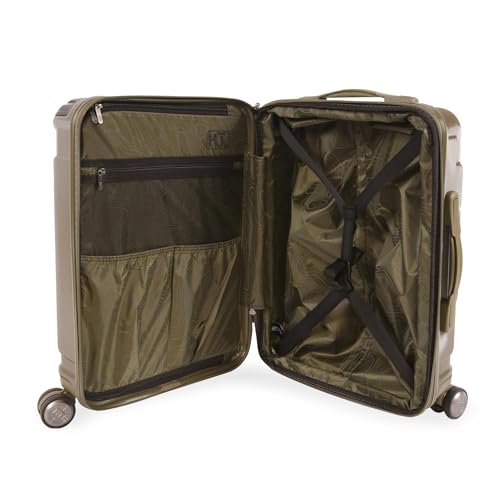
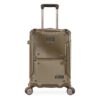
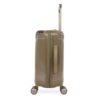
Handles are named at the top, the side and the bottom. A bottom handle on a cabin case is more useful than it sounds, because lifting a loaded case into a high overhead bin needs a low grip point. Interior organization is described only as multiple interior compartments, with no detail on straps, dividers or pockets. There is no mention of a lock of any kind, so if you want the zippers secured you will be adding your own, and a TSA accepted padlock opens to a universal key held by screeners and deters an opportunistic hand rather than securing valuables.
Capacity, weight and what it costs you
Capacity is published as 35 liters. For a case with a bounding box of 21 by 14 by 9.5 inches, about 2,793 cubic inches or roughly 45.8 liters, a usable interior of 35 liters is a credible figure rather than a marketing one, and it implies a reasonably thick shell. That fits with the weight.
The weight is the real cost. At 8.38 pounds, or 3.81 kilograms, this case is one and a half to two pounds heavier than most 20 and 21 inch competitors. On a domestic carrier that does not weigh cabin baggage, that costs you nothing but effort lifting it. On an international or budget carrier that sets the entire cabin allowance at fifteen or twenty pounds, more than half of it is gone before you pack a shirt. That is the single strongest argument against this case, and it is a direct consequence of the shell and the eight wheel assembly. Lighter alternatives include the Sherpani Meridian expandable hardshell at 6.5 pounds and the LUGGEX zipperless carry-on, with the wider field on our carry-on luggage page. The Wrangler hardside spinner carry-on is the closest comparison on styling.
Warranty and the state of the record
No warranty term is published anywhere in this listing. There is no lifetime claim, no limited period, no defect coverage statement and no airline damage provision. On a case sold on durability, and with eight wheel assemblies to go wrong, that absence is the most significant thing missing from the page.
The feedback record is also empty. There is no customer rating and no ratings count, and the listing places it ranked 856th in carry-on luggage, which is a low position in a very large category. Country of origin is given as Thailand, which is a slightly unusual and more reassuring manufacturing origin than the default for this price bracket. With no reviews at all, there is nothing independent to test the toughness claim against, and the only interior description on the page is the phrase multiple interior compartments.
Who should buy it, who should not
Buy it if the tactical styling is what you want, the eight wheel double spinner arrangement appeals, and you fly carriers that do not weigh cabin baggage. Double wheels and a bottom carry handle are real advantages, and 35 liters is a credible usable capacity for the footprint.
Skip it if empty weight matters, because 8.38 pounds is a lot for a cabin case. Skip it if your airline enforces 22 by 14 by 9 strictly, since the published depth is already half an inch over and the wheel height is undisclosed. Skip it if you plan to use the expansion and still board with it, because 25 percent more capacity means more depth on a case that has none to give. And note that super ABS is ABS, not polycarbonate, whatever the wording suggests.