

Description
The traveler this LUGGEX case is aimed at
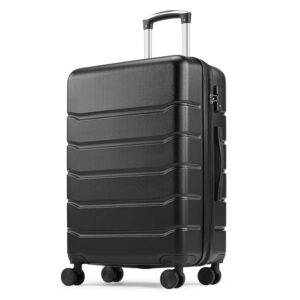
The LUGGEX 8010EX is a polycarbonate hard shell in the 20 inch class with aluminum corner protectors and a 15 percent expansion. That combination points at a specific buyer: someone who checks a bag occasionally, who has broken a shell corner before, and who wants to come home heavier than they left. Aluminum corner guards are not a common feature at this price and they address the exact place hard shells fail first.
The trip is three to six nights, or shorter if you are packing bulk. Seven pounds empty and a stated 34.6 liters of capacity define the envelope. It is not a bag for the traveler who needs to be under a tight cabin weight limit, and as the next section explains, it is not a bag to buy on the assumption that it will always clear a sizer.
Dimensions, and a product name that contradicts the bullets
The product name leads with 22x14x9 and the words airline approved. The first feature bullet gives the actual size as 22 by 14.2 by 9.4 inches, and to LUGGEX’s credit states explicitly that this figure includes the spinner wheels, the handle and the accessories. The specification block rounds the same case to 14 by 9 by 22 inches.
The half inch that matters
Those numbers do not say the same thing. The size guideline most often cited for United States domestic cabin baggage is roughly 22 by 14 by 9 inches. The bullet says this case is 14.2 inches wide and 9.4 inches deep. That is over the commonly quoted width and over the commonly quoted depth, by small margins that a soft bag would absorb and a rigid shell cannot. A hard shell does not compress into a sizer. If the box is 14 by 9 inches at the opening and the case is 14.2 by 9.4, the case does not go in.
So the 22x14x9 in the product name is the rule being quoted, not the case being measured, and the specification block has rounded the real figures down to match the rule. We are not writing that this case is airline approved and no maker can grant that status. LUGGEX’s own wording is that the case is designed to meet airline registration size standards and that you can say goodbye to check in fees. That is a claim and a promise, and neither survives contact with a strict sizer at 14.2 by 9.4 inches.
The expansion makes it worse. Fifteen percent more space comes from a zipper that increases the depth, so an expanded case is further outside the guideline than a closed one. Expand it only on legs where checking the bag is acceptable. Check the allowance published by the airline you booked, and measure the case yourself on arrival.
Shell, corners, zippers and wheels
The shell is polycarbonate, named as such, which is the disclosure that separates this from the many cases that say only hardside. Polycarbonate flexes under an impact and returns to shape rather than cracking the way ABS does at a corner. It scuffs readily, which is cosmetic, and it can still crack under a hard enough hit, which is why the corner protectors matter.
Those protectors are the standout feature. Four all aluminum corner guards take the impact at the four points where a case lands when it falls off a belt. LUGGEX frames this as protection during violent transportation, which is unusually blunt language and also accurate about what happens to checked bags. On the same shell platform the brand also sells an aluminum framed zipperless version, reviewed as the LUGGEX zipperless carry on, which trades the expansion for a rigid frame.
This case keeps its zipper and uses a double layer design that LUGGEX says prevents bursting. A double layer zipper is a genuine improvement over a single coil track on an expandable case, because the expansion zipper is exactly where a full case fails. It remains a coil zipper, which means it can be split with a ballpoint pen and re zipped, so treat any lock on it as a deterrent rather than security.
The wheels are described only as spinner wheels. No count, no bearing type, no material. That is a gap on a case whose own dimension bullet says the wheels are inside the measured envelope. Spinner casters roll sideways easily on smooth terminal floors and poorly on curbs and rough ground, and they are the most common failure point on any wheeled case.
Capacity, weight and the figures that disagree
Two capacity figures appear. The bullet says 34.6 liters. The specification block says 35 liters. That gap is trivial and clearly a rounding, unlike the dimension gap above. Thirty five liters is modest for a case measuring 22 by 14.2 by 9.4 inches, which works out to roughly 2,940 cubic inches or about 48 liters of total envelope, but a hard shell with a fitted lining, a handle channel and internal wheel wells loses a large share of its envelope, so the figure is credible.
Seven and a tenth pounds empty is on the heavy side for a 20 inch polycarbonate case. The aluminum corner guards and the expansion hardware are where that weight goes, and it is a fair trade if durability is why you are buying. It is a poor trade if you fly carriers that weigh cabin baggage against a 7 or 8 kilogram allowance, where seven empty pounds is most of a third of the limit before you pack.
The listing publishes no interior dimensions, which is the figure that matters for packing cubes, and no lining material. If you need those, ask before ordering. Lighter alternatives in the same brand family are covered in the LUGGEX 20 inch carry on and the LUGGEX spinner carry on, both of which publish their own weights.
Warranty, and the wording to check
LUGGEX states a three year protection plan and a customer service response within twelve hours. Three years is longer than most of this price bracket offers and the response commitment is specific enough to hold someone to. The listing’s phrasing is loose, saying the case is claimed a three year protection plan rather than describing what the plan covers, so the term is stated and the substance is not.
What is missing is any statement about airline handling damage. That is the standard exclusion in luggage warranties, and it is the exclusion that matters most on a case sold on its corner protection, because corner damage is overwhelmingly handling damage. Ask what the three year plan covers before you rely on it, and read the document rather than the bullet.
If a shell with published, specific coverage matters more than corner armor, the branded options in our carry-on luggage section state their terms in full. If you want a similar blended shell with a large review base to research, the Coolife PC and ABS spinner is the volume seller in this bracket. Broader cabin options sit in carry-ons.
Who should buy it and who should not
Buy it if you check the bag more often than you carry it on, you want a named polycarbonate shell with aluminum corner guards, and the 15 percent expansion is worth the extra depth to you. Skip it if you need to clear a strict sizer every flight, because the maker’s own bullet puts the case at 14.2 by 9.4 inches, over the commonly cited limits on two axes before you expand it. The 22x14x9 in the product name is a rule, not a measurement.