

Description
The traveler this cabin case is aimed at
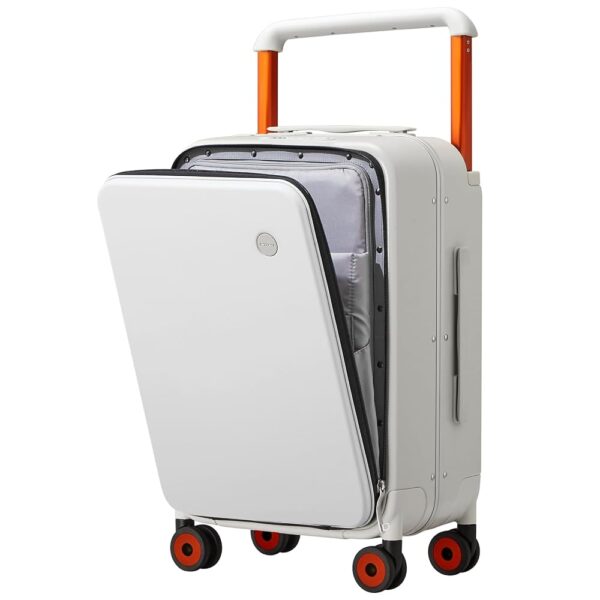
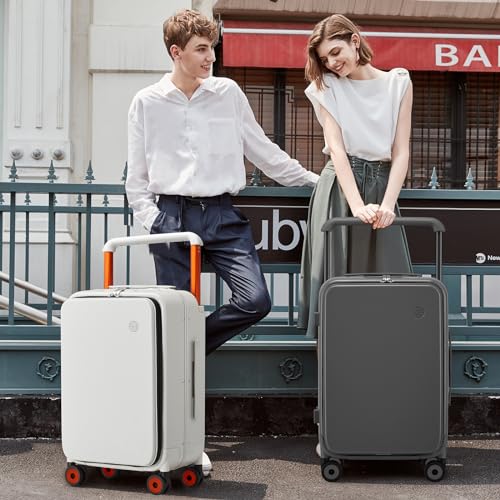
Mixi’s 20 inch case is built around an aluminum frame rather than a zipper closure on the main opening, paired with a polycarbonate shell. Frame construction is the reason to look at it: an aluminum framed case closes on latches, which removes the coil zipper that is the weakest point of most hard luggage and the component most likely to burst when a case is overpacked.
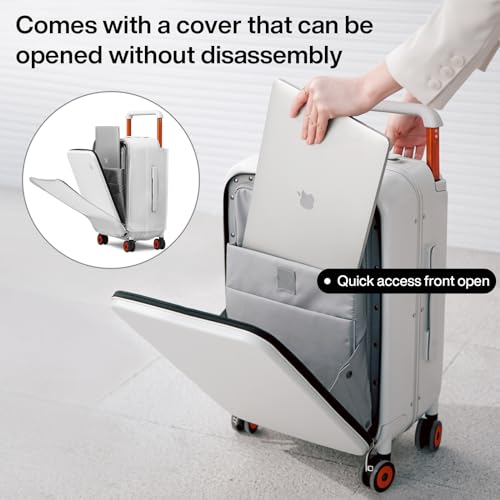
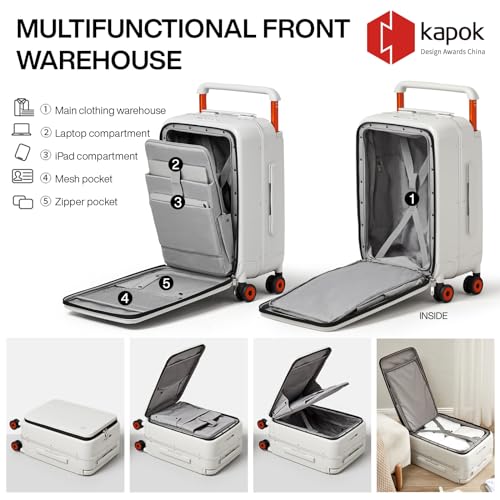
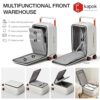
The second feature is a quick access front pocket with a shockproof pad, sized for a 15.6 inch laptop. A front pocket on a framed case is unusual, because the frame runs around the main opening and a second access point has to be engineered around it. That makes this a work travel case rather than a holiday one. Comparable cabin cases are on our carry-ons page.
Dimensions, and the axis that is over
The specification block gives 13.8 by 9.45 by 21.65 inches. The product name calls it a 20 inch case, which is the case body by the usual nominal convention, and 21.65 inches is that body plus the wheels and handle housing. The listing does not say so explicitly, and the roughly two inch gap between 20 and 21.65 is consistent with a wheel and handle allowance.
How it lands against a cabin allowance
The allowance most commonly cited for a United States domestic carry-on is around 22 by 14 by 9 inches. This case is 21.65 inches tall, which clears 22 with a third of an inch to spare, 13.8 inches wide, which clears 14 with two tenths, and 9.45 inches deep, which is just under half an inch over the 9 inch limit.
So on the maker’s own figures the case is over a common cabin allowance on one axis and has almost no margin on the other two. A hard shell does not compress and a framed case has even less give than a zippered one, so there is no persuading a 22 by 14 by 9 sizer to take it. Some carriers publish 9.5 or 10 inches of depth and this case would clear those. Every airline sets its own figures, budget and regional carriers are stricter than the majors, and many international carriers enforce a cabin weight limit as well, which matters here because this case is heavy. Check your specific carrier against 21.65 by 13.8 by 9.45 rather than against the 20 inch name.
Capacity is published as 40 liters in two agreeing fields. Against a bounding box of about 2,823 cubic inches, or roughly 46 liters, a usable interior of 40 liters is credible for a framed hardside rather than a marketing figure. No expansion is described, which on a framed case is expected, since a frame and an expansion panel do not combine.
Frame, shell, zipper and lock
The frame is described as third generation aluminum and the shell as high quality PC, meaning polycarbonate. Both are real disclosures. Polycarbonate flexes under impact and returns to shape where ABS cracks at a corner, and aluminum dents rather than snapping, so the two materials fail gracefully in different ways. The combination is why the case weighs what it does.
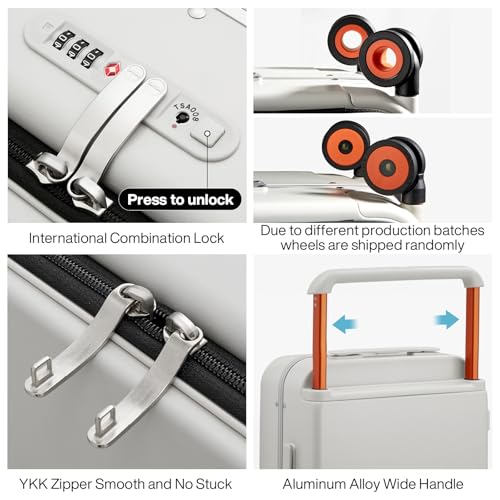
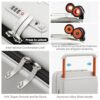
The zipper is named as YKK. On a framed case the main opening does not use a zipper at all, so the YKK reference applies to the front pocket and any internal closures, and naming the supplier is more than most listings offer. The lock is described as a TSA008 customs lock. TSA008 is one of the accepted lock codes under the Travel Sentry standard, and the practical point is the same as for any of them: it opens to a universal key held by screeners, so it deters an opportunistic hand and does not secure valuables. Mixi says it eases customs checks in most countries, which is a fair description of what the standard is for.
A protective cover is included with the case, which is a sensible inclusion because scuffing is the known weakness of a polycarbonate shell and a framed case has exposed metal edges that mark easily.
The wheels, and a disclosure worth reading twice
The wheels are described as hollow spinner wheels from a brand named as American SJ Turbo, presented as a new design that is quieter and rotates freely through 360 degrees. Naming a wheel supplier is a genuine disclosure and rarer than it should be.
Then comes the sentence that matters. Mixi states that due to different production batches there are two versions of the wheels, and that they are shipped randomly. That is unusually honest and it is also a real caveat. You do not know which wheel version you are getting, the listing does not describe the difference between them, and if a wheel fails you do not know in advance which replacement fits. On a component that is the most commonly broken part of any rolling case, that is worth knowing before ordering rather than after.
Exposed spinner wheels also contribute to the measured depth, and on a case already half an inch over a common depth limit they are part of the reason. If wheel consistency matters to you, cases that name a single wheel specification, such as the Hanke 20 inch carry on with its named TPE tread, are the safer choice.
Weight, warranty and the record
Empty weight is published as 9.26 pounds in the specification and 9.3 pounds in an attribute field, which agree. That is heavy for a cabin case, roughly two and a half pounds more than a typical polycarbonate 20 inch spinner and more than double the lightest softside cases in this catalog. The aluminum frame is where that weight goes, and it is the direct cost of removing the main zipper. On a carrier that weighs cabin baggage, and several international and budget carriers set the whole allowance at fifteen or twenty pounds, more than half of it is gone before you pack.
No warranty term is published anywhere. There is no lifetime claim, no limited period, no defect coverage statement and no airline damage provision. What the listing offers instead is a bullet describing a strict production and quality control process and asking the reader to believe in the brand, which is marketing rather than a term you can invoke. On a framed case with latch hardware and two possible wheel versions, a stated warranty would matter, and there is not one.
The specification block also has no manufacturer field at all, which is unusual. Reported customer feedback is 4.2 out of 5 from 410 ratings, which is a reasonable sample and a solid score, and the listing places it ranked 467th in carry-on luggage. Country of origin is China. For other framed and zipperless designs, the Nobl Travel D6 zipperless check in suitcase takes the same approach at a checked size, and the Briggs and Riley Sympatico is the premium comparison with a published guarantee. The wider range is on our carry-on luggage page.
Who should buy it, who should not
Buy it if you want an aluminum framed case rather than a zippered one, you value a named polycarbonate shell, a YKK zipper on the front pocket and an included cover, and the quick access laptop pocket suits how you travel. Removing the main zipper genuinely removes the most common failure point on hard luggage.
Skip it if empty weight matters, because 9.3 pounds is heavy for a cabin case and a large share of any enforced cabin allowance. Skip it if your airline enforces 9 inches of depth, since the published figure is 9.45. Skip it if you need a published warranty. And be aware that the maker states two different wheel versions ship at random, which is honest and is still a thing to know before you buy.