
Description
This is a checked bag, not a carry on
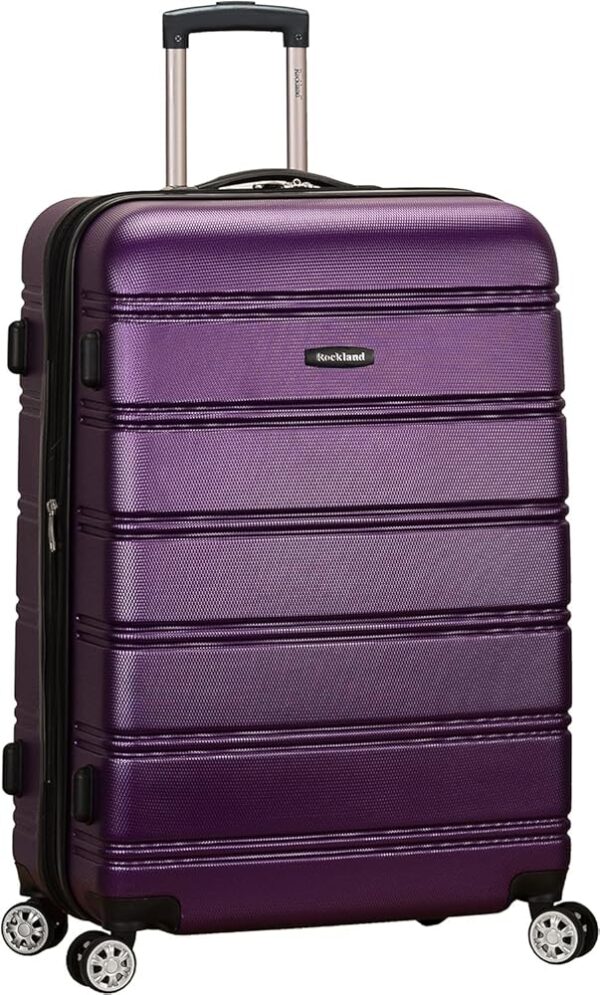
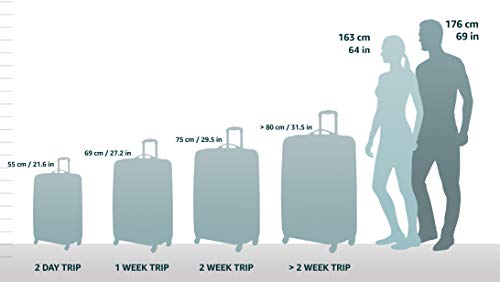
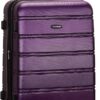
Before anything else: the Rockland Melbourne in this listing is the 24 inch checked medium size. The listing says so, the published dimensions of 24 by 15 by 10 inches say so, and no cabin allowance we are aware of accepts a 24 inch case. It appears in carry on category listings on Amazon and it sits in a carry on category on this site, and neither of those makes it a cabin bag. Buy it as a hold bag.
That settled, the traveler it suits is the one taking a week or more, checking the bag, and wanting a light hard shell that does not eat into a checked weight allowance. Rockland’s own pitch is exactly that: pack more while avoiding excess weight charges. At eight pounds empty for a 24 inch case, that pitch has some substance to it. If you want the same brand at cabin size, the Rockland London hardside carry on is the smaller sibling.
Dimensions, weight and a capacity figure that is nonsense
The specification block gives 15 by 10 by 24 inches and the description repeats 24 by 15 by 10 inches, weighing 8 pounds. Two independent parts of the listing agreeing is unusual on this catalog and worth noting. What neither says is whether the 24 inches includes the eight spinner wheels or stops at the shell. On a hard shell the casters mount outside the case, so assume the measured height is above 24 inches.
The capacity field
The specification block lists capacity as 176 cubic inches. That cannot be right. A box measuring 24 by 15 by 10 inches has a volume of 3,600 cubic inches, so 176 cubic inches would be under five percent of the case’s own envelope, roughly the size of a shoebox lid. The real usable capacity of a 24 inch expandable hard shell sits somewhere in the region of 2,500 to 3,000 cubic inches, or roughly 40 to 50 liters. We are not substituting a figure, because Rockland has not published one we can verify. We are telling you the number on the listing is not usable and that you should plan from the linear dimensions instead.
Checked baggage rules are about weight and linear total rather than a sizer box. Most United States carriers publish a 62 linear inch limit for a standard checked bag, which is length plus width plus depth. This case totals 49 inches, well inside that, so it will not attract an oversize fee on a typical domestic route. The 50 pound weight limit is the one that will catch you, and the expansion is what gets you there: eight empty pounds plus an expanded 24 inch case full of clothes gets close to 50 faster than people expect. Weigh it at home.
Shell, wheels and handle
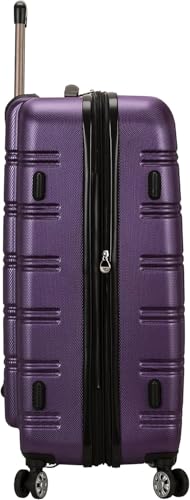
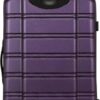
The shell is ABS, named plainly, and Rockland describes it as extremely lightweight and durable. Half of that is fair. ABS is the lightest of the common luggage polymers and it is why this case weighs eight pounds instead of eleven. It is also the most brittle. Under a hard impact ABS tends to star and crack at a corner rather than flexing and returning to shape the way polycarbonate does. On a case designed to be checked, that is the trade sitting at the center of the purchase: you are buying low weight at the cost of impact behavior. A polycarbonate checked case such as the Delsey Helium Aero checked medium weighs more and cracks less.
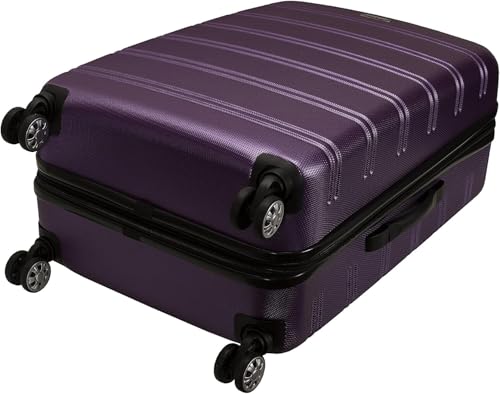
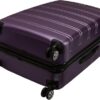
There are eight multi directional spinner wheels, meaning four dual wheel casters. On a checked case the spinner format is less important than on a cabin case, because you are rolling it across terminal floors and a parking lot rather than living with it. The exposed casters remain the most common failure point on any wheeled bag, and on a checked bag they take belt and chute impacts that a cabin bag never sees. That is worth knowing on a case whose shell is the brittle polymer.
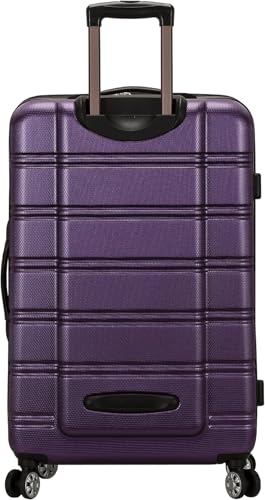
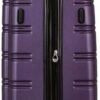
The handle is an internal chrome telescoping system with a push button release, and Rockland calls it recessed and modern. Internal routing keeps the tubes out of the packing space. No stage count or extended height is published. The interior has a mesh pocket, a zip pocket and an elastic pocket, which is a basic but adequate layout for a checked bag.
One small data oddity: the feature bullet spells the wheel type SPIINER. It is a typographical error rather than a different product, but it belongs with the capacity field in the file marked listing not carefully maintained.
The expansion, and what it costs you
The case is expandable, and on a checked bag that is a much better feature than on a cabin bag. There is no sizer to fail. What there is instead is a scale, and every inch of expansion is more weight you can add before the 50 pound line. Use the expansion knowing that a full expanded 24 inch case is heavy enough that lifting it into a car trunk is a two hand job.
The other cost of an expansion is structural. The expansion zipper is the seam a full case pushes hardest against, and it is where softside and hardside cases alike fail. Rockland does not name the zipper brand, does not describe the coil type and does not say whether it is a reverse coil. On an eight pound ABS case at this price, assume a standard coil and treat it accordingly: do not overpack against it, and do not rely on a lock on it, since a coil zipper can be split with a ballpoint pen and closed again.
Warranty, review data and the alternatives
The description states a five year warranty. That is a stated term with a stated period, which puts it ahead of most of this price bracket, and it is genuinely worth something on a checked bag that will take real abuse. What the listing does not say is what the five years covers, and in particular it says nothing about airline handling damage. That is the standard exclusion across luggage warranties and it is the one that matters on a bag that goes in the hold, because handling damage is the damage a checked bag suffers. Read the document before assuming a cracked corner off a belt is a warranty claim.
The review base is the strongest asset here: a 4.3 rating from over 4,700 ratings. That is a large enough pool to read the one and two star reports and learn how the wheels and the shell actually age, which is exactly the research to do on a checked ABS case. Note also that the brand on the product is Rockland while the manufacturer field says Fox Luggage. Those trade names appear interchangeably across this catalog rather than indicating anything wrong, but if brand provenance matters to you, be aware of it.
For alternatives, the same shell family appears in cabin size as the Rockland Pasadena carry on and the Rockland Melbourne spinner. Larger hold cases across brands are collected in our suitcases section, and cabin options in carry-on luggage.
Who should buy it and who should not
Buy it if you want a light, cheap 24 inch checked case with a stated five year term and a very large review base to research, and you accept that ABS trades impact resistance for low weight. Skip it if you were shopping for a cabin bag, because this is a 24 inch case and it will not board with you, and skip it if the contents are fragile, because a brittle shell on a checked bag is the wrong protection. Ignore the 176 cubic inch capacity field entirely.