Description
This Is a Large Checked Case, Not a Carry-On
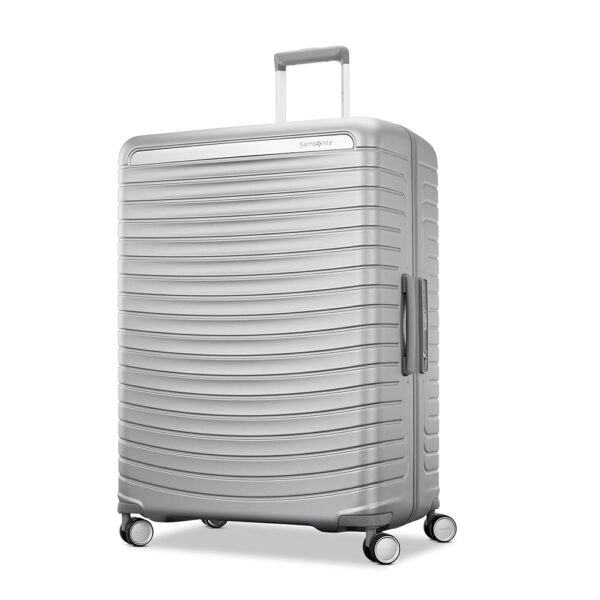
Before any of the engineering, the category needs correcting. The product name reads Framelock Max 29 inch large checked hardshell, and the specification block gives dimensions of 29 by 21 by 13 inches at 11.4 pounds. That is a large checked suitcase. It sits in the carry-ons category on this site and ranks 123rd in Carry-On Luggage on the source data, and both placements are wrong. Nothing measuring 29 inches tall goes into a cabin.
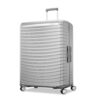
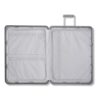
What it actually is, is Samsonite’s zipperless frame case. Instead of a coil zipper closing the two halves, an aluminum style frame clamps them shut and a single centralized slide puller, which Samsonite calls Eazylock, locks and unlocks the whole perimeter at once. That matters for one specific reason covered below. The traveler it suits is someone moving a lot on a long trip or a relocation, who checks bags routinely and wants the closure to be the strong part rather than the weak one.
The Feature Bullet That Describes a Different Suitcase
This listing carries a contradiction serious enough to lead with. The fifth feature bullet reads: compact and travel ready, carry-on friendly with exterior dimensions 21.5 inches high by 15.4 long by 8.75 wide, weight 7.32 pounds. The specification block for the same product says 29 by 21 by 13 inches at 11.4 pounds.
Those are not two readings of one object. They differ by seven and a half inches of height and four pounds of weight. The bullet is describing the carry-on model in the same Framelock Max collection and has been pasted onto the 29 inch listing unchanged. Anyone ordering on the strength of that bullet expecting a cabin bag will receive a large checked case. Go by the specification block and by the 29 inch figure in the product name.
Airline Approved, Against Sixty Three Linear Inches
The product name ends with the words airline approved. We will not repeat that claim, and on this particular case the published numbers argue against it directly.
Checked baggage on most United States carriers is limited by linear inches, meaning the three dimensions added together, with 62 linear inches the common ceiling before oversize charges apply. Add 29 plus 21 plus 13 and the total is 63 linear inches, one inch over the common limit, and that is before the wheels and handle housing are taken into account since the listing does not say whether they are included. A hard shell cannot be compressed to make up the difference.
No airline authority certifies luggage in any case. Carriers set their own limits, some publish a hard maximum above which they will not accept a bag at all, and international allowances differ again. Check your specific airline’s published linear inch limit and its oversize charge before you fly with this, and price the fee into the purchase.
The Frame, the Lock and Why Zipperless Matters
The shell is polycarbonate, which is the right material to name: it flexes under impact and returns to shape rather than shattering, which is why it survives baggage handling better than the cheaper, more brittle ABS. Its weakness is the corners, and no corner guards are described here.
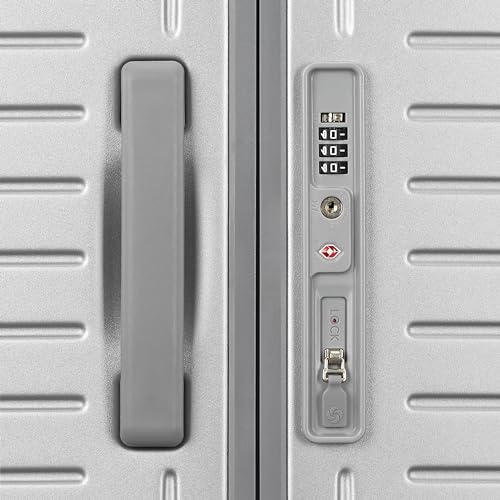
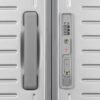
The zipperless frame is the genuine argument for this case. A standard coil zipper can be split with a ballpoint pen and then closed again by running the sliders back over the split, leaving no visible sign that a bag was opened. That is the single most common covert entry method on checked luggage, and a frame closure removes it entirely because there is no coil to separate. Samsonite describes the Eazylock mechanism as keyless TSA approved security, operated by one slide puller.
Be precise about what that buys. Removing the zipper vulnerability is real and meaningful. The lock itself is still TSA compatible, which means it opens with a universal key held by screening agents, and those keys are not confined to airport security. So the case is materially harder to enter covertly than a zippered one, and it is still not a safe. Valuables should not travel in a checked bag.
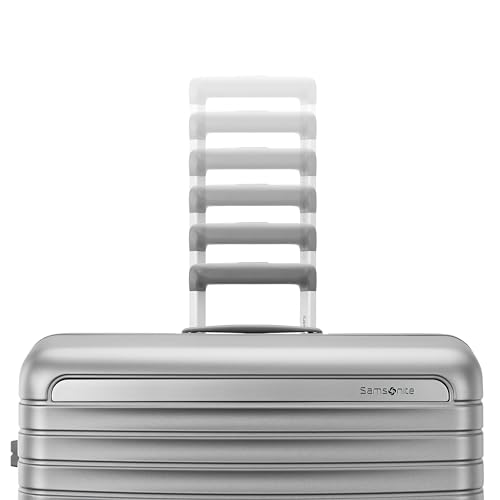
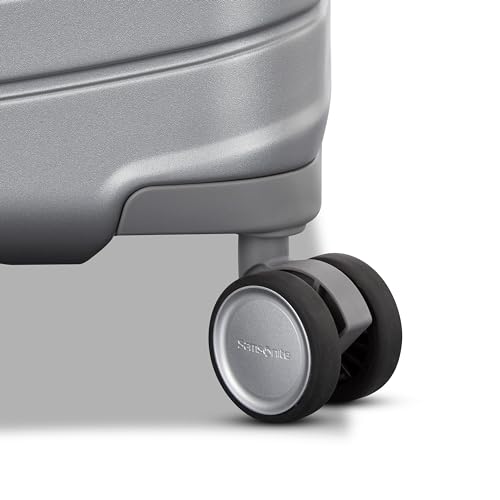
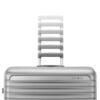
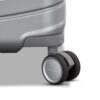
The handle is the RightHeight system with multiple one inch incremental adjustments. Naming the increment is a useful specification, because most cases offer two or three fixed stops that suit two or three heights. The wheels are 360 degree dual spinner casters, meaning paired wheels per assembly, which spread the load and reduce wobble under a heavy case. On rough ground spinners still catch where inline wheels would not, and exposed casters remain the most common failure point on any wheeled bag, which matters more on a case that will be packed to 50 pounds.
Capacity, Weight and the Fifty Pound Ceiling
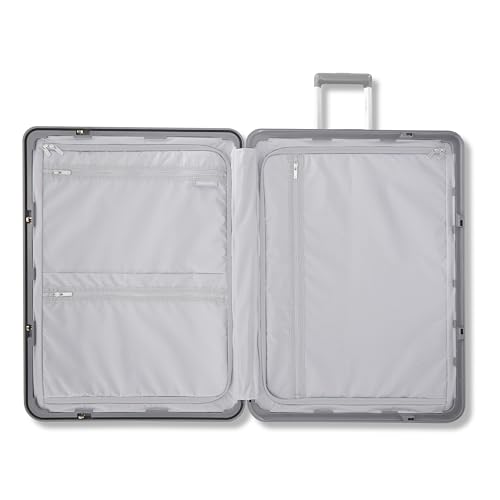
Capacity is published as 7,644 cubic inches, which works out to roughly 125 liters. That is a genuinely large case, comparable to the Traveler’s Choice Maxporter II 30 inch trunk at 106 liters. Interior organization is two zipper dividers, made with a recycled material Samsonite calls Recyclex, which lets you pack both halves independently. For a smaller frame case in the same family, see the Samsonite Centric carry-on.
Empty weight is 11.4 pounds, stated consistently in two fields. Work through what that means. Most carriers cap checked baggage at around 50 pounds before overweight charges start. Eleven and a half pounds of empty case leaves roughly 38 pounds of useful allowance, and 125 liters of volume will reach 50 pounds long before it is physically full. On a case this size, weight rather than volume is the binding constraint, and the frame construction that makes the closure strong is also what makes the case heavy. A lighter zippered alternative such as the Samsonite Centric 2 set gives up the frame to save weight.
No Warranty Published, and a Thin Rating
No warranty appears anywhere on this listing. That is worth flagging specifically, because Samsonite publishes a 10 year limited term against defects on several other listings in this catalog, and nothing carries over automatically. Do not assume a term applies because the brand states one elsewhere. Ask before buying, and read the exclusions when you do: a warranty written against defects in materials and workmanship generally will not cover airline handling damage, which is what actually breaks a checked case.
The feedback record is thin: 4.4 across 120 ratings, ranked 87,878th in Clothing, Shoes and Jewelry. For a premium priced case that is a small sample, and the category rank is against the wrong category. Country of origin is China.
Note also that Samsonite’s own description calls the collection the ultimate travel partner, which is marketing language rather than a specification and is not something we will restate. For alternatives, the Amazon Basics 26 inch hardside checked case is the budget comparison at a size well inside the linear limit, and the suitcases category holds the larger checked options.
Who Should Buy It and Who Should Not
Buy it if you check bags often, want a frame closure that removes the zipper entry problem, and value a handle adjustable in one inch increments. Do not buy it expecting a carry-on, because it is a 29 inch checked case and one feature bullet on the listing wrongly describes a different, smaller model. Do not buy it without checking your airline’s oversize policy, since 63 linear inches is over the common 62 inch line. Do not treat the TSA lock as security. And confirm the warranty terms with the seller, because none are published here.