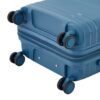
Description
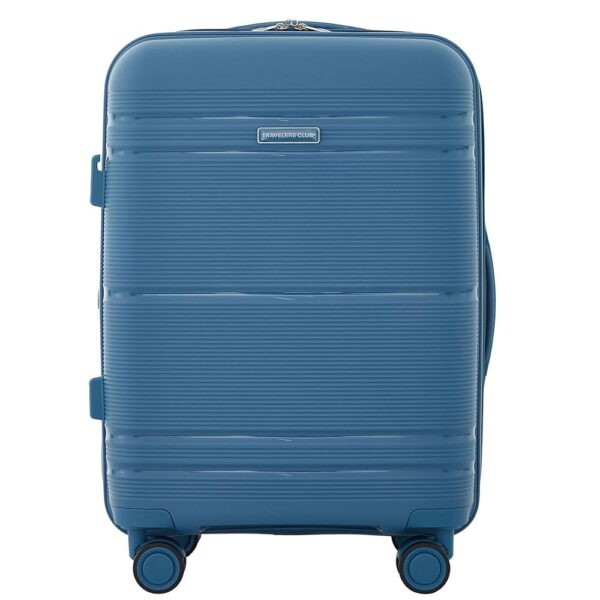
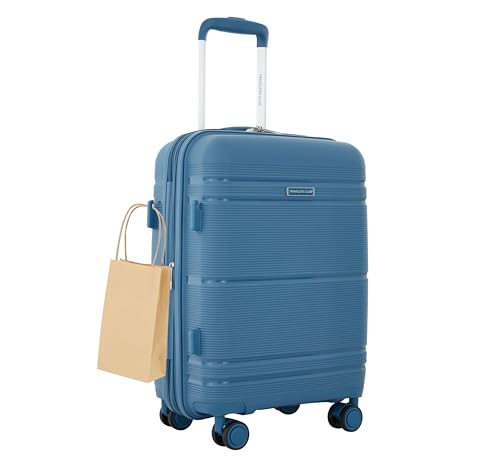
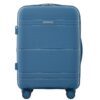
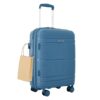
The Travelers Club Astralnaut is a 20 inch polypropylene hard shell with a recessed locking handle, compression straps and an expansion gusset. Naming the polymer is the single most useful thing this listing does, because polypropylene behaves differently from both of the materials that dominate this category. Everything else about the record is thin: no capacity, no expansion figure, no warranty, and a published width that is an inch and a half over the common cabin allowance.
The traveler and the trip
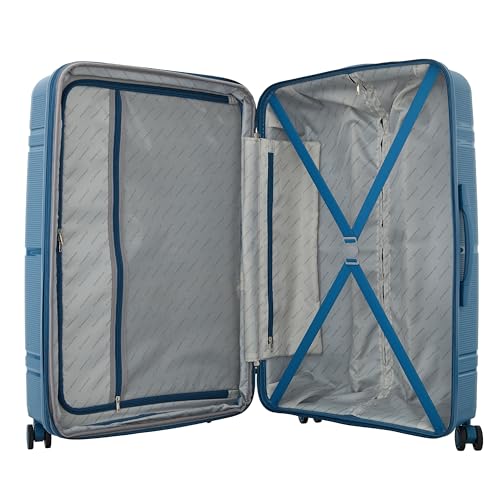
A 20 inch hard shell at just under 8 pounds is a three to four day bag for one adult. The interior is fully lined with an accessory pocket and adjustable compression straps, which points at someone who packs folded clothing and wants it to arrive flat rather than someone who needs elaborate organization.
The Bluesteel finish is doing genuine work at a carousel. It does not suit anyone whose binding constraint is weight, because just under 8 pounds is toward the heavy end for a 20 inch case, and it does not suit anyone flying carriers that measure cabin bags carefully. Lighter and better documented options sit in carry on luggage.
Dimensions, and the width problem
The attribute block gives 15.5 by 8.9 by 22 inches. Reordered, that is 22 inches on the longest side, 15.5 wide and 8.9 deep. The manufacturer bullets publish no dimensions at all, so this single figure is the whole disclosure, and it does not state whether the castors and the retracted handle are counted.
Against the common allowance
The commonly cited United States domestic carry on allowance is around 22 by 14 by 9 inches, measured with the castors on. This case matches the height exactly at 22 inches, is a tenth of an inch under on depth, and is a full inch and a half over on width. That last figure is the problem: 15.5 inches is one of the widest cabin cases in this whole batch, and a rigid shell cannot be compressed into a gauge it does not fit.
The description says the case fits within most airline carry on size standards. That is the maker’s claim, hedged with the word most, and on its own published width it is difficult to support against a 14 inch limit. We are not going to repeat it. Budget and regional carriers publish tighter allowances than the mainstream figure and enforce them with rigid gauges, and international carriers frequently add a cabin bag weight limit that a nearly 8 pound case eats into before you pack.
The case expands and no expansion figure is published anywhere, in inches or in liters. Expanding a case already an inch and a half over on width takes it further outside. Treat the gusset as a feature for a return leg you are prepared to check.
Polypropylene, and why the material matters here
The shell is named as lightweight polypropylene. That is worth dwelling on, because polypropylene is the third of the three common hard shell polymers and it behaves unlike the other two.
Polycarbonate deforms under a crush load and springs back to shape, which is why it is the premium choice. ABS is stiffer and cheaper and cracks rather than flexing, which is why it dominates the budget end. Polypropylene is the lightest of the three and it is very flexible, and its failure mode is neither of the above: it takes a permanent dent or deformation rather than cracking. A dented polypropylene case still closes, still rolls and still protects the contents. It also looks dented forever, because unlike polycarbonate it does not recover.
Whether that is a good trade depends on what you want. If you are protecting a laptop or a camera, a shell that absorbs an impact by deforming permanently has still done its job. If you care what the case looks like after five years, polycarbonate recovers and this will not. The same material appears on the Traveler’s Choice Pagosa, which is the closest direct comparison in this catalog.
At 3.61 kilograms, which is 7.96 pounds, this case is heavy for polypropylene, since the material’s main advantage is low density. Publishing a luggage weight in kilograms on a listing aimed at a United States audience is an import artifact rather than a manufacturer decision.
Wheels, handle and interior
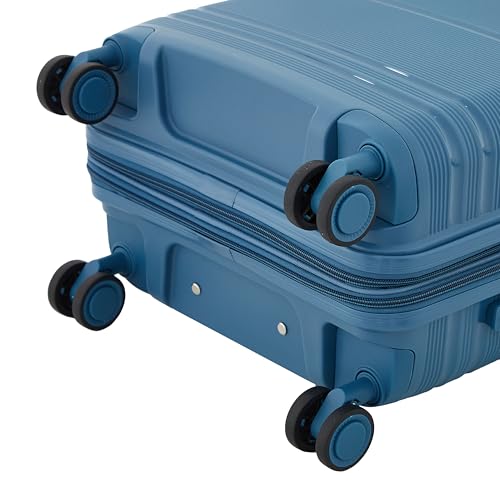
The wheels are 360 degree spinner castors. The listing does not say how many there are or whether the castors are single or dual wheeled, and dual castors roll more smoothly under a full load and are more stable on a sloped floor. The product title says spinner, so four castors is the reasonable reading. Castors remain the most common failure point on wheeled luggage, they are poor on cobble and gravel, and their exposed profile adds to whatever a gauge measures.
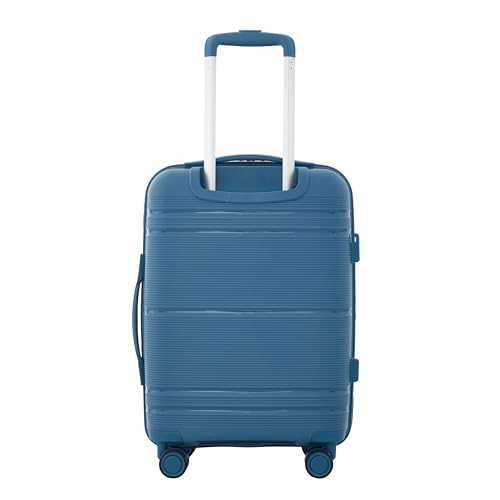
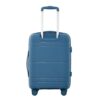
The handle is a push button recessed locking system, which is the same unit Travelers Club uses across its hardside range and appears on the Richmond spinner and the Skyline 22 inch. Recessed is the operative word and it is a genuine advantage on a hard shell, because the handle tubes sit inside the shell profile rather than proud of the back panel, which keeps the measured depth down and stops the housing taking a hit when the case is thrown onto a belt. The listing does not say how many stop heights it offers.
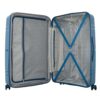
The interior is fully lined with an accessory pocket and adjustable compression straps. Compression straps reduce the height of a packed stack rather than merely holding it flat, which is a step above plain tie downs. There is no divider mentioned, so one half of the case is open when it lies flat, and there is no lock of any kind. The absence of a lock is not the failing it might sound like, since a TSA recognized lock opens to a universal screener key and secures nothing of value, but it does mean the zipper can be opened by anyone who picks the case up.
What is missing, and the warranty
No capacity figure appears anywhere, in liters or cubic inches, and no packing dimension is published either. That means you cannot compare this case against anything else in the size class on volume. Working from a bounding box of 22 by 15.5 by 8.9 inches, the enclosed volume is roughly 50 liters before shell wall, handle housing and wheel wells take their share, so something in the low forties is a reasonable expectation. That is an estimate and not a published number.
The source record for this product is one of the thinnest in the catalog, and the absence of a capacity, an expansion figure, a wheel count and a warranty term all follow from that. Get all four from the seller before ordering.
Expect airline handling damage to be excluded whatever term you are quoted, as it is across essentially this entire category. A defects warranty covers a shell deformed by a manufacturing fault, not one dented by a baggage belt. If a published warranty is what decides the purchase, the Samsonite Omni PC states ten years against defects and names its polymer, which is the standard this listing is being measured against. Other cabin cases at this size sit across carry-ons.
Who should buy it and who should not
Buy it if polypropylene is what you want, meaning a shell that dents rather than cracks and protects the contents even after it has taken a hit, and you value a recessed locking handle and compression straps. Naming the polymer plainly puts this listing ahead of the several in this batch that never say what the shell is made of.
Skip it if your airline uses a rigid gate sizer, because at 15.5 inches the published width is an inch and a half over the common allowance and a hard shell cannot be squeezed. Skip it too if you need a capacity figure, an expansion figure, a wheel count or a warranty term before you commit, because this listing publishes none of the four.