Description
The traveler this Briggs and Riley carry on is built for
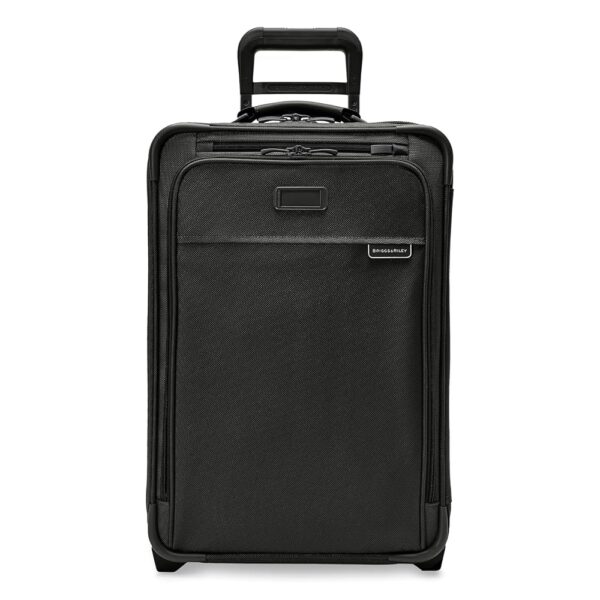
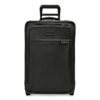
The Baseline Essential is a two wheel upright aimed squarely at the person who flies for work every week and expects the bag to outlast the job. Every design decision on it reads that way: an external handle system that leaves the packing surface flat, a tri fold garment folder for one or two suits, self repairing YKK zippers, corner guards in impact resistant material, and a strap that lets you tow a second bag as one unit.
It is emphatically not a value purchase and it is not a light one. At 9.7 pounds empty this is among the heaviest cabin cases on this site. What you are buying for that weight is construction, and whether that is a good trade depends entirely on how many times a year the bag goes through a terminal. Two trips a year and you are carrying nine and a half pounds for nothing. Fifty trips a year and the calculus reverses. If the weekly flying is real but the weight is not acceptable, the Travelpro Crew Classic spinner targets the same traveler at seven pounds.
Dimensions, and two figures that do not match
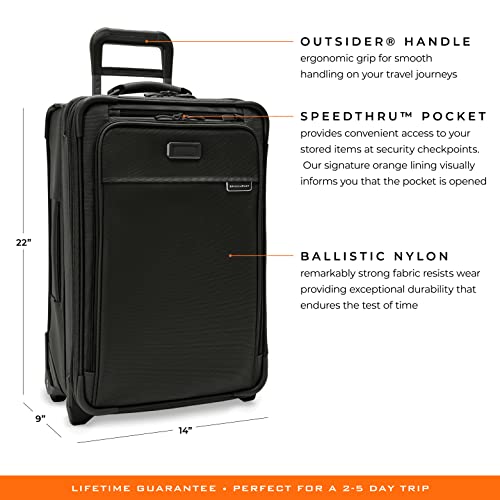
The product description states the case measures 22 by 14 by 9 inches and that it meets carry on regulations for most United States domestic airlines. The specification block on the same listing gives 14 by 11.5 by 22 inches. Height and width agree; depth does not. Nine inches against 11.5 inches is a two and a half inch gap, and it is the dimension airlines are most likely to enforce with a sizer.
Where the extra depth probably comes from, and why we are not guessing
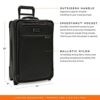
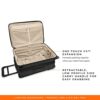
Briggs and Riley’s signature design puts the handle tubes on the outside of the bag rather than inside it. That gives a flat interior packing surface, which is the point, and it also means the external handle assembly sits proud of the case body. A 9 inch case body with an external handle running down the back could plausibly measure 11.5 inches overall. That is an explanation, not a fact, and the listing does not confirm it.
What we can say plainly is which number an airline uses. A sizer measures the object including the handle, so if the overall depth is 11.5 inches, 11.5 inches is what gets measured, and that is well over the roughly 9 inches commonly cited in United States domestic guidelines. The 22 by 14 by 9 figure in the description is the rule being quoted rather than the case being measured, which is a pattern across this whole category.
We will not write that this case is airline approved. Briggs and Riley’s own wording, that it meets regulations for most United States domestic airlines, is a hedged maker’s claim and we are attributing it as such. Airlines set their own allowances, budget and regional carriers are frequently stricter, and international carriers often add a weight limit that a 9.7 pound empty case eats badly into. Measure the case, including the handle, before your first flight.
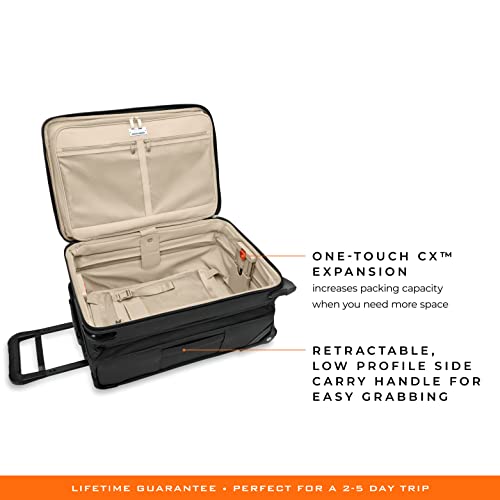
The case also carries a one touch CX expansion, which Briggs and Riley describes as the world’s only design of its kind and which compresses back down after use. Expansion adds depth. A case already published at 11.5 inches deep is further out when expanded. Compress it before you approach a sizer.
Construction, and the parts that justify the weight
The external handle is the defining feature and it is a genuine engineering trade rather than a styling choice. Handle tubes inside a case steal packing depth and create ridges that crease clothing. Outside, the interior is a flat box and the garment panel lies properly. The costs are the extra measured depth discussed above and a handle assembly exposed to knocks.
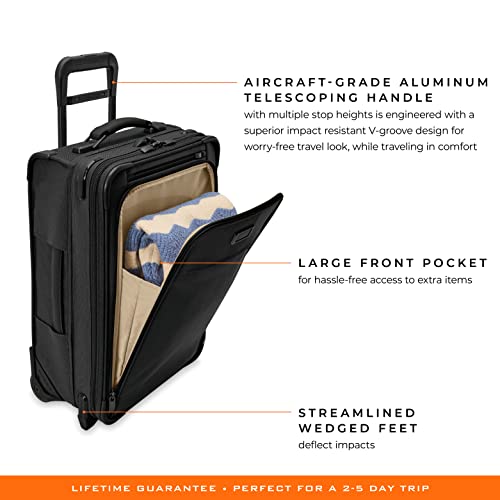
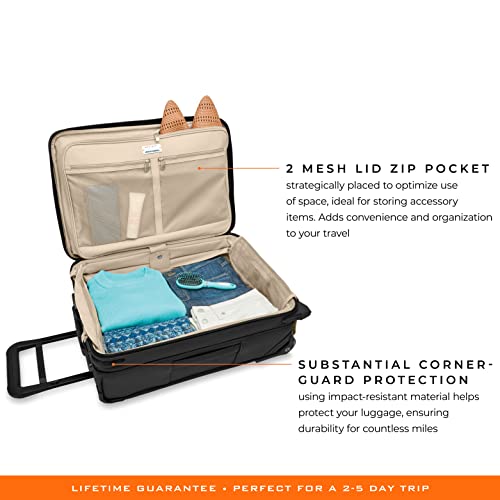
The corner guards use impact resistant material at the four points a case lands on. On a softside bag that is where wear concentrates, so armoring them is a sensible allocation of weight. The zippers are YKK RC, a self repairing coil design with lockable pulls. Naming the zipper brand and series is a real disclosure, since zippers are the second most common luggage failure after wheels. Understand what lockable means: a coil zipper with locked pulls can still be split with a ballpoint pen and closed again by running the sliders across the split, so it is a deterrent, not security.
This is a two wheel case, not a spinner, and that is worth choosing deliberately. Two inline wheels are recessed into the base, harder to shear off, better on rough pavement and curbs, and they add less to the measured envelope than four exposed casters. The cost is that you tow the case behind you at an angle rather than pushing it upright beside you, so the load goes through your arm. For heavy packers on long terminal walks, spinners are easier; for durability, inline wins.
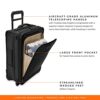
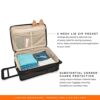
The interior carries a tri fold garment folder with a foam roll bar for one or two suits, mesh lid pockets, compression straps and a large front pocket. If you routinely carry more than two suits, a dedicated garment bag from our garment bags section is the better tool.
Capacity, weight and the power pocket
The capacity field on this listing reads 2 Tons. That is not a capacity, it is a corrupted field, and no part of a purchase should reference it. No liter or cubic inch figure appears anywhere else on the listing, and no interior dimensions are published either. For a case whose selling point is a flat packing surface, that is a frustrating gap. Work from the exterior instead and ask the seller for the interior figures before ordering.
The weight is 9.7 pounds and it is real. That is two and a half pounds over a typical business softside and three or more over a light polycarbonate shell. On United States domestic routes nobody weighs a cabin bag, and the number is simply a thing your shoulder deals with. On budget European and many Asian carriers, where the cabin allowance is 7 or 8 kilograms and enforced at check in, a 9.7 pound empty case consumes roughly two thirds of the limit before you pack anything. That is close to disqualifying on those routes and it deserves to be weighed against everything good about the construction.
The Powerpocket is a compartment for a battery pack and a phone. The battery is not included and is not built in, which is the arrangement airlines want: most carriers require lithium power banks to be removable and carried in the cabin, and bags with sealed in, non removable batteries have been refused at the gate. Keep the bank on your person, never check it, and confirm your airline’s watt hour limit.
Warranty, and what this listing does not say
This is the most important gap on the page. No warranty term appears anywhere in the source data for this listing. No period, no coverage description, no exclusions, and nothing about airline handling damage.
That matters because coverage is a large part of what buyers believe they are paying for at this price point. We are not going to describe a warranty that the listing does not publish, and buyers should not assume one either. Ask the seller for the written coverage terms before ordering, read what is excluded rather than what is promised, and pay particular attention to whether airline handling damage is covered, since that is the standard exclusion in the category and the damage that actually occurs.
The review base is 4.5 from 188 ratings with a rank of 247th in its Amazon carry on category. That is a moderate base, enough to read failure reports but not a large sample. Within the same brand, the Briggs and Riley Sympatico carry on and the Briggs and Riley ZXU carry on offer different weight and material trades. Wider options are in carry-on luggage.
Who should buy it and who should not
Buy it if you fly for work constantly, you want an external handle and a flat packing surface, and you value construction over weight. Skip it if you fly carriers that weigh cabin baggage, because 9.7 pounds empty is most of a strict allowance, and skip it if you need a compliance guarantee, because the listing’s own two depth figures are two and a half inches apart. Get the coverage terms in writing before you pay, because this listing does not publish any.