Description
Who this SwissGear Energie carry on suits
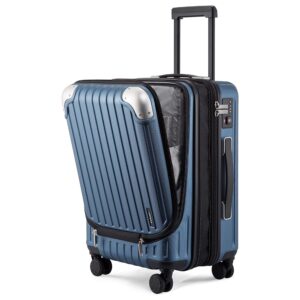
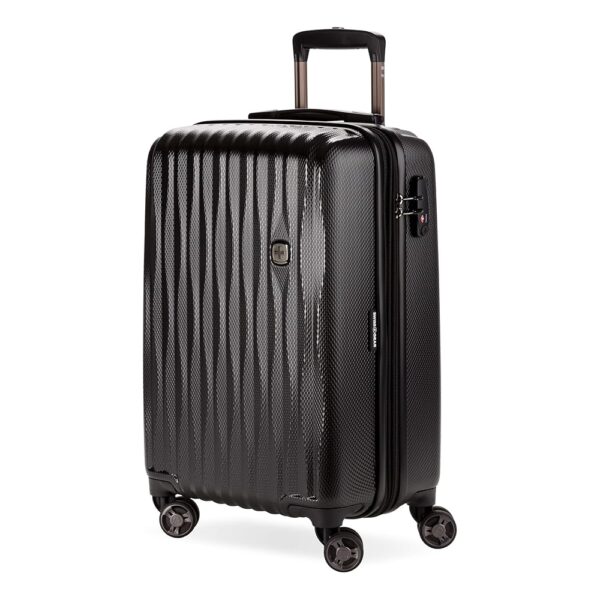
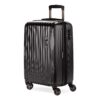
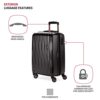
This is a polycarbonate hard shell in the 19 inch class with eight spinner wheels, a split case interior, a TSA lock and a USB pass through for a power bank you supply. The buyer is the traveler who wants a rigid cabin case with some organization built in and a stated warranty behind it, without paying premium prices.
The 19 inch nominal size is worth noting on its own. Most of this category is sold at 20 or 21 inches, so a 19 inch case is a size down, which buys margin against strict allowances at the cost of packing space. The split case interior, where the main compartment opens into two independently organized halves, is the reason to pick this over a plain shell. For the larger sibling in the same line, see the SwissGear 7272 Energie hardside.
Dimensions, and a feature bullet describing a different case
The specification block gives 13.5 by 8.5 by 22.75 inches. That is a credible set of numbers for a 19 inch nominal cabin case once wheels and handle housing are included. Against the size guideline most commonly cited for United States domestic cabin baggage, roughly 22 by 14 by 9 inches, it is three quarters of an inch over on height and comfortably inside on width and depth.
Then the bullet says something else entirely
The final feature bullet reads: packing dimensions 27 by 19.5 by 11.5 inches, product dimensions including wheels and handles 30 by 21 by 11.5 inches, weight 11 pounds. Those are the numbers for a large checked case, not a 19 inch carry on. A 30 inch case is a hold bag on every allowance published anywhere.
The same bullet block gives it away twice more. One bullet describes the product as our checked luggage and then adds, in parentheses, that only carry on sizes include the USB charging port. And the capacity field in the specification block reads 11 Pounds, which is a weight in a capacity field and matches the 11 pound figure from the checked size rather than the 6.9 pounds published for this one.
What has happened is that copy and specification values from the larger sizes in this collection have been mixed into the carry on record. We are not going to pick which is right. We are telling you that the only figures that plausibly describe this case are the specification block dimensions of 13.5 by 8.5 by 22.75 inches and the 6.9 pound weight, that the bullet dimensions belong to a checked bag, and that you must measure the case on arrival before relying on it.
We will not write that this case is airline approved. Check the allowance published by the carrier and fare you booked, note that budget and regional carriers are frequently stricter than the majors and that many international carriers add a cabin weight limit, and be aware that 22.75 inches is already over the commonly quoted height.
Shell, wheels, zipper and lock
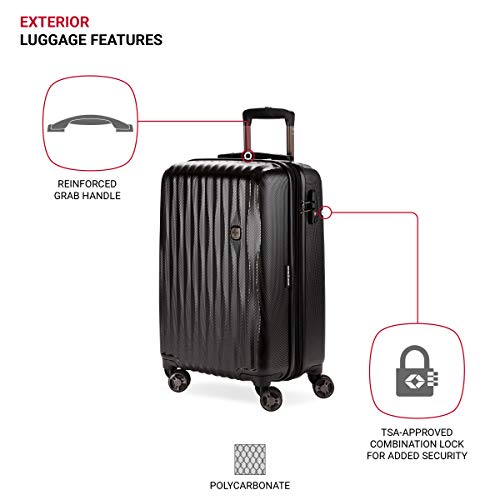
The shell is polycarbonate, named as such in both the description and a feature bullet. That is the disclosure that matters, because polycarbonate flexes under an impact and returns to shape where ABS stars and cracks at a corner. The description calls the case rugged and says that calling it durable would be an understatement, which is marketing language rather than a specification; judge the shell on the named material.
The zipper is described as an easy open self repairing closure. Self repairing means a coil design where the teeth remesh if the slider is run back over a split, which is a genuine feature and addresses the second most common luggage failure after the wheels. It is still a coil zipper, and a coil zipper can be split with a ballpoint pen and closed again by running the sliders across the split, so it is not a security feature.
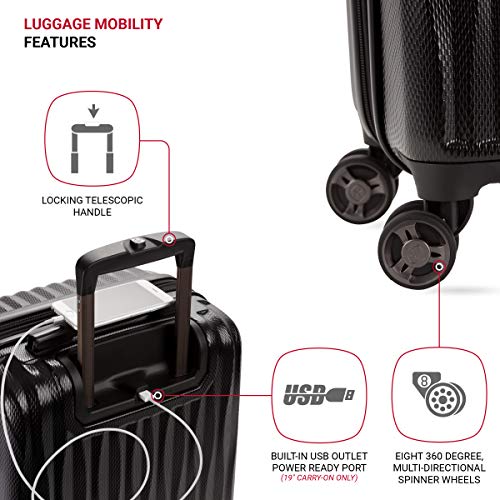
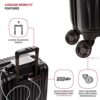
There are eight multi directional spinner wheels, meaning four dual casters, and the listing states the wheel count explicitly, which many do not. Spinners roll sideways easily on smooth terminal floors, catch and tip on curbs and cobblestone, and are the most common failure point on any wheeled case. The handle is a retractable locking design with no stage count or extended heights published.
The lock is an integrated TSA approved lock, and the wording on this listing is better than most: it says the locks deter theft while allowing agents to access your belongings. Deter is the correct verb. A TSA lock exists so a screener can open the case with a master key rather than cutting it, and those master keys have circulated widely for years. It stops a casual hand and stops the case falling open. Keep passports, cash and electronics on your person.
Interior, expansion, weight and the USB port
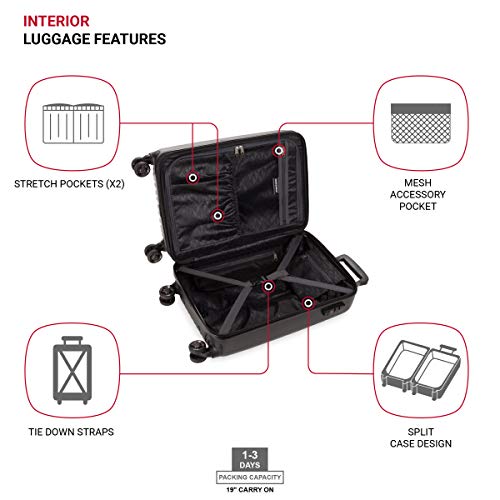
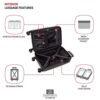
The main compartment opens into a split case: one side with tie down clothing straps and a zippered accessory pocket, the other with a large zippered compartment plus mesh and cinched pockets. That is a properly specified interior for a cabin case, and the split arrangement is what stops a hard shell disgorging its contents when you open it flat on a bed.
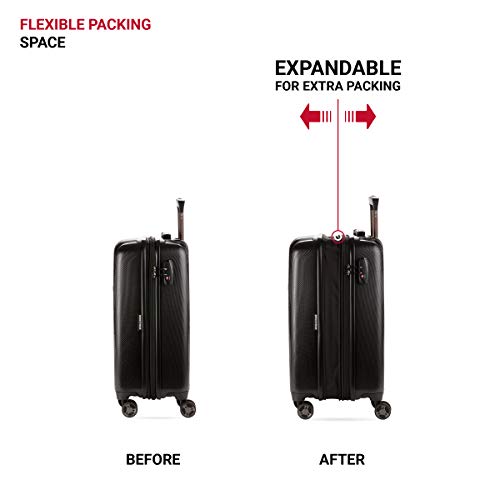
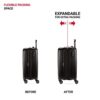
The case expands 1.5 inches, which the listing quantifies as increasing capacity by nearly 15 percent. That is an honest way to state an expansion. It also adds to the depth, so a case published at 8.5 inches deep closed is around 10 inches expanded, which takes it past the commonly cited 9 inch limit. Use the expansion on legs where the case goes in the hold.
No liter or cubic inch capacity is published for this size, because the capacity field has been filled with a weight. Work from the linear dimensions instead: an envelope of 22.75 by 13.5 by 8.5 inches is roughly 2,610 cubic inches, or about 43 liters gross, and a hard shell typically loses a fifth to a quarter of that to structure.
Weight is 6.9 pounds empty. That is respectable for a polycarbonate case with eight wheels, a lock, an expansion mechanism and USB wiring. On United States domestic routes cabin bags are not weighed. On budget European and many Asian carriers, where the allowance is 7 or 8 kilograms and enforced at check in, seven empty pounds takes roughly half of it before you pack.
The USB provision is worth describing precisely, because it is easy to misread. There is no battery in this case. An internal mesh pocket holds a cord that connects to an external port on the back, and you hook that cord to a power bank you supply. That is exactly the arrangement airlines want: most carriers require lithium batteries and power banks to be removable and carried in the cabin, and luggage with a sealed in, non removable battery has been refused at the gate. Take the bank out and keep it with you, never check it, and confirm the watt hour limit your airline publishes before buying one.
Warranty, branding and the alternatives
The listing states a 10 year limited warranty against defects, which is a specific term with a specific scope and puts this ahead of most of the field. Read the scope carefully, though. Against defects means manufacturing faults, and the listing says nothing about airline handling damage, which is the standard exclusion across luggage warranties and the damage that actually happens to a checked or gate checked bag. A ten year defects warranty is real and it is not the same as damage cover.
The listing also says the products are tested to ensure they meet stringent standards. That is the maker describing its own process; no test, standard or result is published.
One branding note. SwissGear is a licensed name and the country of origin field on this listing reads China. That is neither unusual nor a defect, but the Swiss association in the name is a trademark rather than a statement about where the case is made.
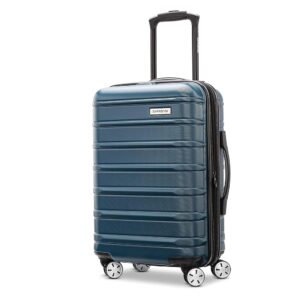
The review base is 4.3 from 1,290 ratings with a rank of 97th in its Amazon carry on luggage category. That is a solid pool for reading the one and two star reports, which is the most useful research available on any case. For comparison, the Samsonite Octiv hardshell carry on offers suspension casters and eight handle stops, and the Travelpro Pathways 3 hardside adds aluminum corner guards and a lifetime term. The wider field is in our carry-on luggage and suitcases sections.
Who should buy it and who should not
Buy it if you want a named polycarbonate shell in a size down from the usual, a properly split interior, eight wheels stated explicitly and a ten year defects warranty. The USB arrangement with no built in battery is the safe design. Skip it if you need a published capacity figure, because the capacity field on this listing contains a weight, and skip it if you cannot measure the case before your first flight, because a feature bullet on this page describes a 30 inch checked bag rather than this one.