Description
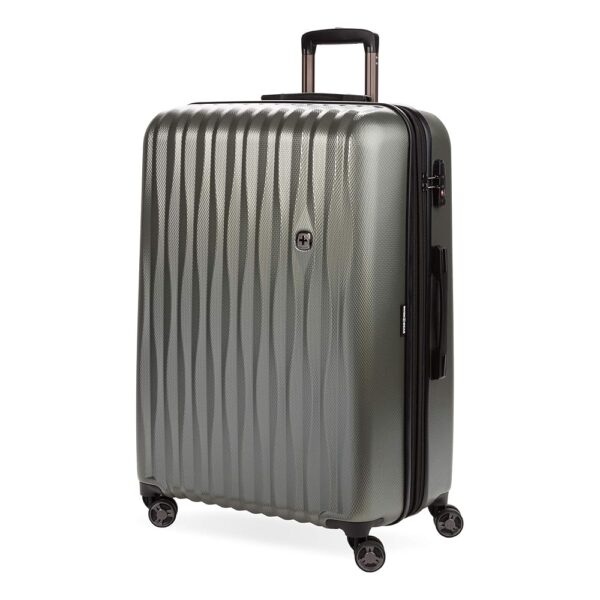
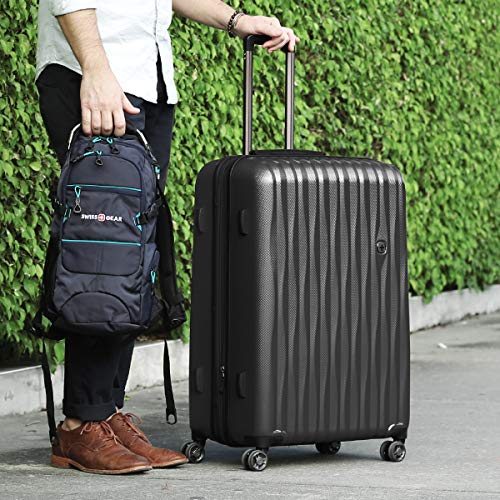
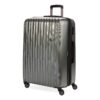
The SwissGear 7272 Energie is a hardside expandable spinner in gunmetal, model 7272565177, and the product name identifies it as the checked large 27 inch size. It sits in a carry-on category on this site, which it is not, and the review below treats it as what the maker sells it as: a large checked bag.
The traveler and the trip this covers
A 27 inch checked case is a two week bag for one person, a one week bag for two sharing, or the bag you buy when you move somewhere for a season. It is at the point on the size curve where empty weight starts to matter a lot, because the bigger the shell, the more of your allowance it consumes before you pack anything.
Hardside suits this size well. A large checked bag spends more time out of your sight than a cabin bag does, it takes more impacts, and a rigid shell keeps rain and crushing off the contents. What you give up is exterior pockets, and on a checked bag that is a small loss. Readers cross shopping large hard shell cases should read the Samsonite Stryde 2 hardside and the Amazon Basics 30 inch hardside checked case.
Dimensions, and a linear total that sits over the line
The specification block gives Product Dimensions of 21 by 11.5 by 30 inches, with an item weight of 11 pounds. The product name calls it 27 inch. Those do not agree, and the gap is three inches.
Which number would be measured
The most likely explanation is the ordinary one: 27 inches is the case body or the marketing size class, and 30 inches is the overall height including the spinner castors and the retracted handle. The listing does not say, and that omission has a consequence here that it would not have on a smaller bag.
Most United States carriers apply a checked bag limit of 62 linear inches, meaning length plus width plus height added together. On the published 21 by 11.5 by 30 figure the linear total is 62.5 inches. That is over the line. Not by much, and many bags run marginally over without ever being measured, but oversize fees on checked luggage are substantial and they are applied at the counter without negotiation. If the 27 inch figure is the one to use, the arithmetic works out very differently and the bag is comfortably inside. A buyer who cannot afford an oversize fee should measure this case on arrival, with the handle down, before committing to it for a trip.
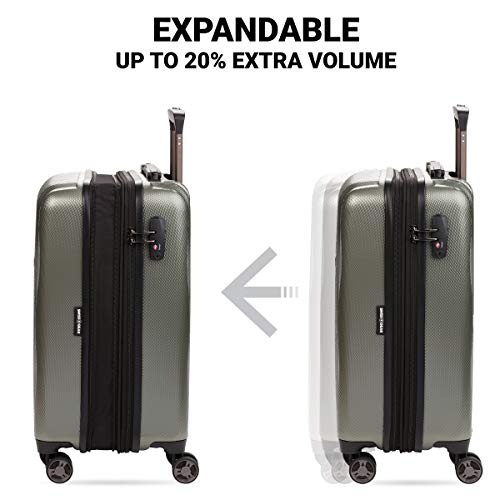
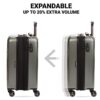
The case expands 1.5 inches, which the maker says increases carrying capacity by nearly 15 percent. On a checked bag an expander is normally free capacity, but on this one it is not, because the linear total is already borderline. Expanding this case pushes it further over 62 inches. Treat the expander as something to use on a road trip rather than a flight.
No capacity figure is published in liters or cubic inches. For a case whose selling point is packing space, that is a real gap, and it means this bag cannot be compared numerically against the alternatives in the suitcases category.
Shell material, wheels and handle
The shell is polycarbonate. The description calls it a rugged PC shell and the feature bullets say durable, lightweight polycarbonate, which is the same material named twice, and it is a straight answer where most listings offer only the word hardside.
Polycarbonate is the better of the two common luggage polymers. It flexes under impact and returns to shape rather than cracking, which is what you want on a bag that will be dropped from a belt height repeatedly. At 11 pounds empty this case is on the heavy side, which is the price of the shell and of eight wheels.
Wheels are eight 360 degree multi directional spinners, meaning four dual wheel assemblies. Dual wheels are the right choice at this size because a fully loaded 27 inch case puts serious weight through the castors and single wheels wander under it. They are still exposed, they are still the first thing to break, and they are part of whatever the real overall height turns out to be.
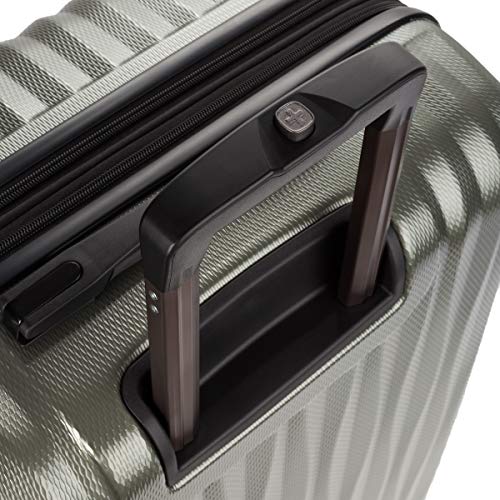
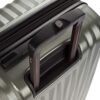
The handle is a retractable locking design. No extended height is published. The zipper closure is described as easy open and self repairing, which means a coil zipper whose teeth remesh if forced apart. That is a real feature and it does not protect the slider, which is the part that fails. Buyers wanting a softside alternative from the same brand should compare the SwissGear Sion carry-on, and the same maker’s smaller hard case is covered in the SwissGear 8018 20 inch hardside review.
Interior, the lock, and a feature this size does not get
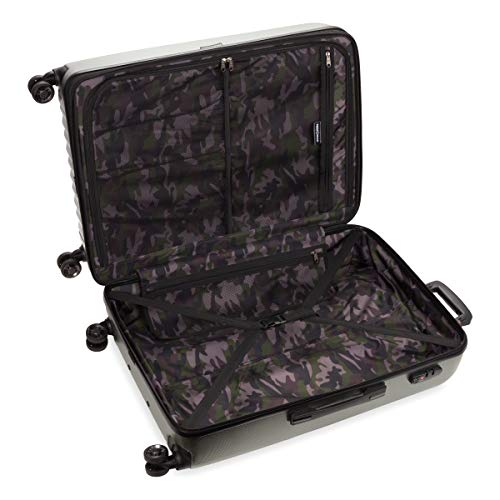
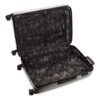
The main compartment opens into a split case. One side is a tie down clothing compartment with a zippered accessory pocket, the other a large zippered compartment with additional mesh and cinched pockets. Tie down straps matter on a case this large because 27 inches of loose packing consolidates into a shifting mass, and a shifting mass is what makes a bag hard to lift and easy to knock over.
A TSA approved lock is integrated. SwissGear describes it as deterring theft while allowing agents access, and adds elsewhere that it provides extra security. That needs qualifying. A TSA approved lock opens with a universal key that screeners hold and whose design has been widely reproduced. It stops a zipper being pulled open in transit and it deters opportunistic tampering. It is not security, and nothing worth stealing should be in a checked bag on the strength of it.
One bullet is worth reading carefully: the listing states that only carry-on sizes include a USB charging port. This 27 inch checked case therefore does not have one, which is the correct outcome. Lithium batteries and power banks are required by most airlines to travel in the cabin and to be removable, and a powered checked bag would be a boarding problem rather than a feature. Buyers who do want a powered cabin bag should look for one where the battery is removable and confirm it before flying.
Warranty and the demand picture
SwissGear publishes a ten year limited warranty against defects, which is a stated term with a stated scope and puts this listing ahead of most in this catalog, where no warranty appears at all. Read the scope for what it is. A defects warranty covers faults in materials and workmanship. It does not ordinarily cover damage caused by airline handling, which is precisely the damage a 27 inch checked bag sustains, and no luggage warranty in this class should be read as covering a castor torn off by a baggage system.
The listing shows a 4.3 star average across 1,306 ratings and ranks 167th in Carry-On Luggage and 107,315th in Clothing, Shoes and Jewelry. That category placement is another sign of the mislabeling running through this listing, since the bag is sold by its own maker as checked large. Country of origin is China. Other checked options sit across the carry-on luggage category despite its name.
Who should buy it, and who should not
Buy it if you want a large polycarbonate checked case with a named shell material, a split case interior with tie downs and a stated ten year defects warranty, and you have measured the bag against your carrier’s linear allowance yourself.
Skip it if you fly carriers that enforce 62 linear inches strictly, because the published dimensions total 62.5 and the expander makes that worse. Skip it too if 11 pounds of empty weight is more than your allowance can spare, or if you needed a published capacity figure to compare.