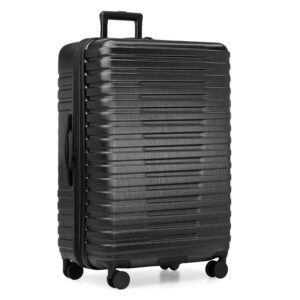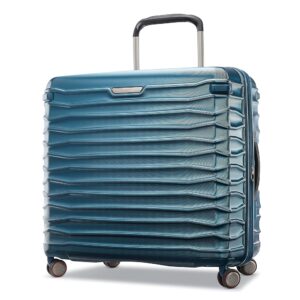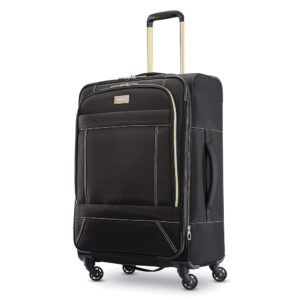
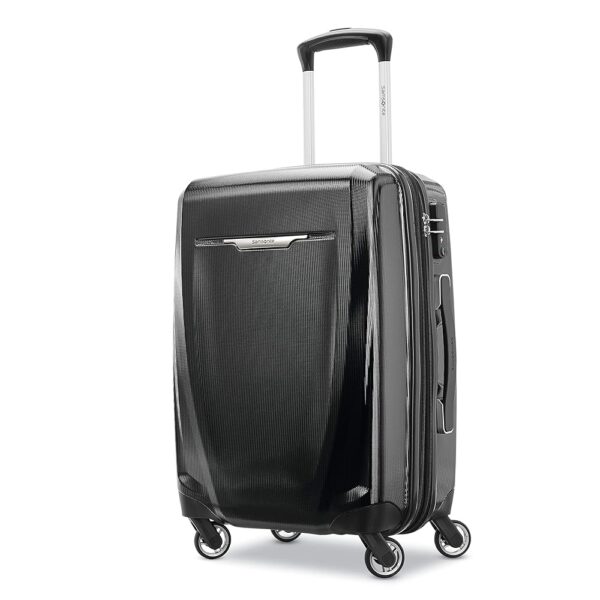
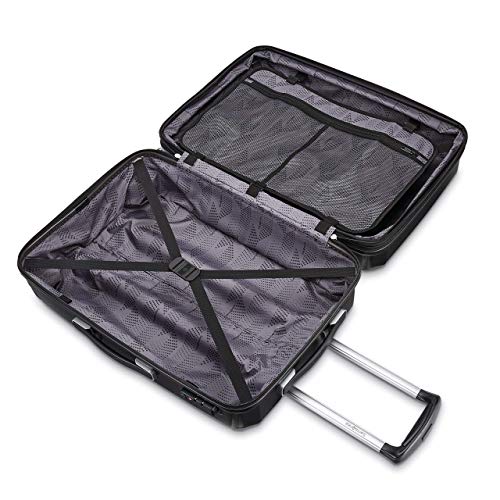
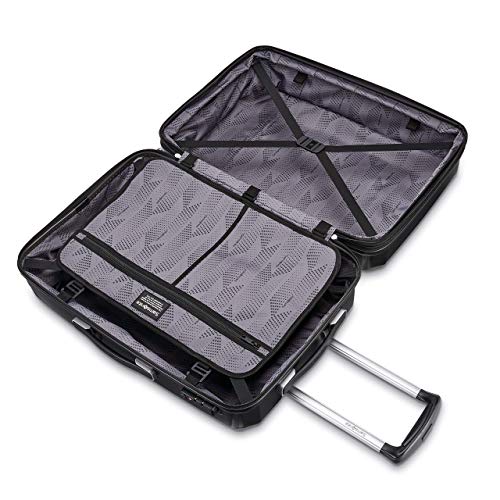
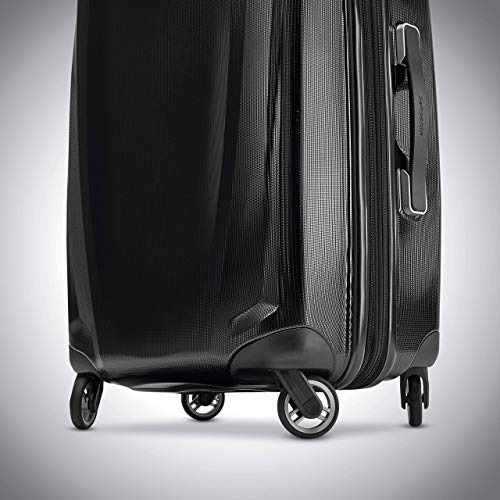
Description
The Traveler This Case Suits
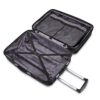
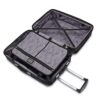
The Winfield 3 DLX is Samsonite’s mainstream polycarbonate cabin case, and its distinguishing feature is inside rather than out. A reversible packing divider lets you configure the interior two ways, with numerous zippered pockets around it, which suits someone who packs differently depending on the trip: clothes on both sides for a holiday, or one side given over to shoes and a wash bag for a work trip.
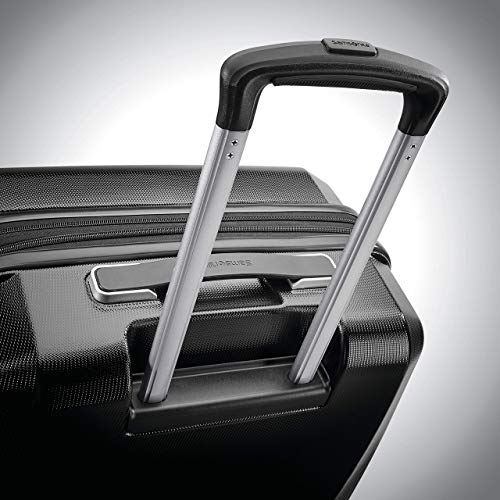
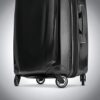
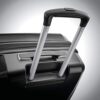
Beyond that it is a conventional and well specified hardside: a scratch resistant polycarbonate shell, four oversized spinner casters, self retracting flush carry handles, side mounted TSA locks and a large ergonomic pull handle. It suits two to four nights in the cabin, or duty alongside a checked bag.
Hardside is the trade being made. A shell keeps rain out and protects fragile contents, and it gives you no exterior pockets and no ability to squeeze into a bin that is already full. If those matter more, a softside case such as the Samsonite Solyte DLX is the in house alternative.
Packing Size, Overall Size and the Half Inch Everywhere
Samsonite publishes both figures and labels them, which is the disclosure this category usually withholds. Packing dimensions are 20.0 by 14.25 by 9.5 inches. Overall dimensions are 22.5 by 14.5 by 9.5 inches. The gap tells you the wheels and handle add two and a half inches of height and a quarter inch of width.
The specification block separately gives 9.5 by 14.5 by 23 inches, which is the overall figure with the height half an inch larger. So the case is 22.5 inches tall in the bullet and 23 in the specifications. Take the larger figure when planning.
Over on Every Axis
An airline sizer measures the whole object, so the overall figure is the relevant one. Against the commonly cited United States domestic cabin allowance of roughly 22 by 14 by 9 inches, this case is half an inch over on height, half an inch over on width and half an inch over on depth. Three axes, each half an inch outside, on a hard shell that cannot be compressed.
Samsonite’s own bullet says the case meets most carry-on size restrictions for those traveling domestically and looking to stay light. That is the maker’s claim with its own two qualifiers, and the qualifiers are doing honest work: most, and domestically. We are not restating it as fact. Every carrier writes its own rule, budget and regional airlines publish smaller figures, and international carriers commonly add a cabin weight limit. Check your specific airline before you rely on it. In practice a case half an inch over on each axis passes wherever nothing is measured and fails a sizer.
The product name also describes the case as expandable, and no expansion depth is published anywhere on this listing. Since the unexpanded depth is already over the reference, an expansion of any size puts it clearly outside. Treat an expanded case as a checked case.
Polycarbonate, Oversized Casters and Flush Handles
The shell is 100 percent polycarbonate, described as scratch resistant. Naming the polymer matters: polycarbonate flexes under impact and returns to shape rather than shattering, which is why it survives baggage handling better than the cheaper and more brittle ABS used on many budget cases. Its weakness is the corners, where repeated impact eventually crazes the polymer, and no corner guards are described here.
The wheels are four multi directional oversized spinner casters, re-engineered for lower weight. Larger diameter helps on carpet and on the gaps between terminal flooring, and the spinner arrangement puts no weight on your arm. On gravel or broken sidewalk they catch where inline wheels would not, and exposed casters remain the most common failure point on any wheeled case. They also account for the two and a half inches of height the overall figure adds.
The self retracting carry handles are a small, sensible detail. Handles that sit flush when not in use do not snag on a conveyor and do not catch on other bags in a bin, which is where grab handles are usually torn off. The Samsonite Centric carry-on uses fixed handles instead. A large format ergonomic pull handle is fitted, though no stage count and no extended height are published.
What the Lock Bullet Overstates
The sixth bullet says the side mounted TSA locks act to deter theft, ensuring that only you or a TSA agent have easy access to your belongings. The first half is right and honestly framed: deter is the correct verb. The word only is not. TSA master keys are not confined to airport screening agents, and a lock openable by a universal key is a deterrent rather than a security device. It keeps the case shut on a belt and lets an inspection happen without the lock being cut off. Do not put anything of real value in a checked bag on the strength of it.
A Weight Figure That Is Off by a Factor of Ten
The specification block lists item weight as 11.2 ounces. The second feature bullet lists weight as 6.97 pounds. Those differ by a factor of ten, and 11.2 ounces is impossible: it is roughly the weight of an empty daypack, not of a polycarbonate suitcase with four casters, a telescoping handle and two locks. Use 6.97 pounds.
Note also that the separate capacity field reads 6.97 Pounds, which is the correct weight sitting in a volume field. So this listing publishes the right number in the wrong place and a wrong number in the right place. No capacity in liters or cubic inches appears anywhere as a result, and the only guide to volume is the packing dimensions of 20 by 14.25 by 9.5 inches, which works out to roughly 44 liters.
Just under seven pounds for a 20 inch polycarbonate spinner is competitive. It is lighter than the 7.7 pounds of the Delsey Chatelet Air 2.0 at similar volume, and considerably lighter than the ten pound plus front opening cases in this catalog. On carriers enforcing a cabin weight allowance that difference is real.
A Warranty That Names What It Covers
Samsonite states a 10 year limited warranty against defects in materials and workmanship. That phrasing is more useful than the vague lifetime language common across this category, because it names the covered failure mode rather than leaving it open, and a stated ten year term is something you can hold a maker to.
It also tells you what falls outside. Damage that is not a manufacturing defect is not covered, and airline handling damage, which is what actually cracks a shell or shears a caster on a checked bag, is a different thing from a defect. Read the full terms before assuming otherwise. For contrast, the Travelpro Platinum Elite publishes a separate carrier damage clause, which is a materially different promise.
The feedback record is strong: 4.3 across 4,364 ratings, ranked 27th in Suitcases and 29,740th in Clothing, Shoes and Jewelry. A 27th place category rank on a sample of more than four thousand is one of the better placements in this batch. Country of origin is Cambodia. The suitcases category holds the alternatives.
Who Should Buy It and Who Should Not
Buy it if you want a named polycarbonate cabin case from a mainstream maker with a reversible packing divider, flush carry handles, a warranty whose covered failure mode is written down, and a strong feedback record behind it. At just under seven pounds it is competitively light for the material. Do not buy it if your carrier measures strictly, because the overall figure is half an inch over the common reference on all three axes and a shell cannot compress. Do not fly it expanded, since no expansion depth is published and the case is already over. Do not read the lock bullet’s word only literally. And disregard the 11.2 ounce weight in the specification block entirely.