Description
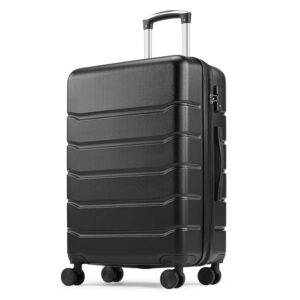
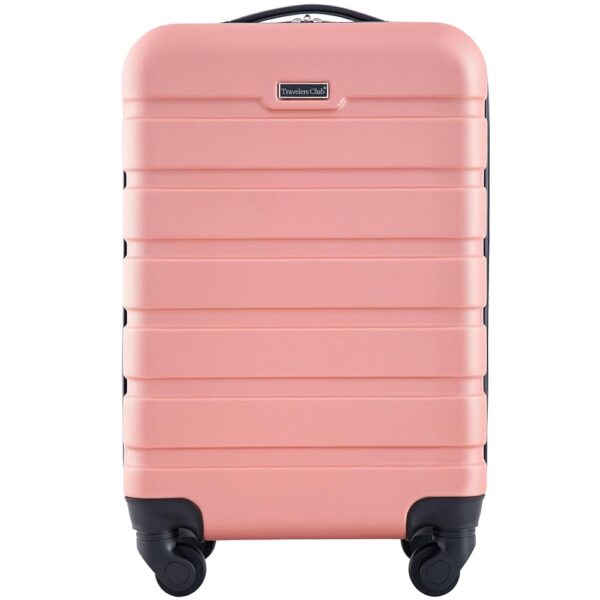
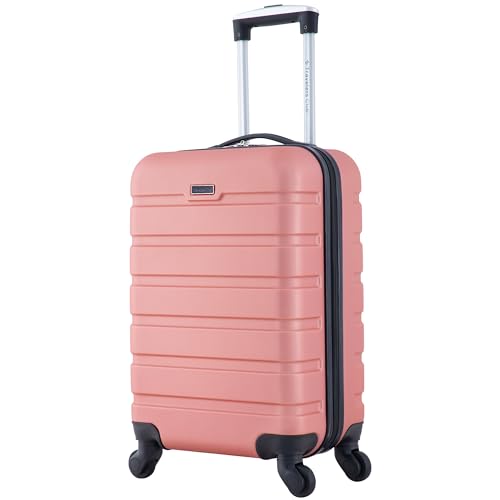
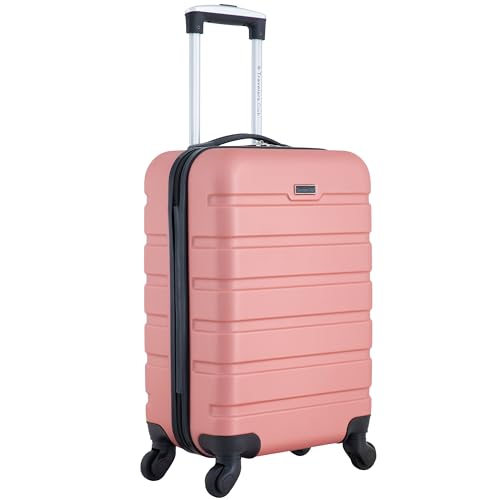
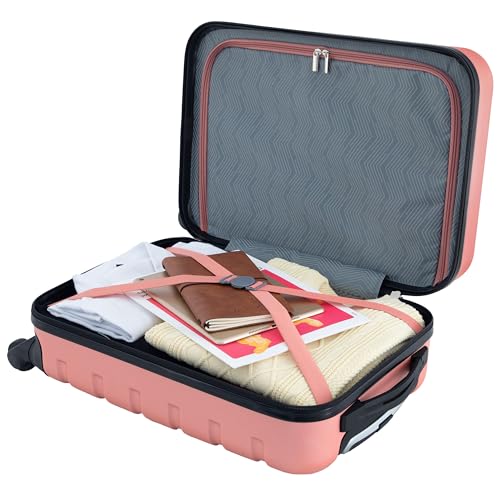
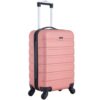
The Travelers Club Harper is a 20 inch ABS hard shell in rose gold with a push button recessed locking handle and four wheels. The listing is short on measurements and long on adjectives, and it carries one structural ambiguity worth settling first: the manufacturer’s description offers the product either as a two piece set with a 28 inch check in case, or as the 20 inch carry on alone. Confirm which one you are buying.
The traveler and the trip
Thirty eight liters at 6.97 pounds is a three to four day bag for one adult. The capacity fields give 38 liters twice, and nothing in the listing describes an expansion gusset, so this is a fixed volume case. On a cabin bag that is a feature rather than an omission, because expansion is the mechanism by which a compliant case becomes non compliant, and a fixed volume case cannot be talked into that mistake at a gate.
The rose gold finish is doing real work at a carousel, where identifying your case quickly matters more than most buyers credit. It suits leisure travel and short business trips. It does not suit frequent checked travel, because ABS is a consumable material rather than a durable one. Frequent flyers should look at polycarbonate, and the Samsonite Omni PC is the direct comparison. The wider field sits in carry on luggage.
Dimensions, and a width that does not look right
The attribute block gives 11 by 9 by 22 inches. Reordered, that is 22 inches on the longest side, 11 inches wide and 9 inches deep. The manufacturer bullets publish no dimensions at all, so this single figure is the whole disclosure, and it does not state whether the castors and the retracted handle are counted.
Why the 11 inch width deserves scepticism
Eleven inches is narrow for a 20 inch upright. Almost every comparable case in this catalog measures between 13 and 15 inches across: the Travelers Club Cosmo is 13.5 inches, the Richmond is 13.4, the Chicago is 13, and the Samsonite hard shells run 14 to 15. A case 11 inches wide with a 38 liter capacity would need to be unusually deep to hold that volume, and it is published at 9 inches deep.
Run the arithmetic: 22 by 11 by 9 inches is about 2178 cubic inches, or 36 liters, before any allowance for shell wall thickness, the retracted handle housing or the wheel wells. Those normally take fifteen to twenty five percent. A 38 liter usable capacity from that bounding box is not possible. Either the width figure is wrong or the capacity figure is wrong, and the listing gives no way to tell which. Get the measurement from the seller before ordering.
The commonly cited United States domestic carry on allowance is around 22 by 14 by 9 inches, measured with the castors on. On the published figure this case matches the height and depth exactly and has three inches of margin on width, which would be a comfortable position if the width were real. Travelers Club makes no explicit compliance claim in the bullets we can read, and we are not going to make one on their behalf. The short description previously on this page claimed the case fits most airline carry on requirements, which nothing published here establishes.
Shell, wheels and handle
Travelers Club names the material as ABS hardshell and describes it as providing excellent impact resistance. Naming the polymer is the right thing to do and it sets expectations correctly, though the impact resistance claim is generous. ABS is light and cheap and it molds into strong colors well, which is why it dominates this price bracket. It is also the most brittle of the common shell polymers: under a hard impact, particularly in a cold cargo hold, it cracks rather than flexing back the way polycarbonate does, and a cracked ABS shell cannot be repaired in any practical way. At 6.97 pounds it is not especially light for the material either.
The finish is described as scratch resistant, which on a metallic rose gold shell is a claim worth treating carefully. A textured surface hides marks; a polished metallic one shows them. Expect the finish to look used sooner than a matte case would.
The wheels are described only as a four wheel design allowing effortless maneuverability. There is no statement of whether the castors are single or dual wheeled, and dual castors roll more smoothly under a full load and are more stable on a sloped floor. Castors remain the most common failure point on wheeled luggage, they are poor on cobble and gravel, and their exposed profile adds to whatever a gauge measures.
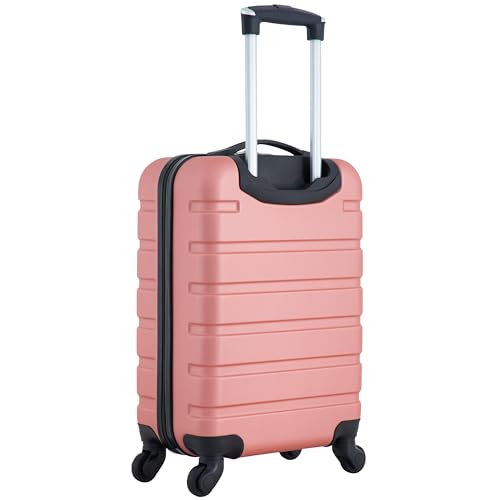
The handle is a push button recessed locking system. Recessed is the operative word and it is a genuine advantage on a hard shell, because the handle tubes sit inside the shell profile rather than proud of the back panel, which keeps the measured depth down and stops the housing taking a hit when the case is thrown onto a belt. The same handle appears on the maker’s Cosmo hardside spinner and its other cabin cases.
Capacity, packing and the set question
Thirty eight liters is a normal figure for a 20 inch hard shell, and it is the figure to plan around if the width discrepancy above resolves in the buyer’s favor. The listing publishes no packing dimension, so you cannot tell how much of the exterior is shell wall and handle housing.
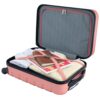
The interior is not described anywhere in the manufacturer’s bullets. The short description previously carried on this page mentioned a zippered divider. No divider appears in the maker’s specification, and we are not going to describe a feature the source data does not support. On a hard shell that opens as two halves, whether the divider zips closed changes how the case behaves when opened flat, so confirm it before buying.
On the set question, the manufacturer description says you can choose between a two piece set containing a 28 inch check in suitcase and a 20 inch carry on, or the 20 inch carry on on its own. The product title and the model code point at the single case. Listings in this catalog that cover both a single item and a set routinely publish the set’s data against the single item, which may be part of why the dimensions here do not reconcile. Confirm the piece count. Matched pairs sit under luggage sets, and the Travelers Club Midtown hardside set is the same maker’s take on that format.
Warranty and the comparison set
No warranty term appears anywhere in the source data. On a value priced ABS case that is the most important missing number, because the material has a finite service life and the warranty is the only recourse when a shell cracks or a castor shears. Get the term and the exclusions in writing before ordering.
Expect airline handling damage to be excluded whatever term you are quoted, as it is across essentially this entire category. A defects warranty covers a shell cracked by a manufacturing fault, not one cracked by a baggage belt. If a published warranty is what decides the purchase, Samsonite states ten years and Travelpro states a limited lifetime term with one year of carrier damage cover, both openly on the listing. The maker’s own Harper in another finish is the closest sibling on this site.
Who should buy it and who should not
Buy it if you want a light, fixed volume hard shell in a distinctive finish with a recessed locking handle, you fly occasionally, and you will confirm the dimensions with the seller before ordering. The absence of an expansion gusset is quietly in the buyer’s favor on a cabin bag.
Skip it if you need reliable numbers before you commit. The published width of 11 inches cannot produce the published 38 liter capacity, no packing dimension is given, the wheel type is never stated, the interior is never described, and no warranty term appears. Confirm too whether you are buying one case or a two piece set, because the maker’s description offers both.