

Description
The traveler this Coolife upright is built around
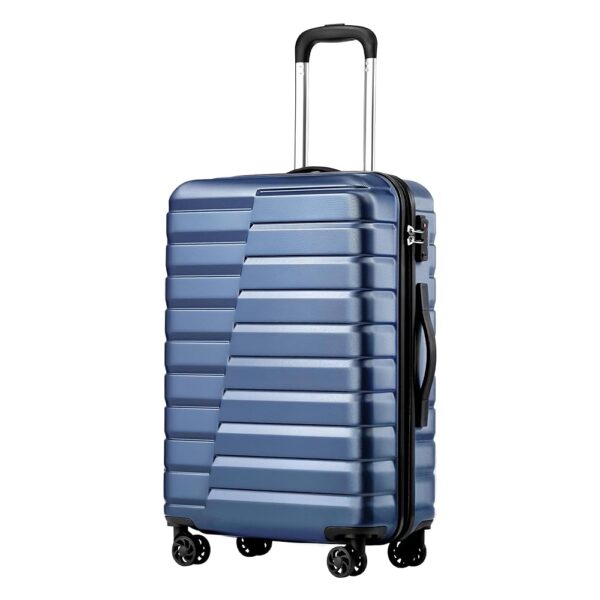
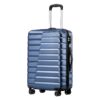
Coolife sells the YD000075 as a hardside spinner with a combination lock and a telescoping handle, and the variant recorded on this listing is described in the manufacturer title as blue, M, 24 inches. That one detail decides most of who the bag is for. A 24 inch upright is a checked bag on essentially every carrier. It is the size one person takes for two weeks or a couple takes for a long weekend, and it is not the piece you walk through security and lift into an overhead bin. If the trip in question is a two night hop with nothing to check, a genuine cabin size such as the Coolife YD000092 cabin spinner is the closer match.
There is a filing conflict here that we would rather name than quietly smooth over. This product sits in our carry-on luggage section and its page address carries the words carry on, while the manufacturer title on the source listing names the 24 inch medium. Coolife builds this shell in 20, 24 and 28 inch versions and merges them into overlapping listings, so the phrase carry on attaches itself to the product family rather than to the piece described on this page. Check the size selector before ordering, because the difference between the 20 and the 24 is the difference between boarding with it and paying to check it.
Dimensions, and why the published numbers do not settle the size question
The specification block gives one figure only: 26 by 18 by 10 inches, with an item weight of 7.7 pounds. Nothing on the listing states whether that figure describes the bag or the carton it ships in, and nothing states whether wheels and the retracted handle are inside the measurement. On a 24 inch upright, 26 by 18 by 10 reads much more like packaging than like the case itself, which is the single most common data fault in this catalog. Treat it as unconfirmed.
The feature bullets then publish a second, different set of numbers for the whole family: the 20 inch as 22 by 8.9 by 15.2, the 24 inch as 17.8 by 9.9 by 26.1, and the 28 inch as 20.1 by 11.8 by 29.9, with the depth rising to 13 inches when expanded. Those three are not written in a consistent axis order, and none of them reconciles with the 26 by 18 by 10 in the specification table. We are not going to pick a winner among three conflicting sets. What a shopper needs to do is ask the seller for the case dimensions with wheels and handle included, for the exact size being ordered, before the order goes in.
What the commonly quoted cabin allowance actually is
The figure most United States domestic carriers publish is in the region of 22 by 14 by 9 inches, wheels and handles included, but every airline sets its own limit, budget and regional carriers are tighter, and many international carriers enforce a cabin weight cap on top of the linear one. We never write that a bag is airline approved, because compliance is a property of the airline and not of the suitcase. Check your specific carrier and your specific fare class. The 24 inch version described here is not a cabin bag under any of those rules, and only the 20 inch member of this family is a plausible candidate.
Shell, wheels, handle and lock, and where each one gives out
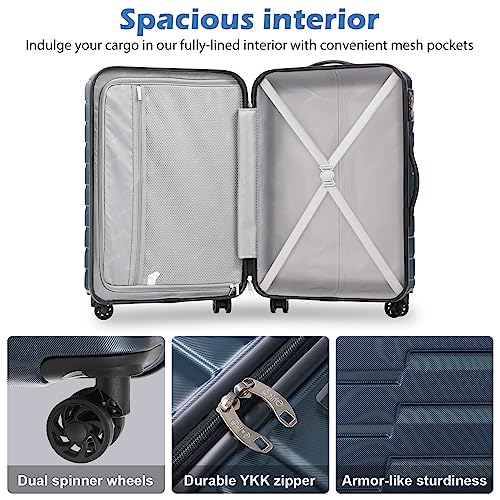
Coolife names the shell as ABS plus polycarbonate with a textured finish. That blend is the mainstream compromise in this price band. Polycarbonate flexes under a load and springs back, which is what you want when a bag is at the bottom of a container; ABS is stiffer, cheaper and more brittle, and it is the component that tends to crack at a corner after a hard drop. A textured finish genuinely does hide the fine scuffing that a gloss shell shows within one trip, so the cosmetic claim is reasonable even though it says nothing about structural life. The maker also describes a beveled upper edge intended to add stiffness.
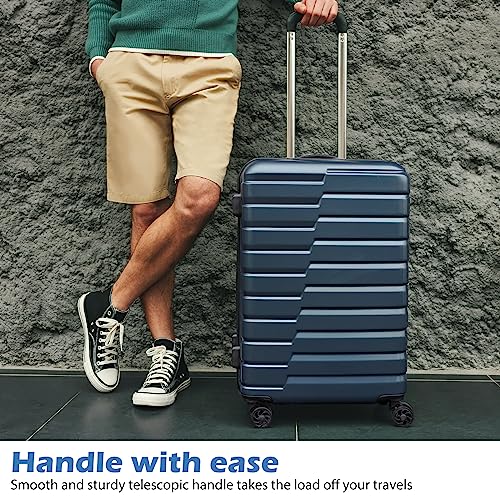
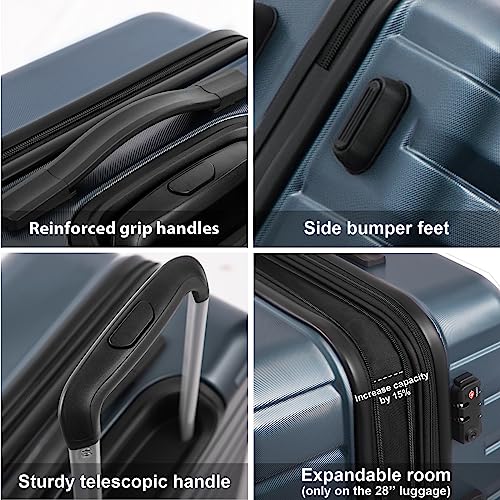
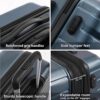
The wheels are where the listing contradicts itself. The product title says spinner, while the opening feature bullet describes a two wheel design praised for being smoother and quieter. Those are different things. The most likely reading is a four caster spinner built with paired, double wheels on each caster, which is common at this level, but the listing never says so plainly. Whichever it is, exposed casters are the most frequent failure point on hardside luggage, they add to the measured depth at a gate sizer, and they are the reason spinners handle badly on cobbles and curb cuts compared with two inline skate wheels. The handle is described as a three stage aluminum telescoping tube, which is the right material choice; the failure mode to watch is lateral wobble at full extension once the locking button wears.
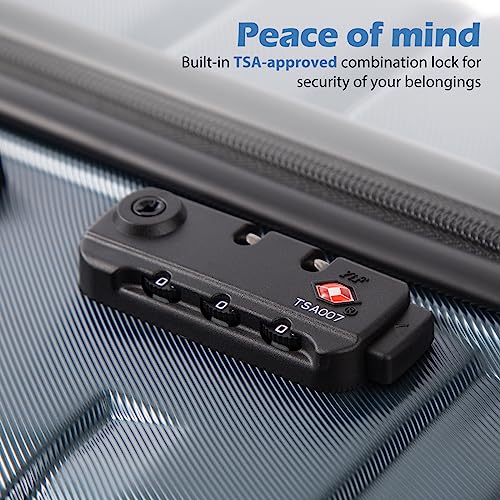
The lock is described as a TSA lock. Worth being blunt about that: TSA recognized locks open to a universal master key held by screeners, so they deter casual interference and stop a zipper being pulled open in transit. They are not security for anything of value, and nothing of value should be in a checked bag in the first place.
Capacity, weight and what the figures leave out
Capacity is published twice as 60 liters, which at least is internally consistent, and the empty weight is given as 7.7 pounds. Sixty liters on a 24 inch frame is normal rather than generous. The number that deserves more attention is the 7.7 pounds. On a domestic checked allowance of 50 pounds, the empty case is already taking about 15 percent of your budget before anything goes in it, and on international economy tickets where checked allowances are often 23 kilograms the arithmetic is tighter still. Compare that with a lighter cabin piece such as the LUGGEX PCF-20BK hardshell cabin case at under 6 pounds and the trade becomes obvious.
Expansion is another point the listing muddles. Only the 28 inch member of the family is described as expandable, adding roughly 15 percent. The 24 inch described here is not given an expansion figure at all. Where any bag does expand, using the expansion is what pushes it out of cabin compliance, so an expandable cabin case is really a cabin case with a checked bag setting.
Warranty, standing and the alternatives worth a look
No warranty term appears anywhere in the source data for this product. Not a length, not a coverage description, not an exclusion list. On luggage that gap matters more than it would on most goods, because the damage that actually happens to a suitcase happens on a conveyor belt, and airline handling damage is the exclusion that most luggage warranties quietly carry. Ask before buying, and ask specifically whether handling damage is covered.
The listing shows a rating of 4.6 from 7,235 ratings and a position of 92nd in Amazon’s carry-on luggage chart, so this is a high volume seller rather than an obscure one. If a warranty in writing matters more to you than price, a mainstream hardside such as the Samsonite Winfield 3 DLX publishes its terms clearly. If you want the same Coolife construction as a matched three piece rather than a single case, look at the Coolife YD000076 set or the Coolife YD13 range, and browse the wider suitcases section if a checked size is what you actually need.
Who should buy it and who should walk away
Buy it if you want a well reviewed, textured hardside checked bag at a low price, you accept that the dimensions on the listing are unreliable and are willing to confirm them, and you are not depending on a written warranty. Walk away if you need a bag you can carry into the cabin, because the piece described here is the 24 inch and the family’s dimension data is too tangled to trust at a gate sizer; if you need documented warranty coverage; or if you need a firm empty weight figure to plan an international allowance around.