


Description
Who this Fast Forward kids case is for
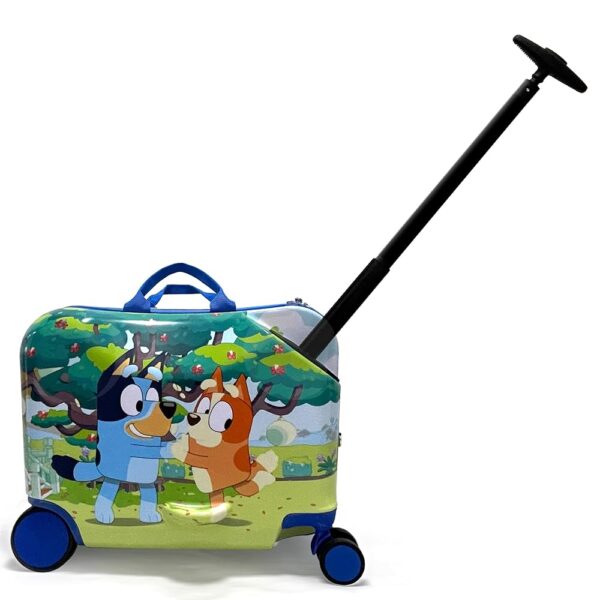
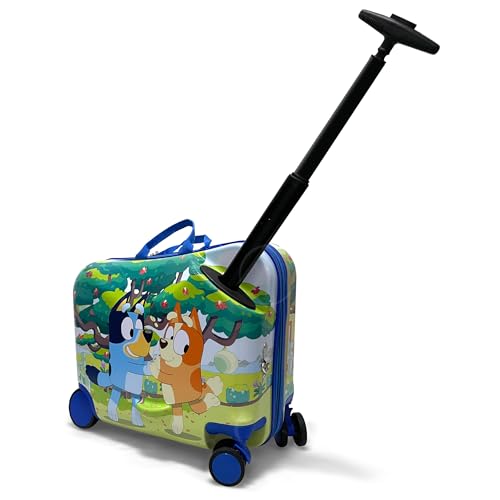
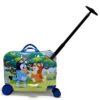
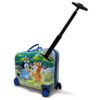
This is a licensed hardside kids case in an 18 inch nominal size, printed with Bluey artwork under a clear protective coat and rolling on inline skate wheels. The buyer is a parent giving a child their own bag for a family trip, and the appeal is entirely in the artwork and the sense of ownership rather than in packing capacity or engineering.
Two things shape how useful it will be. First, a child pulling their own case through a terminal is either a help or a hindrance depending on the child, and that is a judgment only the parent can make. Second, the practical capacity here is a few days of small clothes, not a week. If the child is old enough to want the artwork but not old enough to manage a wheeled case, a soft bag is easier, and the range is in our kids’ luggage section.
The ride on question, and the age gap
The product name calls this ride on luggage. Nothing in the description or the feature bullets describes a riding function. There is no seat, no footrest, no ride on handle, no towing strap and no stated weight limit for a child sitting on the case. What the listing describes instead is a conventional pull along case with inline skate wheels and a protruding wheel design that keeps the shell off the ground.
Why that matters more than a wording slip
Ride on cases and pull along cases are different products with different safety considerations. A case designed to be sat on publishes a weight limit and a minimum age. A case not designed to be sat on has neither, and a child sitting on a shell that was not built for it can crack the shell or, worse, tip it. Nothing here tells you which product you are buying. Confirm with the seller before ordering, and if the answer is that it does not ride, do not let a child sit on it.
The listing also publishes no age range at all. The department field says child and that is the extent of the guidance. There is no minimum age, no recommended age band and no height guidance for the handle. For a product aimed specifically at children, the absence of any age guidance is a real gap, and parents should treat it as one. Handle height in particular decides whether a small child can pull the case at all without clipping their heels.
Dimensions and a weight figure that is off by a factor of three
Three sources give three answers. The description says the case measures 47 by 24 by 37 centimeters, which converts to 18.5 by 9.5 by 14.5 inches, and gives the size as 18 inch. A feature bullet repeats the same centimeter figure but labels it inner size rather than exterior. The specification block gives product dimensions of 14.5 by 9.5 by 18.9 inches.
Those are close enough to be the same object measured slightly differently, and the labeling confusion between inner and outer is the real problem: if 18.5 by 9.5 by 14.5 inches is the interior, the exterior is larger than any figure on the page. Nothing says whether the wheels are included in any of them.
The weight is the figure that is plainly broken. The description says 7 pounds and the feature bullet repeats 7 pounds. The specification block says 2.2 pounds, and a second specification field says 1 kilogram, which is the same 2.2 pounds. So the listing publishes both 7 pounds and 2.2 pounds for the same case, and the two cannot both be right. For a child’s bag that gap is the whole decision. A 2.2 pound case is something a five year old can lift into a car. A 7 pound case, empty, is more than many small children will manage before anything goes in it. Get the real figure from the seller before ordering.
On the compliance question, we are not going to write that this case is airline approved, and the listing does not claim it. An 18 inch case is under the roughly 22 by 14 by 9 inch guideline commonly cited for United States domestic cabin baggage on height, and its 14.5 inch width would be marginally over the commonly quoted 14 inches. Check the allowance published by the airline you booked, and note that many carriers count a child’s case against the child’s own allowance rather than the adult’s.
Shell, wheels and the protruding wheel design
The shell is described as an ABS and polycarbonate composite. That is a better disclosure than hardside alone and it sits between the two pure materials in behavior: polycarbonate flexes and returns under impact, ABS is lighter, cheaper and cracks at a corner, and a composite does some of each. No ratio is published. The printed artwork sits under a clear coat, which is what stops it scuffing off in the first month and is the single feature most likely to determine whether the child still likes the case in a year.
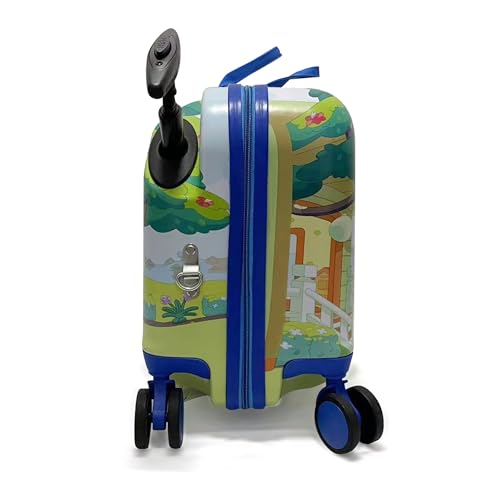
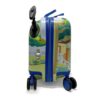
The wheels are inline skate wheels rather than spinner casters, and for a child’s case that is the right choice. Inline wheels are recessed and take load in one plane, so they are far harder to shear off than exposed casters, and they cope much better with curbs, gravel and the general abuse a child’s bag receives. The cost is that the case must be tilted and pulled rather than pushed upright, which for a small child is actually easier, because a tilted case follows rather than wandering.
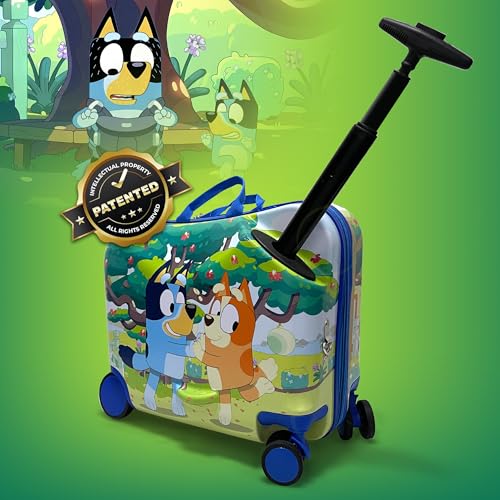
Fast Forward describes a patent pending design where the wheels protrude to keep the base of the case off the ground. That is a sensible detail. On a printed case the base is where the artwork wears through first, and lifting it clear of the floor protects the print as well as the shell.
The closure is a zipper. No lock, no zipper brand, no coil type and no lining detail are published. The case is explicitly not expandable, which the description states directly.
Warranty, review data and the alternatives
No warranty term appears on this listing. No period, no coverage description, no exclusions, nothing about airline handling damage. On a licensed children’s product that is standard and it is what you are pricing in.
The review base is 4.5 from 182 ratings with a rank of 584th in its Amazon category. That is a modest but usable pool. Read the one and two star reports specifically for handle and wheel failures, since those are the parts a child’s case loses first, and for comments on how the printed artwork holds up.
For alternatives, the same maker’s Fast Forward kids luggage and its Bluey soft luggage cover the same license in different constructions, the soft version being the lighter and more forgiving option for a younger child. A different approach to the same problem is the Kiddietotes hardshell kids case. Adult sized options sit in carry-on luggage.
Who should buy it and who should not
Buy it if your child wants this specific artwork, they are big enough to pull an 18 inch case, and you have confirmed the real empty weight with the seller. Inline wheels and a protected print are the right engineering decisions for a child’s bag. Skip it if you were buying a ride on case, because nothing on the listing describes a riding function, and skip it if the empty weight turns out to be 7 pounds and your child is small. No age guidance is published anywhere.