
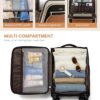
Description
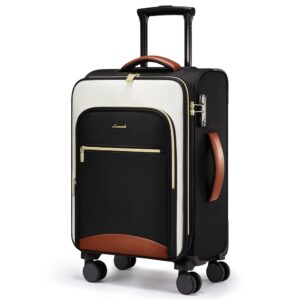
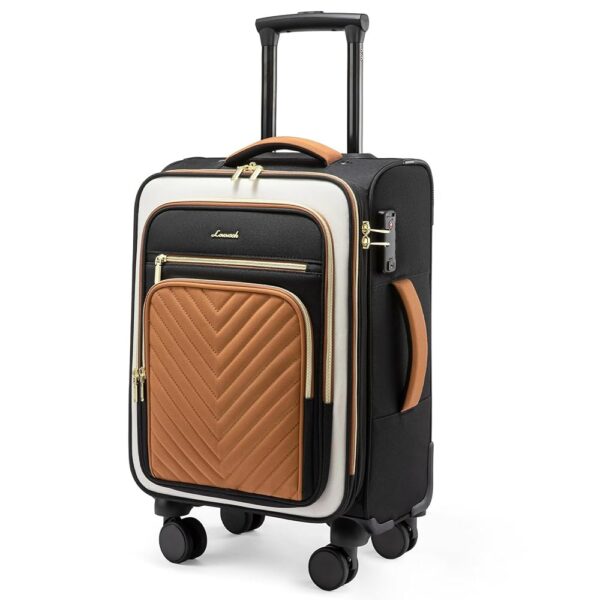
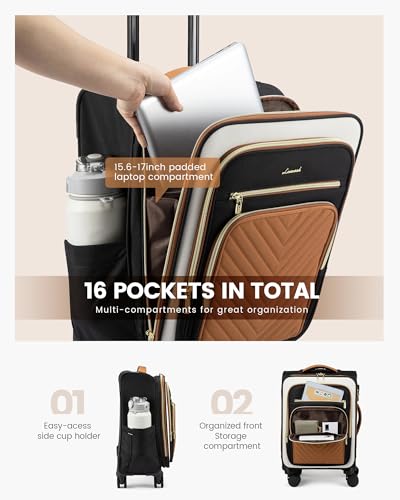
The LOVEVOOK softside carry-on is a 20 inch rolling case with an external laptop compartment, a dry and wet interior split and a TSA lock. Before any of that is worth discussing, a reader needs to know that the structured specification data on this listing is placeholder junk. The product dimensions field reads 1 by 1 by 1 inches and the weight fields read 1 pound and 16 ounces. Those are not measurements of anything.
What the listing actually publishes
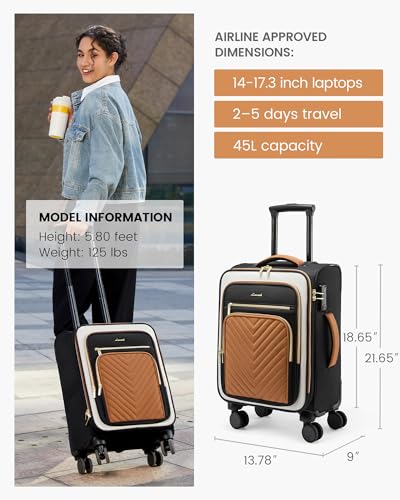
The real figures exist, but only inside the maker’s marketing bullets rather than in any structured field. The first bullet gives 21.65 by 9 by 13.78 inches, states that the figure includes the wheels, and gives a weight of 6.7 pounds. The third bullet gives a 45 liter main compartment, and the capacity field agrees at 45 liters.
So the useful numbers are 21.65 by 9 by 13.78 inches including wheels, 6.7 pounds, and 45 liters, and every one of them comes from advertising copy rather than from a specification. That distinction matters because marketing text is not held to the same standard as a spec sheet, and because a placeholder in the fields that are supposed to be checked tells you something about how carefully this listing was assembled. Verify the bag against your own tape measure and scale when it arrives.
The trip and the traveler this suits
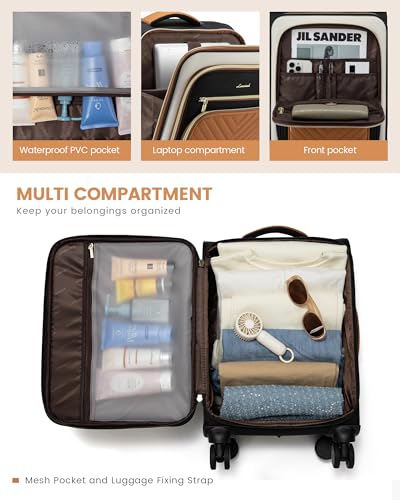
The layout is built for a traveler who wants to reach things without opening the case. There is a dedicated external laptop compartment, multiple exterior pockets sized for boarding passes, magazines or A4 folders, and side pockets for a bottle or an umbrella. That is a bag for a commuter or a business traveler moving through security repeatedly, where getting a laptop out without unpacking is the difference between a smooth screening and a slow one.
The maker names two to five days as the range for the 45 liter interior, with a designated area separating dry and wet items and internal straps to hold packing in place. Two to five days is realistic for a 45 liter softside bag. What it does not suit is anyone who wants crush protection, because a fabric shell will not stop a bag above it in the bin from pressing on what you packed.
Dimensions, and the claims attached to them
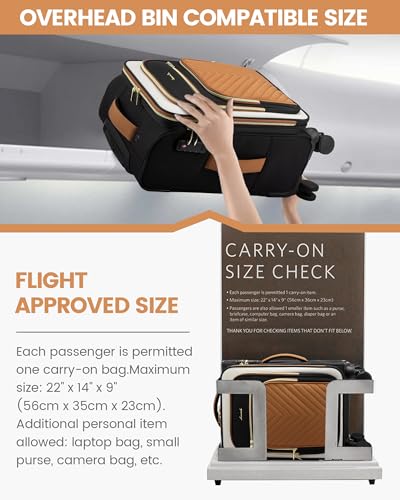
Taking the maker’s own figure of 21.65 by 9 by 13.78 inches including wheels, this bag sits just inside the roughly 22 by 14 by 9 inch convention that most United States domestic carriers apply, with about a third of an inch of margin on height, a fifth of an inch on width, and effectively none on depth. The fact that the figure explicitly includes the wheels is a genuine point in its favor, because published dimensions that quietly exclude wheels are the most common reason a bag thought to be compliant is stopped at a gate.
The title carries the string 22x14x9 airline approved. That is a search keyword, not a measurement of this bag, and it is not a compliance statement. The first bullet goes further and lists American, Delta, United, Southwest, Hawaiian and Alaska by name, saying the bag meets their check in size restrictions. Two problems with that. Naming carriers does not create an approval, since airlines do not certify individual luggage models, and check in size restrictions and carry-on size restrictions are different things entirely. We are not going to write that this bag is airline approved. Take the 21.65 by 9 by 13.78 inch figure and check it against the carrier and route you are actually flying, remembering that budget, regional and international operators are frequently stricter and often add a cabin weight limit.
Capacity against geometry
There is a small arithmetic problem worth naming. An external box of 21.65 by 9 by 13.78 inches works out to about 2,685 cubic inches, or roughly 44 liters. The published interior capacity is 45 liters. An interior cannot be larger than the exterior that contains it, so the two figures cannot both be right. The gap is small enough to be a rounding or a marketing convention rather than a wild error, but it means the 45 liter figure should be treated as approximate at best. Expect a usable interior somewhat below it.
Shell, wheels, handle and lock
The listing never names the fabric. There is no material and no denier figure anywhere, only the word softside and a reference to a padded exterior. That is a significant gap on a fabric bag, because denier is the single number that tells you how a shell will wear, and a listing that omits it has told you nothing about durability that you can check.
Mobility comes from robust double spinner wheels, described as quiet and effortless on various surfaces. Dual wheel casters spread the load across two contact points, which helps on rough ground compared with single wheel spinners, and they remain exposed and remain the most common physical failure on any wheeled bag. Nothing is published about the telescoping handle: no stage count, no material, no load rating. On a case where the handle and the wheels are the two components that decide how the bag ages, neither is documented.
The lock is described as TSA approved and offering extra security. It keeps the case shut and lets a screener inspect without cutting anything, and it opens to a universal key held by a great many people, so it is a convenience rather than security. On a softside case the point is sharper still, because a zipper can be split with a ballpoint pen and pressed closed again regardless of what the lock is doing.
Warranty, the record, and the alternatives
No warranty is published. The fifth bullet offers what it calls worry free after sales service and invites the buyer to make contact if there are quality issues, promising a satisfactory reply. That is a customer service posture, not a warranty. There is no term, no coverage description and no exclusion list, so there is nothing a buyer could hold anyone to. Airline handling damage, which is the damage luggage actually suffers, is routinely excluded even from written warranties, and here there is no written warranty to read.
The feedback record is very thin: 19 ratings at an average of 4.4 out of 5, with the bag ranked 195th in Carry-On Luggage and 144,446th in Clothing, Shoes and Jewelry. Nineteen ratings tells you almost nothing about how the wheels or the handle hold up. The listing also publishes no manufacturer field and no model number, with the LOVEVOOK name appearing only in the title, and gives China as the country of origin.
For alternatives with more behind them, the Travelpro Tourlite softside publishes a real warranty structure and a labeled packing dimension, the BAGSMART carry-on is a similarly positioned softside case, and the softside expandable carry-on covers the same brief again. For a hardside case that also uses the 22x14x9 string in its title, the Tilymol TLM102 is worth reading for comparison. The wider field sits in the carry-on luggage category and the carry-ons category.
Who should buy it, and who should not
Buy it if the external laptop compartment and the dry and wet split solve a problem you have, and you are content to verify the bag’s size and weight yourself. Do not buy it if you need reliable published specifications, because the structured fields on this listing contain placeholders rather than data, or if you want a named fabric, a documented handle or a written warranty, none of which appear. Treat the 45 liter figure as approximate, treat the named airline list as marketing rather than approval, and measure the assembled case before you fly.