
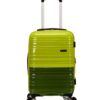
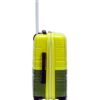
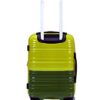

Description
The traveler this Rockland Melbourne suits
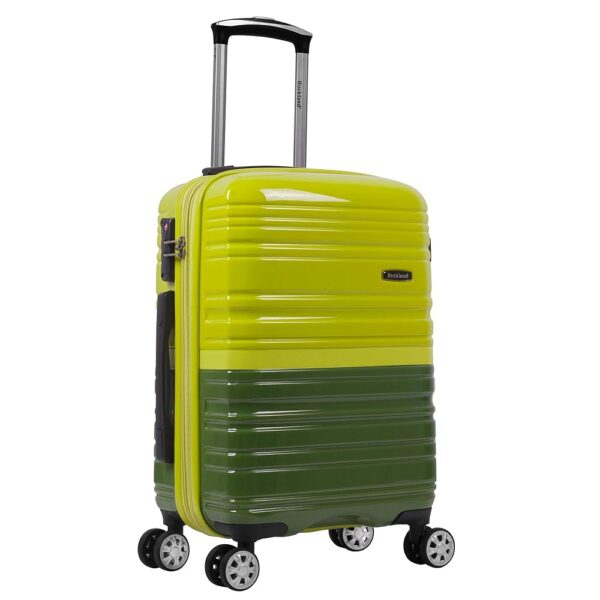
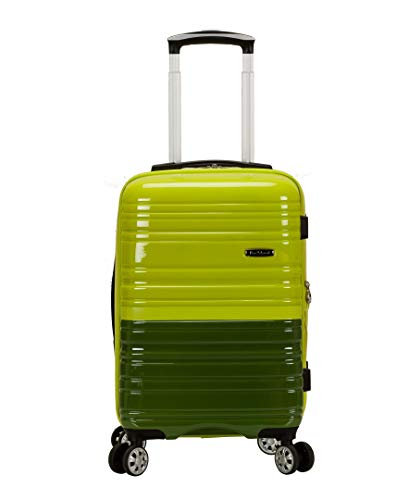
This is one of the most heavily reviewed cabin cases in the whole category, with more than twenty thousand ratings behind it, and it earns that position by being cheap, light enough, brightly colored and expandable. The traveler it fits is the occasional to moderate flier who takes two to six trips a year, wants a rigid shell without paying for one, and values being able to add packing space on the way home. The two tone green finish does the same practical job as any loud luggage color, which is making the bag findable and hard to take by mistake.
It is not built for weekly travel, and it does not pretend to be. Also worth knowing: the manufacturer field records Fox Luggage rather than Rockland, since Fox is the parent company, so both names appear across this site for the same family of shells.
Dimensions, expansion and what a sizer sees
The listing publishes two dimension sets. The specification table gives 13 by 9 by 22 inches. The product description and the first feature bullet both give 22 by 13.5 by 9 inches and state explicitly that the figure includes wheels. Those two reconcile well once you understand which is which, and the wheel inclusive figure is the one a gate sizer measures. Publishing a wheel inclusive number at all puts this listing ahead of most of its competitors, and it deserves credit for that.
The expansion is what changes the answer
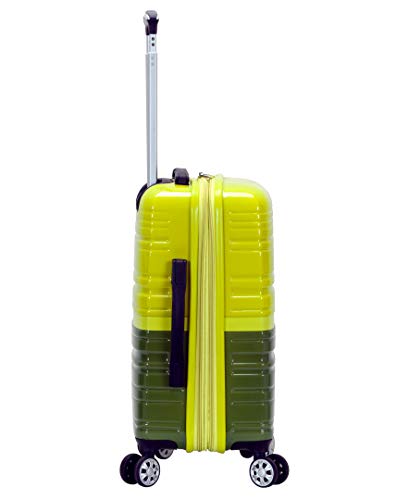
This model is expandable, and the capacity fields tell you by how much: 38.3 liters in the capacity field and 46.9 liters in the capacity total field. That is roughly a 22 percent increase, and it comes from a secondary zip that adds depth. A case that measures 9 inches deep collapsed does not measure 9 inches deep expanded. The 22 by 13.5 by 9 figure is a collapsed figure, and using the expansion takes the bag outside it. The honest way to describe an expandable cabin case is that it has two settings, a cabin setting and a checked setting, and the second one is not a cabin bag no matter what the packaging says.
The maker also names five carriers whose size restrictions it says the bag meets. That is the maker’s claim about those five airlines and not a certification, and we will not restate it as fact. Published cabin limits change, they differ by fare class and aircraft type, budget and regional carriers set tighter figures, and many international carriers add a cabin weight cap on top of the linear one. The commonly quoted United States domestic benchmark is around 22 by 14 by 9 inches with wheels and handles counted, and this case sits exactly at that limit on two of three axes when collapsed. There is no margin. Check your own airline’s current published figure.
Shell, wheels, handle and interior
The product description names the material as ABS, without a polycarbonate component. That is a specific disclosure and a more honest one than a listing that says only hardside, and it sets expectations correctly. ABS is the cheapest of the common suitcase polymers. It is stiff, light, holds a molded shape and a color well, and it cracks rather than flexes when a corner takes a heavy impact under load. On a cabin bag that lives in an overhead bin rather than at the bottom of a container, that is a more defensible trade than it would be on a checked case, but it is still the reason a case like this has a life measured in dozens of trips rather than hundreds.
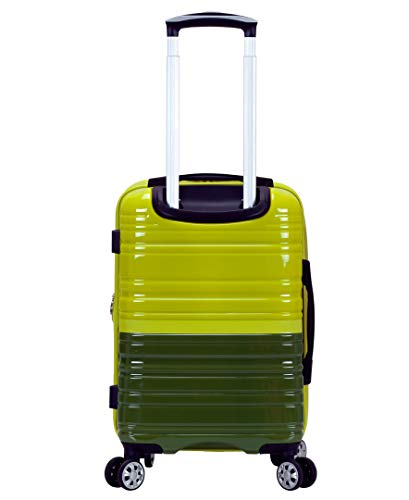
Wheels are multi directional double spinner casters. Four casters with paired wheels roll easily on smooth floors and badly on cobbles, gravel and curb cuts, they add to the measured depth, and they are the most common single point of failure on budget hardside luggage. The handle has a description conflict worth naming: the product description calls it a chrome telescoping handle with a push button, while a feature bullet calls it an aluminum telescoping handle. Chrome is a plating and aluminum is the substrate, so the two are not necessarily contradictory, but the listing never says which is which. The interior is fully lined with a mesh zip pocket and an elasticated pocket. No lock of any kind is described anywhere, TSA recognized or otherwise, which is worth stating plainly rather than assuming.
Capacity, weight and a half pound discrepancy
The 38.3 to 46.9 liter range is generous for a 20 inch case and the expansion is a genuine feature rather than a token one. Collapsed, that is three to four days of clothing for one person; expanded, closer to five or six, at the cost of no longer fitting the size it was sold at.
Weight is published twice with two values. The specification table says 7 pounds. The product description says 7.5 lbs. Take the higher figure when planning. Seven and a half pounds is heavy for a 20 inch cabin case, noticeably heavier than the 6.5 pound Safari model in the same family, and on any carrier that enforces a 7 kilogram cabin weight cap the empty case is consuming nearly half the allowance before you pack a shirt. That is the constraint that catches travelers out on international and low cost tickets far more often than the linear dimensions do. On United States domestic tickets where cabin bags are not weighed, it matters only to your shoulder.
Warranty, standing and the alternatives
The warranty appears in the description only as the fragment five year, isolated between two asterisks with no sentence around it. That is import damage rather than a term. A five year length is implied, and nothing at all is published about coverage or exclusions. Luggage warranties commonly exclude damage caused by airline handling, which is precisely the damage that occurs, so do not assume a snapped caster after a rough transfer would be covered. Ask for the written terms before relying on them.
The listing shows 4.5 stars from 20,829 ratings and a position of 11th in the carry-on luggage chart, which is a very large and long running body of feedback and the single strongest argument for the bag. Among close relatives, the Rockland Vision 20 inch is the non expandable sibling at a lighter weight, the Rockland Melbourne in mint is the same case in another color, and the Rockland Melbourne hardside in charcoal is a further variant. The Rockland Safari is a pound lighter with the same wheel arrangement. For a branded alternative with clearer documentation, the Amazon Basics 21 inch hardside is worth comparing. Browse carry-on luggage and carry-ons for the wider field.
Who it is for and who should look elsewhere
Buy it if you want a cheap expandable cabin case with an enormous review history, you fly carriers that do not weigh cabin bags, and you understand the expansion turns it into a checked bag. Look elsewhere if you fly with a cabin weight cap, since 7.5 pounds empty is a lot; if you need a lock, because none is described; or if you need the shell to survive being crushed, since plain ABS cracks where polycarbonate flexes.