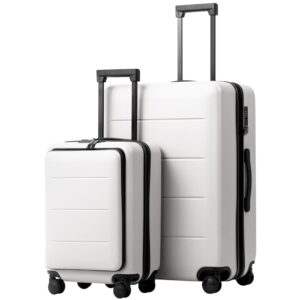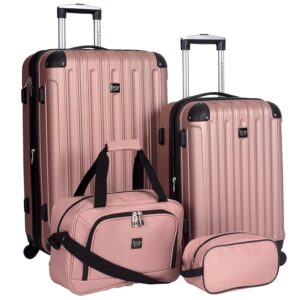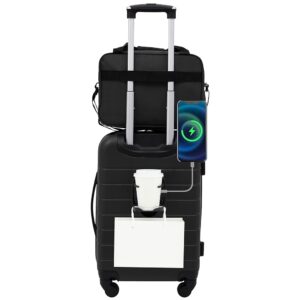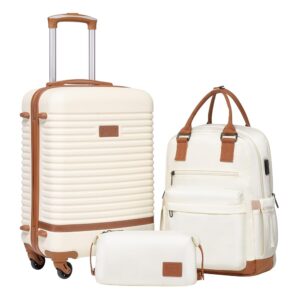
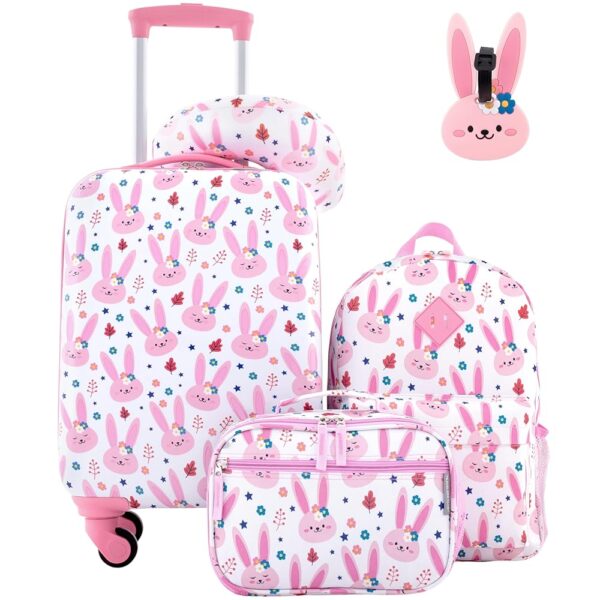
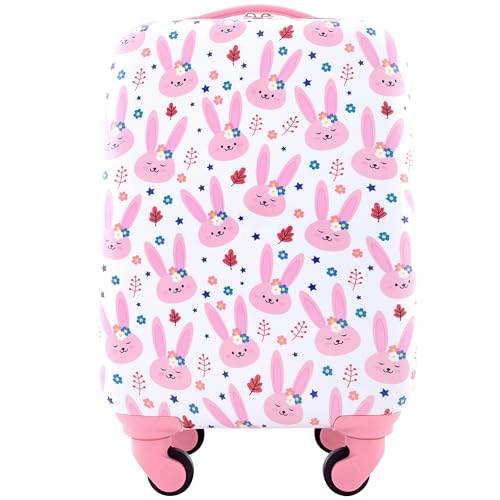
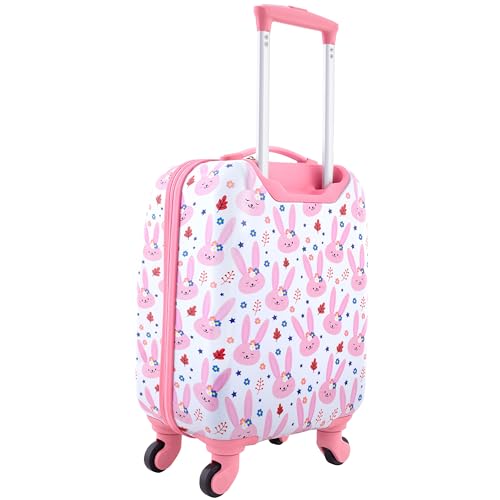
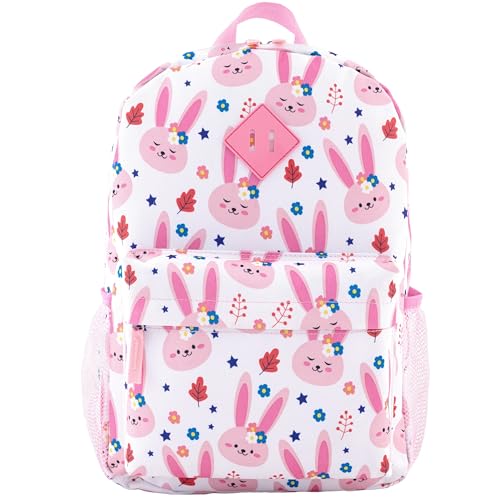
Description
The child and the trip this set is built around
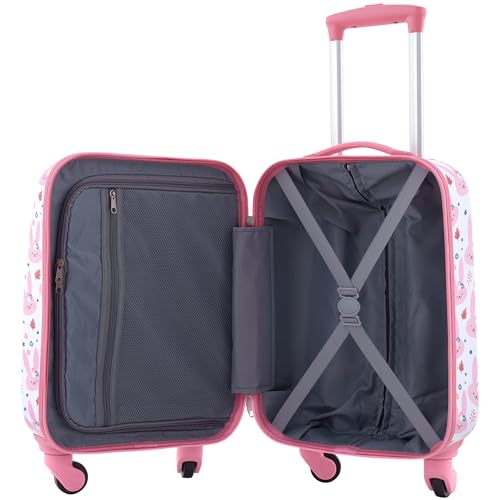
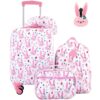
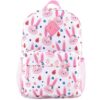
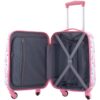
This is a five piece children’s travel bundle: an 18 inch hardside case on four wheels, a 15 inch backpack, a 10 inch lunch bag, a neck pillow and an identification tag. The maker recommends it for children aged six and over, which is a genuinely useful disclosure and one that a great many children’s luggage listings omit entirely.
The case for buying a bundle like this rather than assembling one is straightforward. A child who has their own matching luggage carries their own luggage, the backpack covers the school year as well as the trip, and the pieces coordinate without a parent having to make five decisions. The case against it is equally straightforward: bundles are priced as a package, so you pay for the neck pillow and the tag whether or not you would have bought them, and the individual pieces are built to a package price rather than to a piece price.
Sizes, and what is not published
The specification table gives 12 by 9 by 18 inches, which lines up with the 18 inch case rather than with the set. Nothing states whether the wheels and the retracted handle are inside that measurement, and no dimensions at all are published for the backpack beyond its 15 inch label or for the lunch bag beyond its 10 inch label. On a children’s set that is a modest gap rather than a serious one, because the case is the piece that has to fit anywhere specific.
How an 18 inch case sits against cabin rules
The commonly cited United States domestic cabin allowance is in the region of 22 by 14 by 9 inches with wheels and handles counted. At 18 by 12 by 9, this case is inside that benchmark on every axis, comfortably on two of them and exactly at the limit on depth. That makes it a plausible cabin bag on most mainline domestic carriers. We still never write that a bag is airline approved, because the limit belongs to the airline: budget and regional carriers publish tighter figures, and several carriers restrict how many pieces a child’s ticket includes or count a child’s bag against an accompanying adult’s allowance. If your child is flying on a basic fare, check whether the backpack counts as their personal item and whether the case counts as anyone’s cabin bag before you get to the gate.
Construction, wheels and the material question
The case is described as hardside with four wheels, and that is the extent of the material description. No polymer is named anywhere on the listing. The maker says only high quality materials, which tells you nothing: ABS, polycarbonate and polypropylene behave very differently under load and have very different lives. On a child’s case the practical failure is a cracked corner from a drop rather than a crushed shell from a container load, and ABS cracks where polycarbonate flexes, so the answer would genuinely change what the set is worth. Ask the seller.
The four wheel arrangement deserves an honest note. On adult luggage, spinner casters are a convenience trade. On children’s luggage they are more of a liability, because a child pulls a bag sideways around corners, drags it up curbs and lets it fall over, and an exposed caster stem is the component that snaps under exactly those loads. Two inline skate wheels, as used on the American Tourister Disney hardside, survive that treatment considerably better. Against that, casters let a small child push the case upright beside them rather than tow it tilted, which a six year old may find easier. It is a real trade rather than a clear win either way.
The handle is a telescoping tube. No lock of any kind is described, which is entirely appropriate on a child’s bag. The backpack is listed at 15 inches, which is a normal school size, and the lunch bag at 10 inches. No fabric or denier figure is published for either.
Weight, capacity and what a child can actually manage
The specification table records 7.48 pounds and no capacity figure at all, for any piece. The 7.48 pound figure is almost certainly the combined shipping weight of all five items rather than the weight of the case alone, since a 7.5 pound 18 inch children’s case would be unusually heavy. The listing does not say which, and that matters more here than it would on adult luggage.
The reason it matters is simple. A child of six weighs perhaps 45 pounds, and general guidance on children carrying loads is to stay well under a tenth of body weight for a backpack. An empty case that already weighs seven pounds leaves very little room before a child cannot manage it, and the whole premise of buying a child their own luggage is that they can. Ask the seller for the empty weight of the case on its own, and pack it accordingly. There is no capacity in liters published, so plan by volume rather than by number: an 18 by 12 by 9 inch case holds roughly three or four days of a child’s clothing plus a toy and a book.
Warranty, standing and the alternatives
No warranty term appears anywhere in the source data. No length, no coverage description, no exclusion list. On a five piece bundle the useful question is whether a single failed piece can be replaced or whether a broken caster means the whole set is done, and nothing here answers it. Ask before ordering.
The listing shows 4.7 stars from 6,141 ratings and a position of eighth in the luggage sets chart. That is a high score on a large base and it is the most persuasive fact on the page. Note that the same set is sold in several character themes and appears on this site more than once, including as the car themed version of the same TCS-K1005 set, which is the identical product with different graphics. Among alternatives, the Kiddietotes hardshell kids’ case is the unlicensed single bag option, the Emissary unicorn kids’ case covers the same age range, and the Fast Forward kids’ luggage is another. Browse kids’ luggage and luggage sets for the wider field.
Who should buy it and who should not
Buy it if you want one purchase to cover a child’s case, backpack and lunch bag, you value that the maker published an age recommendation, and a 4.7 average across six thousand buyers reassures you. Do not buy it if you need to know the case weight on its own, since the published figure appears to cover all five pieces; if you want inline wheels that survive a child’s handling better than casters; or if you need to know what the shell is made of, because no polymer is named.