

Description
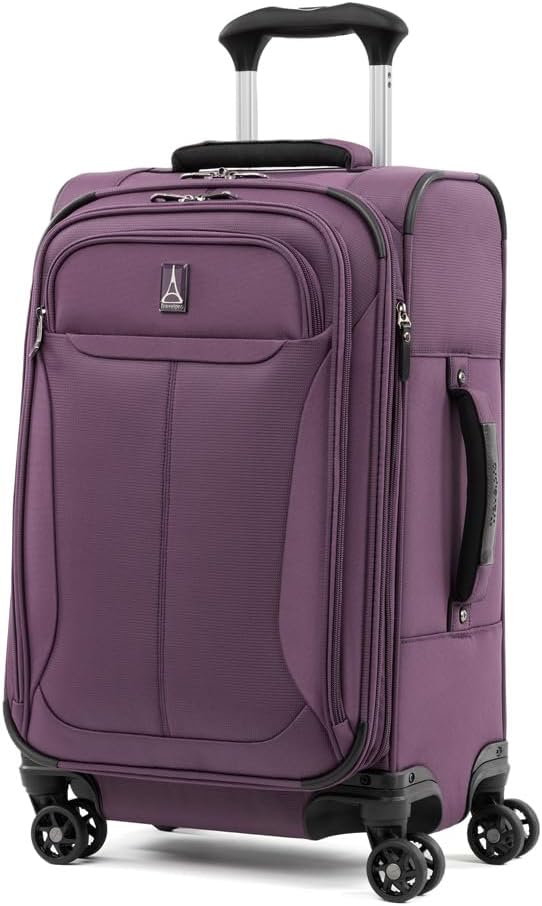
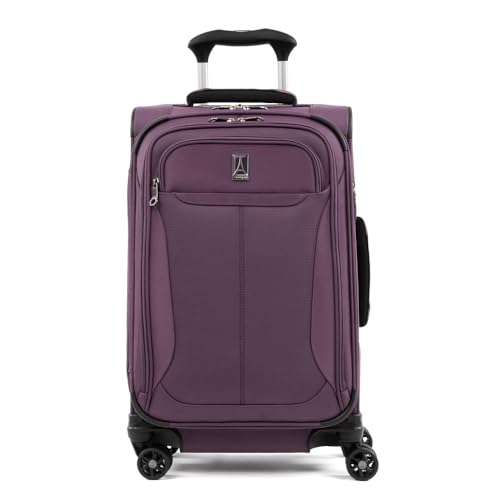
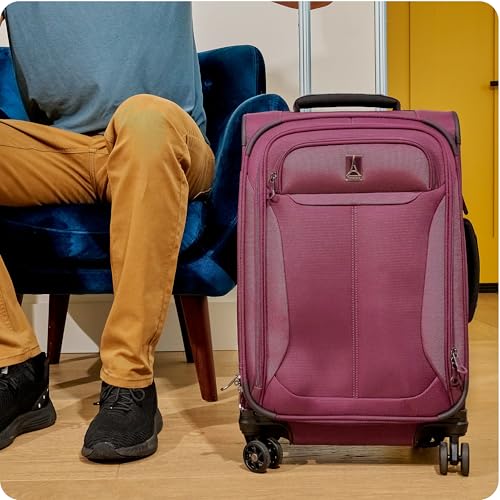
The Travelpro Tourlite is a 21 inch softside expandable carry on at 5.7 pounds, sitting just below the better known Maxlite line in the same maker’s range. The specification is strong and the listing is unusually thorough about features. It has one significant gap: Travelpro publishes only the case packing dimensions and never publishes the overall dimensions with the wheels included, which on every other Travelpro listing in this catalog it does.
The traveler and the trip
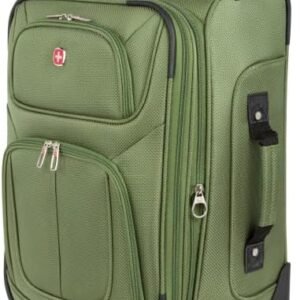
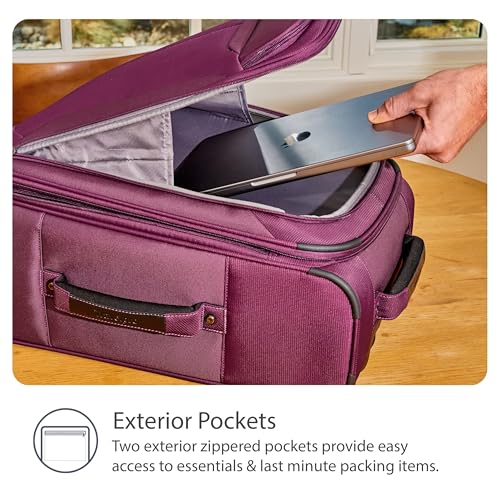
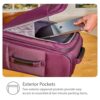
A 21 inch softside at 5.7 pounds is a four day bag for one adult. The pitch is a light fabric case with front pocket access, and at this weight it is competitive with almost anything in its size class. Two exterior pockets mean a laptop, a passport and a boarding pass come out at security without opening the case, which is the everyday advantage a hard shell cannot offer at any price.
It suits regular flyers who lift the case into an overhead bin themselves and anyone on a carrier that weighs cabin baggage. It does not suit travelers carrying fragile contents, because fabric provides no crush protection. If a rigid shell is the requirement, the maker’s own Travelpro Maxlite Air is the polycarbonate alternative at 6.3 pounds, and the wider field sits in carry on luggage.
Dimensions, and the figure that is not published
The only measurement on this listing is a case packing dimension of 20.75 by 13.75 by 8.75 inches, at 5.7 pounds. There is no attribute block on this product, so there is no second figure to check it against, and there is no overall dimension anywhere.
Why the missing overall figure matters
An airport sizer measures the case standing on its castors, and published packing dimensions describe the space inside the shell. Those two are not close on a wheeled bag. On the Maxlite 5, which Travelpro documents fully, the case dimensions are 21 by 14 by 9 inches and the overall dimensions including wheels and carry handles are 23 by 14.5 by 9 inches. That is two inches of height and half an inch of width added by the wheels and handles.
Apply the same gap to this case and an overall figure in the region of 22.75 by 14.25 by 9 inches is a reasonable expectation, which would put it over the commonly cited United States domestic allowance of around 22 by 14 by 9 inches on two axes. That is an estimate and not a published number, and we are not going to present it as one. Get the overall dimension with wheels from the seller before you order, and compare it to your specific carrier.
The case has a tapered expansion zipper adding two inches. Travelpro states elsewhere in its range that a fully expanded carry on may not meet airline restrictions, and the same logic applies here. Treat the expansion as a feature for a return leg you are prepared to check.
Fabric, wheels and handle
The fabric is DuraGuard, which Travelpro describes as water repellent and stain resistant. Naming the treatment is better than most listings manage. Water repellent is not waterproof, so a case left on a wet ramp will eventually take on moisture, but spills bead and dirt brushes off. The listing does not give a denier figure, which is the number that would tell you how the fabric ages, and that is a gap on a bag whose selling point is a light fabric.
Four spinner castors rotate 360 degrees. They are effortless on terminal flooring, poor on cobble and gravel, and the most common failure point on any wheeled case. The two wheel version of the maker’s Maxlite line uses larger inline skate wheels that survive rough ground far better, at the cost of not being able to push the case upright beside you.
The handle is the PowerScope with Travelpro’s contour grip, set to two heights at 38 inches and 42.5 inches, with rubberized touch points at the top, bottom and side. Two stops is fewer than the multi stage handles on some competitors, though 42.5 inches suits most adults. Three easy grip handles are fitted for lifting, and the zippers are described as high tensile and ergonomic. On a softside the zipper is the weak point, so a stated grade is worth having.
Capacity, organization and the missing volume figure
No liter capacity appears anywhere in the source data. Working from a packing dimension of 20.75 by 13.75 by 8.75 inches, the raw enclosed volume is roughly 41 liters before the lid pocket and the exterior compartments take their share. That is an estimate. The Maxlite 5 spinner at a similar packing dimension publishes 46 liters, so somewhere in the low forties is the reasonable expectation here.
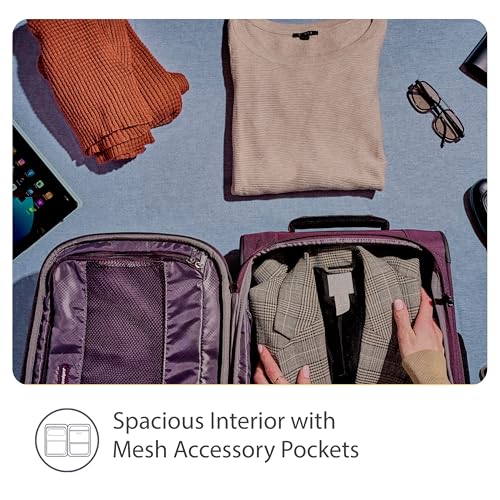
Organization is a full length mesh pocket, a mesh side pocket, adjustable compression straps and two exterior pockets. Compression straps are better than plain hold down straps because they actually reduce the height of a packed stack rather than simply holding it flat. There is also a discreet side compartment for an identification tag, which is a sensible touch: a tag inside a pocket does not get ripped off by a baggage system the way a hanging tag does.
At 5.7 pounds the case is light, three tenths of a pound heavier than the Maxlite 5 and well under the eight pound hard shells. Empty weight counts twice on carriers that enforce a cabin bag weight limit, because the case eats your allowance before you pack anything.
The warranty, read carefully
Travelpro states limited lifetime coverage plus its trusted companion promise, which covers the cost of repair for damage from an airline or another common carrier for one year. Elsewhere in the range the same term is qualified as applying when purchased new and after registration, and it is reasonable to assume the same conditions here.
Read those clauses together. The lifetime element is a defects warranty against faults in materials and workmanship. The airline handling element, which is the damage that actually happens to luggage, runs for twelve months. That is a better deal than the category norm, because most competitors exclude carrier damage entirely and Samsonite’s ten year term on cases like the Winfield 3 DLX is silent on it. It is not a lifetime guarantee against baggage handlers, and the word lifetime should not be read as one.
Register the bag the day it arrives, because the twelve month carrier damage window starts running. Larger cases in the same line sit under suitcases.
Who should buy it and who should not
Buy it if you want a light fabric carry on with exterior pockets, compression straps and a stated warranty that covers carrier damage for a year, and you will register it. At 5.7 pounds with a DuraGuard coating and a contour grip handle, the specification is strong for the money.
Skip it if you need to check the case against a gate sizer before ordering, because this listing publishes only the packing dimension and never the overall dimension with wheels, which is the figure that gets measured. Skip it too if you need crush protection or a published capacity, because the listing gives neither. Ask the seller for the overall dimension before you commit.