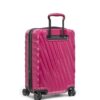

Description
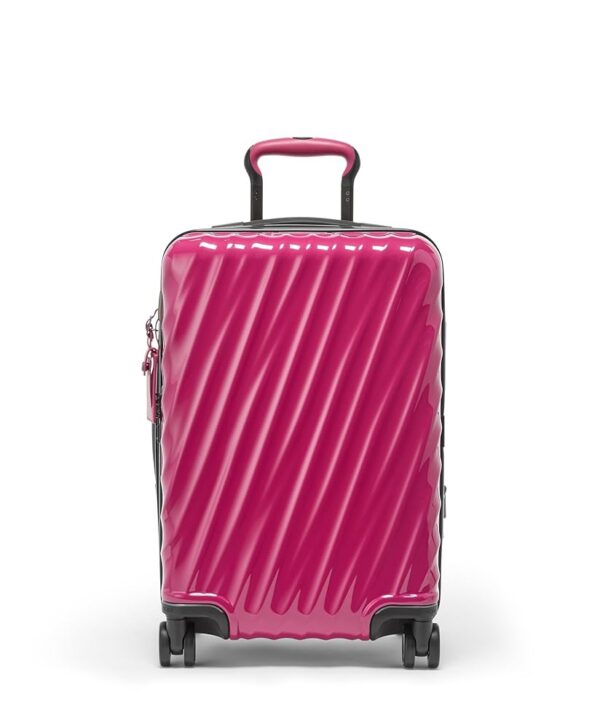
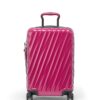
The TUMI 19 Degree International Expandable 4 Wheeled Carry-On, model 149060-1347, is a hard shell cabin case in fuchsia. It sits at the premium end of this catalog and the listing reflects that: dimensions are in the product name, capacity is published, and a warranty term is stated with a number attached. It also has a USB-C port, which brings a boarding rule with it.
The traveler this is aimed at
This is a frequent flyer’s cabin bag. The feature set, a three stage handle, compression straps, an integrated lock, a tracking service and a charging port, is aimed at someone who flies often enough that small conveniences compound. At 7.9 pounds empty it is not the lightest hard case in the category, and on carriers that weigh cabin bags that matters.
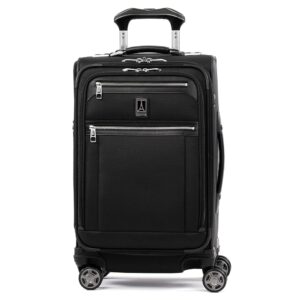
Buyers cross shopping at this tier should read the Briggs and Riley ZDX 22 inch carry-on and the Travelpro Platinum Elite carry-on, both of which take a different approach to the same trip.
Dimensions, and what International means here
The product name gives 21.8 by 14.0 by 9.0 inches. The specification block gives 9 by 14 by 21.75 inches. Those are the same figures with a rounding difference on the height, so the listing is internally consistent, which is more than most manage.
Two different standards to measure against
Against the commonly cited United States domestic cabin allowance of roughly 22 by 14 by 9 inches, this case is inside on height by a fifth of an inch and exactly level on width and depth. There is no margin on two of three axes. A hard shell does not bulge the way a soft bag does, which helps, but exactly level is exactly level.
The name says International, and that word is doing work that needs unpacking. Converted, 21.8 by 14.0 by 9.0 inches is about 55.4 by 35.6 by 22.9 centimeters. Many carriers outside the United States publish cabin allowances of 55 by 40 by 20 or 55 by 40 by 23 centimeters. On the first of those this case is over on depth by nearly three centimeters. On the second it fits on depth and is four millimeters over on height. Several international and budget carriers also enforce a cabin weight limit that a 7.9 pound empty bag begins consuming immediately.
So International here is TUMI’s size class name, not a compliance statement, and it is not one we will make either. Check the specific allowance published by the airline you are flying.
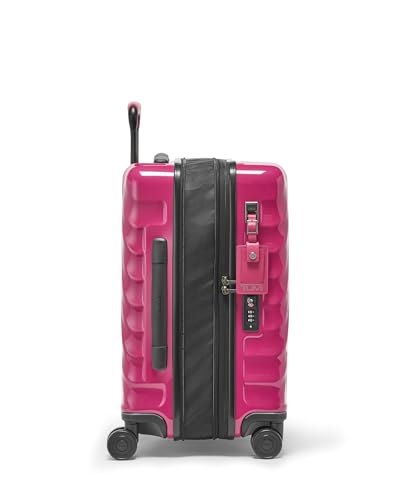
The case has a zipper expansion. Nothing in the listing states how much it expands, which is a real gap on a bag with no dimensional margin. Using an expander on a cabin case pushes the depth past what a sizer allows, so treat an expanded 19 Degree as a checked bag.
Capacity is published as 38 liters. Cross checking, the outer envelope of 21.8 by 14 by 9 inches is about 2,747 cubic inches, or roughly 45 liters, so a stated 38 liters sits sensibly below the outer volume and reads as a real usable figure rather than a geometric calculation.
Shell, wheels, handle and lock
The listing describes a hard shell suitcase and calls the case lightweight and resilient, but it never names the polymer. That is a surprising omission at this price point, where the difference between polycarbonate and an aluminum composite is part of what is being paid for. Polycarbonate flexes under impact and returns to shape, while stiffer materials crack instead. With no material named, the honest position is that the shell composition is not identifiable from this listing.
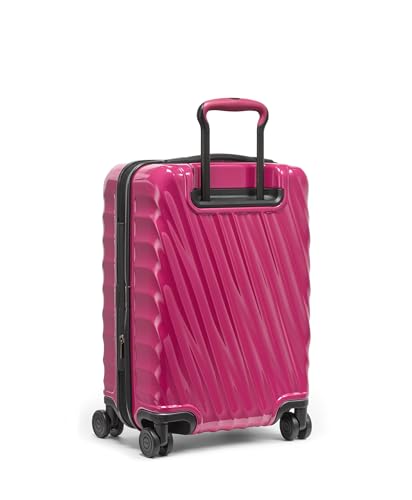
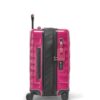
The wheels are four spinner castors. The usual trade applies: easy to push on terminal flooring, awkward on gravel and cobbles, exposed to the knocks that break them, and counted in the measured depth. On a case with no dimensional margin, a replacement castor that sits even slightly differently changes whether the bag clears a sizer.
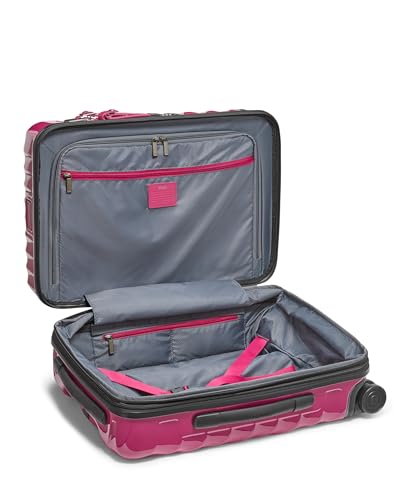
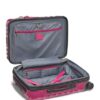
The handle is a three stage telescoping design, which lets a taller user set a comfortable height rather than choosing between two fixed positions. Compression straps hold the load in place, which on a hard case that opens into two halves is what stops the contents redistributing when it is opened flat.
A Low Profile Integrated Lock is fitted. The listing does not say whether it is a Travel Sentry or TSA recognized design. If it is, and integrated luggage locks in this market usually are, then it opens with a universal key held by screeners. Such a lock deters casual tampering and keeps a zipper shut in transit. It is not security, and valuables should not be in the bag on the strength of it.
TUMI Tracer is included, which is the maker’s registration and recovery service rather than a tracking device, and monogramming is offered.
The USB-C port, and the rule that governs it
This is the part of the listing that needs the most care. The bag has a USB-C charging port. What the listing does not say is whether a battery is included, whether one is fitted internally, or whether the port simply routes to a pocket where you supply your own power bank.
That distinction decides whether the bag boards. Most airlines require lithium batteries and power banks to travel in the cabin and to be removable, and bags with non removable batteries have been refused at the gate and in some cases banned outright by specific carriers. If you carry a power bank in this case, you must be able to take it out, and you must take it out if the bag is ever gate checked, which on a full flight is a real possibility for any cabin bag.
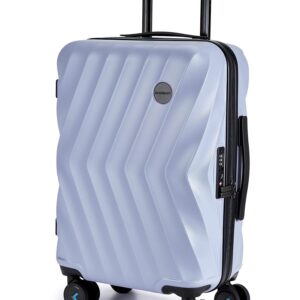
Before flying with it, confirm with the seller whether a battery ships with the case and whether it is removable. This is a boarding risk rather than a convenience question. Readers who prefer a cabin case with no powered components should look at the LEVEL8 Luminous hard shell carry-on or the Samsonite Freeform carry-on.
The warranty, and the demand picture
TUMI states that a product from its travel, business or bags collections is covered for five years, with two years for wallets and accessories, and that limited warranty coverage begins on the date of in store purchase or delivery.
Two things follow. First, this is a five year limited warranty, not a lifetime one, and a buyer expecting lifetime coverage at this price should note that. Second, the listing does not publish the exclusions, and limited warranties on luggage ordinarily cover defects in materials and workmanship rather than damage caused by airline handling, which is the damage that actually happens. Read the full terms before treating the warranty as part of the value.
The listing shows a 4.4 star average across 71 ratings, a thin sample for a product in this category, and ranks 275th in Carry-On Luggage and 212,568th in Clothing, Shoes and Jewelry. Other cabin options sit across the carry-ons category and the carry-on luggage category.
Who should buy it, and who should not
Buy it if you want a well specified premium cabin case with a published capacity, a three stage handle, compression straps and a stated warranty period, and you have checked your carrier’s allowance yourself rather than relying on the word International.
Skip it if you need dimensional margin at the gate, because there is none on width or depth. Skip it too if you want a named shell material, a stated expansion amount, or a bag with no powered components to explain at a boarding gate.