
Description
The traveler this UrbanExplorer case is pitched at
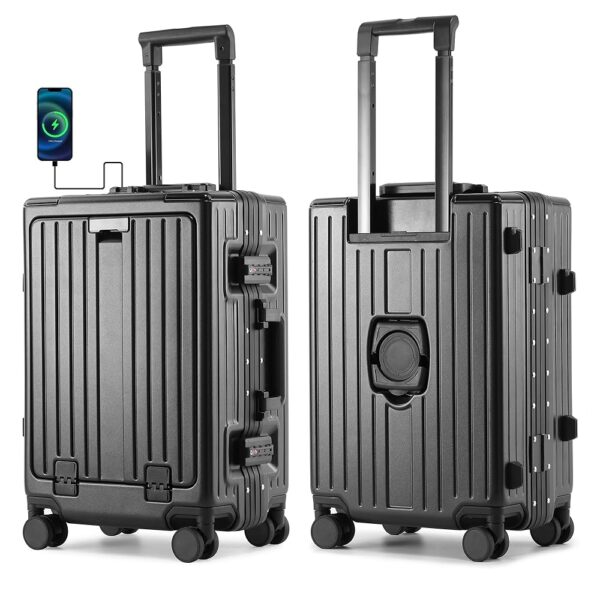
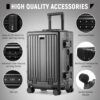
This is a zipperless aluminum framed case with USB and USB-C ports, a stowable cup holder and a pop out phone platform on the trolley bar. Everything on that list points at the same buyer: the traveler who spends time standing in terminals, wants a coffee and a phone somewhere other than in their hands, and likes the idea of charging from the bag. It is a gadget forward cabin case rather than a durability first one.
The trip is a short one, two to four nights, because the practical capacity is small once the frame and the fittings are subtracted. Before going further it is worth naming something that shapes the whole review: this listing carries 34 ratings, a 4.4 average and a rank of 134th in its Amazon category. Thirty four ratings is not enough to tell you anything about how the case behaves after a year, and on a case with a frame, latches and electronics there are more things to fail than on a plain shell.
Dimensions, and two sets that are far apart
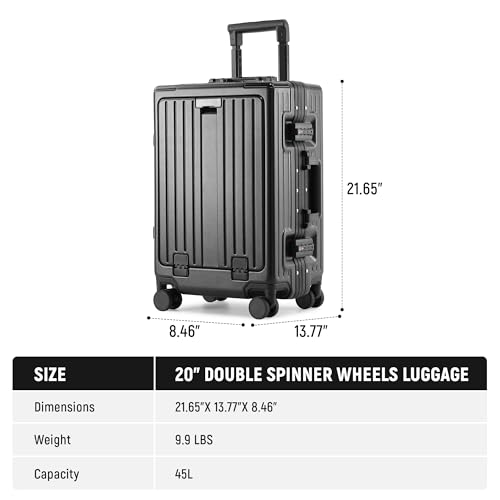
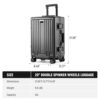
The specification block gives product dimensions of 15.75 by 11.02 by 22.83 inches. The first feature bullet gives the size as 19.7 by 13.4 by 9.46 inches with a volume of 43 liters. Those are not the same object. The specification block is more than three inches taller and nearly two inches deeper than the bullet.
Which one to plan around
The bullet figures look like the case and the specification figures look like the shipping carton, which is a common failure in imported luggage data. But we are not going to declare which is right, because nothing on the listing says. What we can say is what each implies. At 19.7 by 13.4 by 9.46 inches the case is inside the roughly 22 by 14 by 9 inch guideline commonly cited for United States domestic cabin baggage on height and width, and about half an inch over on depth. At 22.83 by 15.75 by 11.02 inches it is over on every axis and would not clear a sizer at all.
The listing’s own words are that this is airline approved luggage complying with the carry on restrictions of all major airlines around the world. That is a claim we will not repeat in our own voice, and it is a claim no manufacturer can support. Airlines set their own allowances, budget and regional carriers are frequently stricter than the majors, and many international carriers enforce a cabin weight limit as well. Given the dimension conflict on this listing, measuring the case on arrival is not a precaution, it is the only way to know what you have.
One structural detail affects the measurement. The cup holder stows on the back of the case, and the phone platform extends from the trolley bar. If either of those sits proud of the shell when stowed, it adds to the measured depth. The listing does not say whether the published dimensions include them.
Frame, latches, wheels and the weight problem
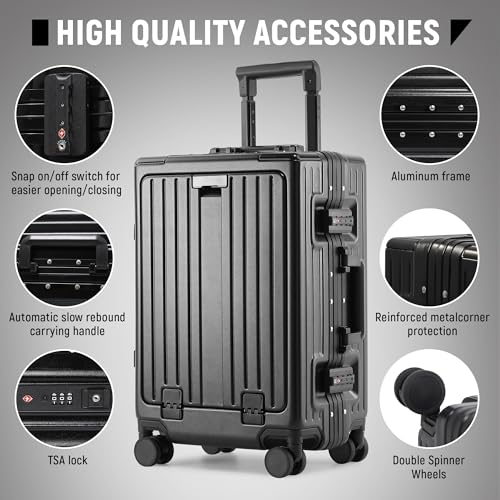
The case is zipperless, using an ABS shell with an aluminum frame closed by TSA latches. That construction has real advantages. There is no zipper to burst under a full load and no coil track to split open with a pen, and the frame adds rigidity that a zippered shell does not have. The trade is weight, cost and the fact that a bent frame is harder to live with than a broken zipper, because a bent frame stops the case closing at all.
The latch mechanism is described as sitting close to the face of the case and requiring simultaneous pressure on both sides to open, which is a sensible guard against the case springing open on a belt. The locks are TSA approved, meaning a screener can open them with a master key. That is a screening convenience, not security. TSA master keys have circulated widely for years, so treat the latches as protection against accidental opening and keep valuables on your person.
Now the weight, which is the number that should stop most buyers. The specification block says 12.27 pounds and the bullet says 12.58 pounds. Both are extraordinary for a 20 inch cabin case. A typical polycarbonate carry on in this size runs six to eight pounds, and a heavy business softside runs eight to nine. Twelve and a half pounds is aluminum frame territory and then some. On any carrier that weighs cabin baggage against a 7 or 8 kilogram limit, this case consumes roughly three quarters of the allowance while empty. That is not a nuance, it is a disqualification on those routes.
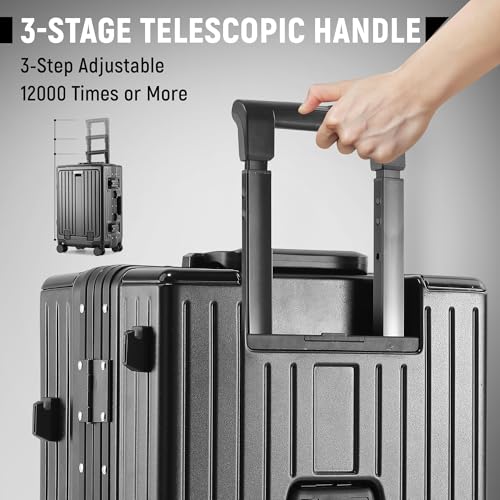
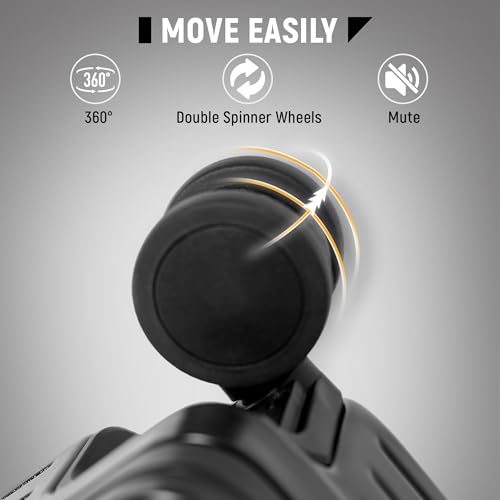
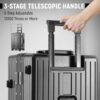
Wheels are 360 degree dual spinners with no material or bearing detail. The trolley bar is aluminum with three position adjustment. Spinner casters roll sideways well on smooth floors, catch and tip on rough ground, and are the most common failure point on any wheeled bag, more so under a case this heavy when loaded.
The power features and the rule that governs them
The case has USB and USB-C ports and the listing states clearly that the power bank is not included. That is the right arrangement and it is worth explaining why. Most airlines require lithium batteries and power banks to be removable and carried in the cabin rather than in the hold, and luggage with a sealed in, non removable battery has been refused at the gate by carriers enforcing those rules. Because you supply the bank here and it lives loose in the case, you can pull it out and keep it with you.
Do exactly that. Never put a power bank in a checked bag, check your airline’s stated watt hour limit before buying one, and remember that the ports on the case are only wiring. They generate nothing. Smart luggage with fixed batteries is a different category of risk, and the ride on category in particular is worth reading about in our look at the Airwheel SE3S riding luggage.
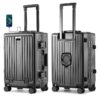
The other convenience features are a front pocket that opens independently for a 15.6 inch laptop, the stowable cup holder and the phone platform. The laptop pocket on a zipperless case is genuinely useful, because it means you can reach a laptop at security without unlatching the whole shell.
Warranty, data quality and the alternatives
No warranty term appears anywhere on this listing. No period, no coverage, no exclusions, and nothing about airline handling damage. On a case with a frame, latches and electrical fittings, that silence is worth more than it would be on a plain shell, because there is more to go wrong.
The listing also spells the brand two different ways, as UrbanExporer in the product name and UrbanExplorer in the manufacturer field. It is a small thing, and it belongs in the same file as the twin dimension sets and the twin weights: the source data on this product is not carefully maintained, and every figure on it should be confirmed before you order.
For a zipperless case with a longer stated coverage plan, the LUGGEX zipperless aluminum frame carry on is the direct comparison. For a conventional expandable shell at a similar size, see the LUGGEX expandable hard shell. Wider choices are in our carry-on luggage and suitcases sections.
Who should buy it and who should not
Buy it if the cup holder, phone platform and charging ports are things you would actually use, you fly United States domestic routes where cabin bags are not weighed, and you are willing to measure the case before the first flight. Skip it if you fly anywhere the cabin bag goes on a scale, because at over twelve pounds empty this is the heaviest cabin case in its class by a wide margin. And do not read the worldwide compliance claim as a fact when the listing cannot agree with itself on how big the case is.