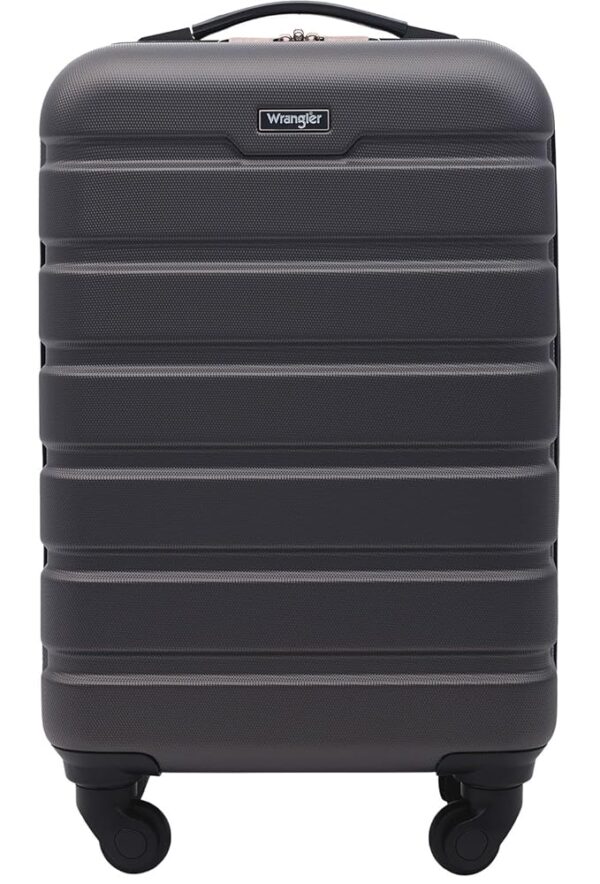
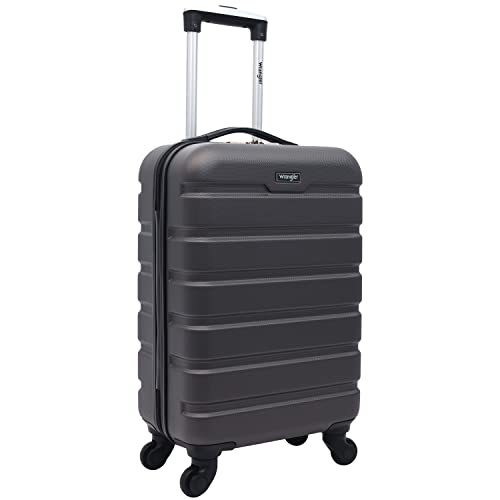
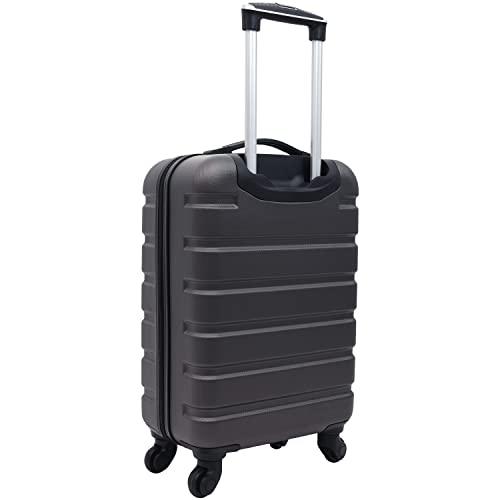
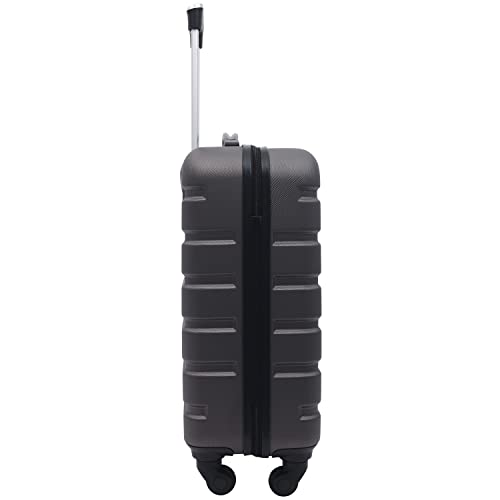
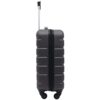
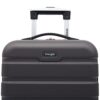
Description
Who this Wrangler hard shell is for
This is a light ABS cabin spinner with a fully lined interior, a dividing zipper and compression straps, sold cheaply under a licensed western wear name. The buyer is the occasional traveler who wants a rigid case, a low price and a low empty weight, and who is not asking it to survive a monthly checking cycle.
The numbers that matter are 5.34 pounds empty and a rank of third in its entire Amazon carry on luggage category across nearly 7,000 ratings. Light and heavily bought is a reasonable combination at this price. The trip is three to five nights. A near identical shell from the same manufacturer appears as the Travelers Club Chicago hardside spinner, which is worth comparing directly.
The size question, and a listing that gives two answers
The product name calls this a 22 inch case. The product description calls it a 20 inch case. The specification block gives 14 by 9.5 by 20 inches. Two of the three sources say 20 inches and only the product name says 22.
Which to believe, and what it changes
Work from 20 inches, since two independent parts of the listing agree on it and the outlier is a product name, which is the least reliable field on any listing in this catalog. That matters practically: a 22 inch case sits exactly at the commonly cited height limit with no tolerance, while a 20 inch case has two inches of margin, and those are very different purchases.
The depth figure is the one that deserves attention either way. At 9.5 inches this case is half an inch over the roughly 9 inches commonly quoted in United States domestic guidelines. A softside bag would compress that away. A rigid ABS shell will not compress at all. Nothing on the listing says whether the wheels are included in any of the figures.
A feature bullet claims the case meets most, if not all, airline carry on standards and regulations, naming Spirit Airlines specifically. That is a strong claim and we are not repeating it in our own voice. Two corrections. First, cabin baggage allowances are airline policy rather than regulation; no law defines a carry on size in the United States. Second, most if not all is not a statement anyone can support, and the case is already over the commonly cited depth. Check the allowance published by the carrier and fare you booked and measure the case on arrival.
Shell, wheels, handle and interior
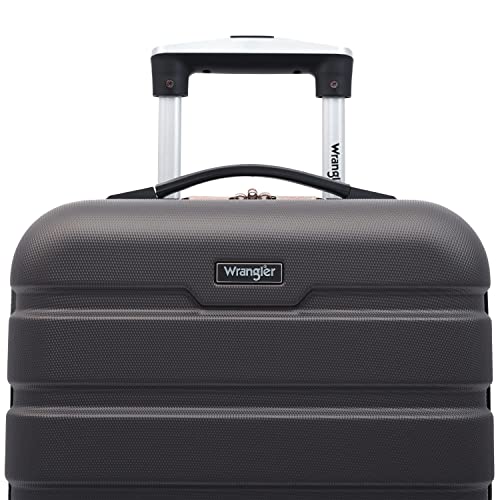
The shell is ABS, named plainly, and the listing describes it as rugged, durable and lightweight. Two of those three hold up. ABS is the lightest of the common luggage polymers, which is exactly why this case weighs 5.34 pounds and why it is worth considering at all. It is also the most brittle. Under a hard impact ABS stars and cracks at a corner rather than flexing and returning to shape the way polycarbonate does. Keep the case in the cabin and it will last; check it repeatedly and the corners are where it ends.
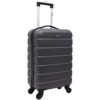
The wheels are described as a 360 degree spinner system with no count, material or mounting detail. Spinners roll sideways easily on smooth terminal floors, catch and tip on curbs and cobblestone, and exposed casters are the most common failure point on any wheeled case because they take the impact of every drop. The listing claims the system reduces strain on your wrists, which is true when rolling upright on level ground and stops being true the moment the surface changes.
The handle is not described at all. No type, no stage count, no extended height, no tube material. There is a top carry handle for lifting the case into a bin.
The interior is the best specified part: fully lined, with a dividing zipper and compression straps. A dividing zipper turns a clamshell into two closed halves rather than a lid and a cavity, which is what stops a hard shell disgorging itself when opened flat, and compression straps hold the contents down. For a case at this price that is a better interior than most.
There is no lock and no lock provision described anywhere. If you need one, check whether the zipper pulls have holes before ordering, and understand that any zipper lock is a deterrent rather than security, because a coil zipper can be split with a ballpoint pen and closed again by running the sliders across the split.
Capacity, weight and the disclaimer in the description
Capacity is published as 38 liters and it survives a check. The exterior envelope of 20 by 14 by 9.5 inches is roughly 2,660 cubic inches, or about 43.6 liters, so 38 usable liters after the shell walls, the handle channel and the internal wheel wells is credible rather than inflated. That is a better arithmetic result than several higher priced cases in this catalog manage, and it is worth crediting.
Weight is 5.34 pounds in one field and 5.3 in another, which is a rounding. That is one of the lightest rigid cabin cases in this catalog, more than two pounds under several branded polycarbonate shells. On United States domestic routes cabin bags are not weighed and the figure is convenience. On budget European and many Asian carriers, where the allowance is 7 or 8 kilograms and enforced at check in, a saving of two pounds on the empty case is two pounds of clothes you get to bring, which is the strongest argument for buying here.
Now the description, which contains something worth reading carefully. It says that if you have any issues with your product or purchase you should contact the manufacturer directly, and that the manufacturer contact information will be found on the product hangtag. That is a disclaimer rather than a warranty. It tells you where to complain and commits to nothing: no coverage period, no scope, no remedy. Note also that the manufacturer field reads Travelers Club Luggage while the brand on the case is Wrangler, which is a licensing arrangement rather than a defect, though it does mean the name on the case is not a guide to who stands behind it.
Warranty, the review base and the alternatives
No warranty term appears anywhere on this listing beyond the contact the manufacturer disclaimer described above. No period, no coverage, no exclusions, and nothing about airline handling damage, which is the standard exclusion in luggage coverage and the damage that actually happens. Assume you are buying a case rather than a repair commitment.
The review base is the substitute and here it is strong: 4.4 from 6,876 ratings, ranked third in its Amazon carry on luggage category. Nearly seven thousand ratings is a large pool and a rank that high means the case sells in serious volume. Read the one and two star reports for corner cracking and caster failures, which are the two things an ABS spinner is most likely to suffer, and which the specification sheet cannot tell you about.
For a comparable light hard shell with an even larger review base, see the Travelers Club Chicago linked above. For a case at a similar weight with a stated ten year defects warranty, the American Tourister Stratum XLT is the step up. A cheap ABS alternative with a huge review base is the Rockland Melbourne hardside spinner. The wider field sits in our carry-on luggage and carry-ons sections.
Who should buy it and who should not
Buy it if low empty weight is your binding constraint, you want a properly divided interior with compression straps, and you keep the case in the cabin. At 5.34 pounds with a credible 38 liter capacity it is one of the better value propositions in this batch. Skip it if your carrier enforces a 9 inch depth, because the case is published at 9.5 and a rigid shell does not compress, and skip it if the case will be checked often. Do not read the airline compliance bullet as a guarantee, and confirm whether you are buying a 20 inch or 22 inch case before ordering.