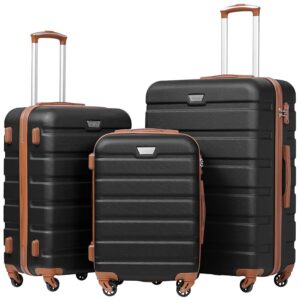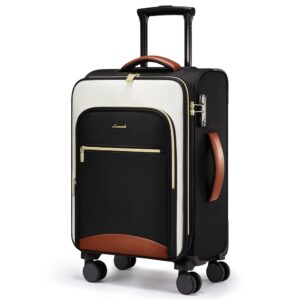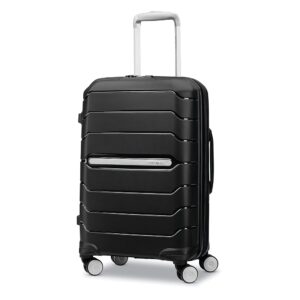


Description
The Rockland Melbourne in this listing is a 28 inch checked large upright, not a carry on, and it is filed on this site under carry on luggage. The manufacturer title says checked large, the description says 28 inch upright, and the published dimensions are 28 by 17 by 12 inches. Nothing about it belongs in an overhead bin. Read as what it is, a budget ABS checked bag, it is a coherent product with an unusually complete listing.
The traveler and the trip
A 28 inch upright is a one to two week bag for a single traveler, or a shared bag for a couple on a shorter trip. It is a checked bag by size, so the buyer has already accepted a checked bag fee and wants the volume that comes with it.
Rockland’s positioning is value rather than premium: ABS, a chrome handle, a simple interior, and a price that assumes the bag will be replaced eventually rather than repaired forever. It suits family holidays, students moving between homes, and anyone who checks a bag twice a year. It does not suit frequent checked travel, because ABS has a finite number of baggage handling cycles in it. Cases in the same size class sit under suitcases, and matched pairs are grouped under luggage sets.
Dimensions, and the checked bag limit that matters
Both the product description and the first manufacturer bullet give 28 by 17 by 12 inches, and the description adds an empty weight of 10 pounds. There is no attribute block on this product, so there is no second figure to compare against, but for once the two sources that exist agree with each other.
Against a 62 linear inch allowance
Checked baggage on most airlines is limited by linear inches, meaning length plus width plus depth added together, and the standard figure is 62 linear inches. Bags over that attract an oversize fee that frequently costs more than the bag did.
Add the published figures: 28 plus 17 plus 12 gives 57 linear inches. That sits comfortably inside a standard checked allowance with five inches to spare, which is a genuinely good result and better than several 28 inch spinners manage once their castors are counted.
Two cautions. First, the listing does not state whether the 28 inches includes the spinner castors, and on a large upright castors typically add one to two inches to the height. If 28 inches is the shell alone, the real total is closer to 59 or 60 linear inches, which is still inside the limit but with less room. Second, the manufacturer title describes the case as expandable and no expansion figure is published anywhere. Expanding a checked bag adds to the linear total, so if you use the gusset on a full case, measure it again before you go to the airport.
There is no carry on conversation to have here. The commonly cited United States domestic cabin allowance is around 22 by 14 by 9 inches and this bag is six inches longer, three inches wider and three inches deeper. The site category is simply wrong.
ABS at 28 inches, and why that matters more here
Rockland names the material as ABS and describes it as lightweight, durable and protective of the contents. The first of those is right. ABS is genuinely light, which is how a 28 inch case with four castors and a telescoping handle reaches 10 pounds, and it molds into strong colors and textures well.
The durability claim needs more qualification on a checked bag than it does on a cabin case. ABS is the most brittle of the common shell polymers: under a hard impact, particularly in a cold cargo hold, it cracks rather than flexing back the way polycarbonate does, and a cracked ABS shell cannot be repaired in any practical way. A cabin bag stays with you and is handled gently. A 28 inch checked bag is thrown onto belts, dropped from height into containers, and stacked under other bags at altitude in an unheated hold. That is precisely the environment ABS handles worst. If this case will be checked more than a few times a year, a polycarbonate shell is the meaningful upgrade.
The textured finish is doing real work by hiding the scuffing a gloss shell would show after a single trip, which is the site excerpt’s one accurate observation about the material.
Wheels, handle and interior
The wheels are multi directional double spinner castors rotating 360 degrees. Dual castors are the right choice on a large case, because they roll noticeably better under a full load and are more stable on a sloped floor, and a 28 inch bag packed to a fifty pound limit puts serious weight through four small contact points. They are also the first thing to fail on any budget case, because the castor housing is riveted to a thin shell wall. Spinners are poor on cobble, gravel and unpaved parking areas, which is where a checked bag often gets dragged.
The handle is an internal chrome telescoping unit with a push button release. Chrome plated steel is heavier than aluminum, which on a 10 pound case is part of where that weight goes, and it is stiffer, so it resists the twisting that eventually kills a telescoping handle on a heavy bag. The listing does not say how many stop heights it offers.
Inside there is a mesh zip pocket, an elastic pocket and straps to secure clothing. That is minimal for a bag this size. The short description previously carried on this page claimed an interior divider, and no divider appears anywhere in the manufacturer’s specification. We are not going to describe a feature the source data does not support. On a 28 inch case, the absence of a full zip divider means one half is open when the case lies flat, which is awkward on a bag that holds two weeks of clothing.
Capacity, weight and what is missing
No capacity figure appears anywhere, in liters or cubic inches. Working from a 28 by 17 by 12 inch shell, the enclosed volume is roughly 93 liters before the wall thickness, the handle housing and the wheel wells take their share, so something in the mid eighties is a reasonable expectation. That is an estimate and not a published number.
The 10 pound empty weight is the number that should govern how you use it. Most airlines cap a standard checked bag at 50 pounds, so a 10 pound empty case leaves 40 pounds of contents before an overweight fee applies. Rockland’s description says the case lets you pack more while avoiding excess weight surcharges, which is a fair claim in the sense that 10 pounds is light for a 28 inch hard shell. It is still a fifth of your allowance before anything goes in.
For comparison within the same range, the Rockland Safari 20 inch weighs six and a half to seven pounds for a case a third of the volume, and the Amazon Basics 30 inch hardside is the closest competitor at the next size up.
Warranty and the sibling listings
Rockland publishes a five year warranty in the product description. That is longer than many budget hard shells offer and shorter than the ten year limited terms on premium polycarbonate cases. It is a real stated term, which puts this listing ahead of many in this catalog.
As with every luggage warranty in this category, expect it to cover defects in materials and workmanship rather than airline handling damage. On a checked bag that distinction is the whole point, because handling damage is essentially all of what happens to a checked bag. A five year defects warranty covers a shell cracked by a molding fault; it very likely does not cover a shell cracked by a baggage belt. Ask for the exclusions in writing before you rely on it.
The Melbourne appears several times in this catalog in different sizes and colors, including the 24 inch version and the charcoal listing. Their specifications differ between listings in ways the product does not, so read them together.
Who should buy it and who should not
Buy it if you need a large checked bag for occasional travel, you want to stay well inside a 62 linear inch allowance, and you accept ABS as a consumable material. At 57 published linear inches and 10 pounds empty, the fundamentals are sound and the five year warranty is a real commitment at this price.
Do not buy it as a carry on. It is a 28 inch checked large upright, filed on this site in the wrong category, and it is six inches longer than a standard cabin allowance. Skip it too if you check bags frequently, because ABS is the wrong polymer for a hold, and confirm whether the 28 inches includes the castors before you plan your linear inch total.