





Description
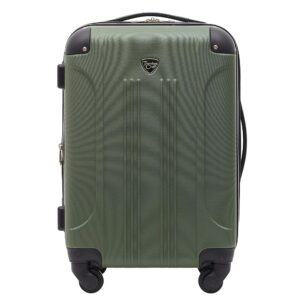
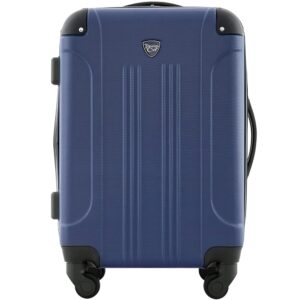
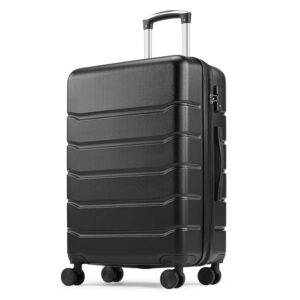
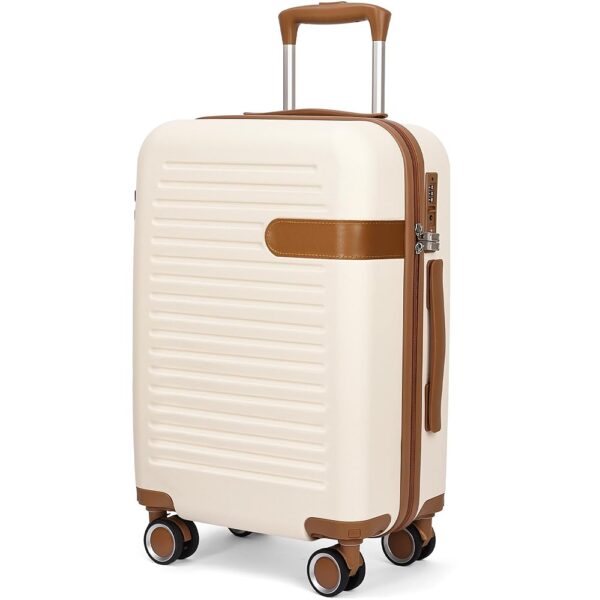
This is a 20 inch ABS hard shell spinner sold under the model code TLM102-6335 in white. It is one of the better disclosed listings in this part of the catalog on the single spec that matters most, because the maker states outright that its published dimensions include the wheels. It is also one of the thinner listings on everything else, including the brand name itself.
The trip and the traveler this suits
A 20 inch hard shell spinner is the standard modern cabin bag, and this one is aimed at the traveler who wants a rigid shell for a short domestic trip and does not want to think about it further. Two to four nights is the natural range. The rigid shell protects what is inside from being crushed by whatever else goes into the overhead bin, and it sheds water in a way fabric does not, which is the practical argument for hardside over softside on a rainy tarmac.
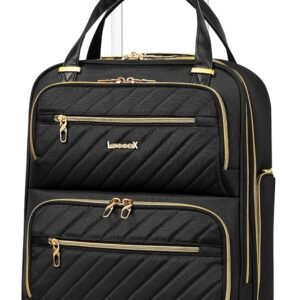
It suits the traveler who packs to a list. There are no exterior pockets on a sealed hard shell, so anything you want to reach mid journey has to live in a personal item rather than in the case. It suits a traveler poorly who needs to squeeze in one last item, since a rigid shell has no give at all beyond whatever the zipper allows. If exterior access is what you want, a fabric case such as the Samsonite UpLIFT softside carry-on answers a different brief with the same footprint.
Dimensions, and the number the listing gets right
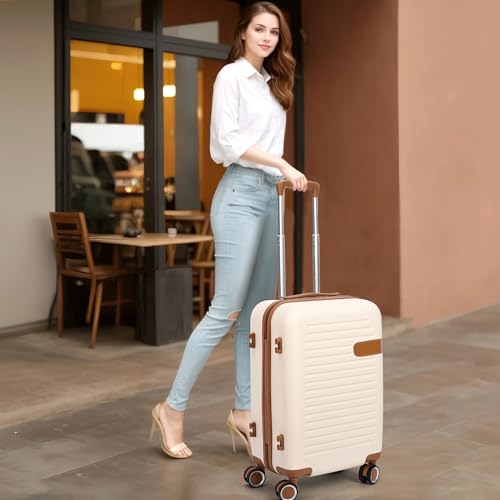
The specification block gives 13.78 by 8.88 by 21.25 inches. The maker’s first bullet gives the same three numbers in a different order, 21.25 by 13.78 by 8.88 inches, and adds the four words that most listings in this category omit: including wheels. That is the single most useful disclosure a cabin bag listing can make, because published dimensions that quietly exclude the wheels are the most common reason a bag a traveler believed was compliant gets pulled at the gate. Here the number you measure is the number you were given.
The title says 22x14x9, and the bag does not
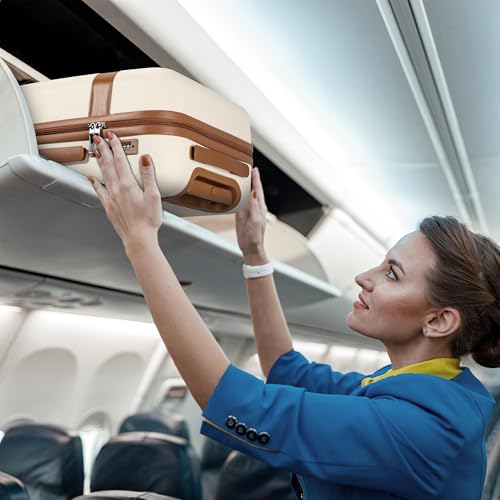
The listing title carries the string 22x14x9 airline approved. Neither half of that is a specification. The numbers are the conventional allowance used as a search keyword, not a measurement of this bag, which the same listing measures at 21.25 by 13.78 by 8.88 inches. And there is no such thing as general airline approval, so we will not write that this bag is airline approved. Every carrier sets its own cabin allowance, budget and regional operators are frequently stricter than the mainline convention, and many international carriers enforce a cabin bag weight limit as well as a size limit. The approval language is the maker’s, and the reader has to check their own airline on their own route.
Shell, wheels, handle and lock
The maker names the shell as 100 percent ABS with a textured finish for scratch resistance. Naming the polymer is worth something, since a great many listings say only hardside. ABS is the cheaper of the two mainstream hard shell plastics. It is light and it molds well, and the textured finish is a sensible response to its main cosmetic weakness, which is that a smooth hard shell shows every scuff after one trip. Its structural weakness is brittleness. ABS is more likely than polycarbonate to crack at a corner under a hard impact rather than flex and recover. For a cabin bag that mostly lives in a bin rather than on a belt, that is a reasonable trade. For anything you expect to gate check regularly, it is less reasonable.
Mobility comes from 360 degree rotating double wheels. Spinners suit terminals and suit broken pavement badly, and their exposed casters are the most likely thing on the bag to fail. The maker supports the wheels with a test claim that reads oddly: it says the case passed a drop test and a walk test described as loading 29 pounds and rolling at 25 miles per hour. Twenty five miles per hour is not a walking speed and is not achievable by a person pulling a suitcase, so that figure appears to be a machine test rate, a unit error, or a translation artifact. We are naming it rather than repeating it as a durability finding, because as published it does not describe anything a traveler will do. The handle is described as aviation aluminum, and the closure is a YKK zipper with a built in TSA lock. That lock keeps the case shut and lets a screener inspect it without cutting anything, but it opens to a universal key, so it does not secure valuables.
Weight, capacity and what is not published
Weight is given as 6.93 pounds, in a single field with no contradicting second figure. For a 20 inch hard shell that is a normal to good number, and empty weight counts twice on a cabin bag, once against any enforced weight allowance and once against your own arms at the bin.
Capacity is not published. There is no liter figure and no volume of any kind on this listing, which makes it impossible to compare directly against cases such as the Coolife hardside carry-on or the KROSER hardside carry-on, which do publish one. The external box works out near 2,600 cubic inches, but interior volume is always well below that once the shell walls, wheel wells and handle housing are subtracted, and converting the one into the other would be inventing a figure.
The listing also publishes no manufacturer. The specification block has an ASIN, a model number, a country of origin of China and a department, but no manufacturer field at all, and the brand name Tilymol appears only in the product title rather than in any structured field. On a bag with no published warranty, an unnamed maker is not a small point, because a warranty is only as good as the entity standing behind it. If a named brand behind the product matters to you, the ECOHUB hardside carry-on and the rest of the carry-on luggage category and the overlapping carry-ons category give you alternatives.
Warranty, and the standing of this listing
No warranty is published. No term, no coverage, no exclusions. Combined with the missing manufacturer field, that means a buyer here is relying on the retailer’s return window rather than on any manufacturer commitment. That is worth weighing against the fact that this is, by the numbers on the page, a well received product: 476 ratings at an average of 4.6 out of 5, ranked 9th in Carry-On Luggage and 1,380th in Clothing, Shoes and Jewelry. A high rating with a high volume of ratings behind it tells you the bag arrives in good condition and works out of the box. It tells you much less about how it looks in year three, and with no warranty there is nothing to fall back on if the answer is badly.
Who should buy it, and who should not
Buy it if you want a light rigid cabin bag with an honestly stated dimension that already counts the wheels, you accept ABS rather than polycarbonate, and you are content that the fallback is the retailer’s return policy. Do not buy it if you need a published capacity, if you want a named manufacturer standing behind a written warranty, or if you gate check regularly and need a shell that flexes rather than cracks. And do not read the 22x14x9 in the title as either a measurement of this bag or a promise about your airline, because it is neither.