Description
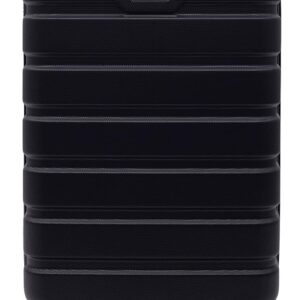
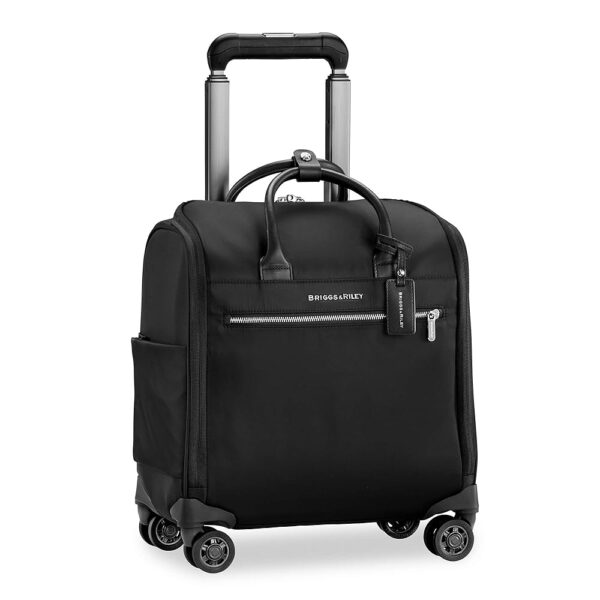
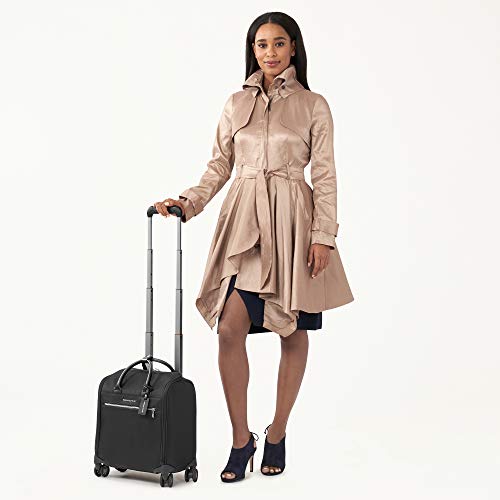
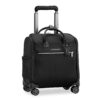
The Briggs and Riley Rhapsody, model PU118SP, is a wide 16 inch softside underseat cabin spinner in black. It is not a conventional carry-on. It is the smaller bag, the one meant to go under the seat in front of you, and the maker describes it as built for quick overnight trips with maximum room in minimum space. That framing is accurate, and the interesting part of this listing is a handle design that changes how the bag packs.
The traveler and the trip this fits
This bag is for the overnight or one night business trip, and for the flyer on a fare that does not include overhead bin space. It holds a laptop, a change of clothes, shoes and the small items that otherwise end up loose in a tote. It will not do a week, and it is not trying to.
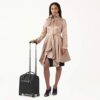
The other traveler it suits is the one who already checks a bag and wants a wheeled personal item rather than a shoulder bag, because at a published 5.94 pounds it rolls rather than hangs. Readers weighing the underseat format generally should also read the KROSER underseat carry-on and the TPRC smart underseater, both in the carry-ons category.
Dimensions, and why underseat is a harder target than carry-on
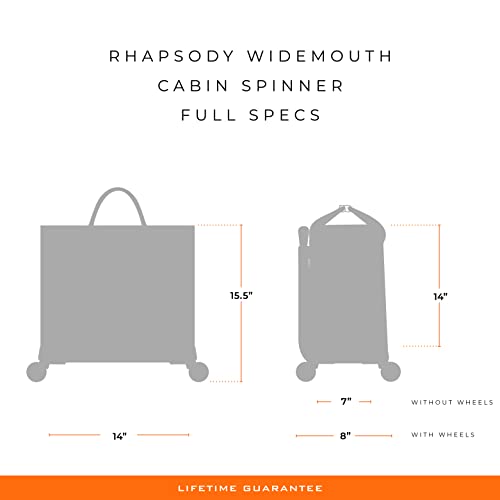
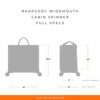
The specification block gives Product Dimensions of 8 by 14 by 15.5 inches. The product name calls it a wide 16 inch bag, so the 15.5 inch figure and the 16 inch name are already half an inch apart, which is a small thing but worth naming since nothing else reconciles them.
The measurement the listing does not make
Briggs and Riley does not state whether that 8 by 14 by 15.5 figure includes the four spinner castors and the retracted handle, or describes the bag body alone. On an underseat bag that omission bites harder than it does on a cabin case, because underseat space is bounded on three sides by fixed aircraft structure and there is no gate agent judgment involved. The bag either slides under the seat or it does not.
Underseat dimensions are also not standardized in any useful way. They vary by carrier, by aircraft type, by whether you are in a window or aisle seat, and by whether the row has an entertainment box or a life vest housing eating into the space. The commonly cited United States cabin allowance of roughly 22 by 14 by 9 inches is a different and larger standard entirely, and clearing it is not the same as fitting under a seat. Check the personal item dimensions your specific airline publishes, and expect the real space to be tighter than the published one.
Capacity is published as 21.9 liters, repeated consistently in a Capacity Total field. As a cross check, the outer envelope of 8 by 14 by 15.5 inches is about 1,736 cubic inches, or roughly 28.4 liters, so the stated 21.9 liters is meaningfully below the outer volume and therefore reads as a real usable interior figure rather than a geometric calculation. That is unusual in this catalog and it is worth crediting.
The Outsider handle, and what it actually buys you
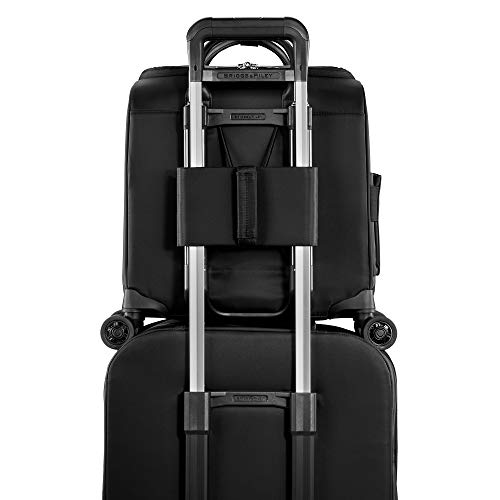
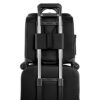
The feature that separates this bag from its competitors is the handle system. Briggs and Riley mounts the telescoping handle tubes on the outside of the case rather than running them through the interior. Two consequences follow, and both are real.
First, the interior floor is flat. On a conventional bag the handle tubes create two raised ridges down the packing surface, and folded shirts and jackets crease along those ridges. A flat floor means garments pack flat and come out with fewer fold lines.
Second, the interior volume goes up, because the space the tubes would have occupied is now outside the shell. On a 21.9 liter bag, recovering the volume of two handle tubes is a larger proportional gain than it would be on a 70 liter checked case.
The trade is that the tubes are exposed on the back of the bag. They are the part that gets knocked when the bag is set down hard or shoved into an underseat space at an angle, and they add to the depth an airline measures. A conventional internal handle bag such as the TPRC underseater puts that hardware where it cannot be hit.
Fabric, wheels and interior fittings
The shell is a micro weave nylon that the maker describes as resisting wear, moisture, dirt and abrasion. Nylon is the better of the two common softside fabrics for abrasion resistance, and a tight micro weave sheds dirt better than a loose one. No denier is published, which is the usual gap, so the fabric grade cannot be pinned down from the listing.
The wheels are four double swivel spinner assemblies. Double wheels track straighter under load and roll more quietly on hard flooring than single castors, and Briggs and Riley claims long rolling life for them.
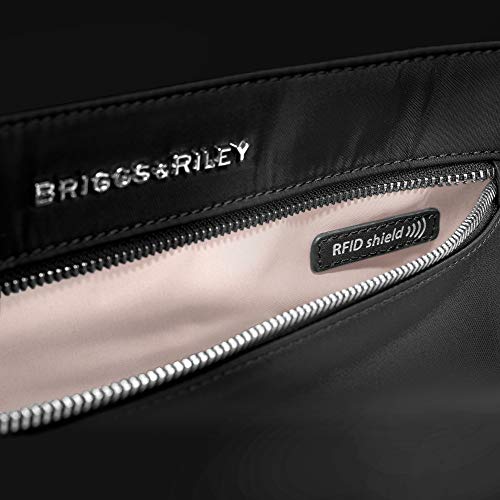
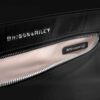
Inside there is a padded laptop pocket, room for shoes and a change of clothes, and small pockets for a phone and charger. No laptop size is published, which is a genuine omission on a bag sold partly on its laptop pocket. Compression garment panels with a single buckle and a cinch down webbing strap hold the contents from shifting, which on a bag that will be slid under a seat and kicked during a flight is more useful than it sounds. A large U shaped front pocket gives outside access and is stated to fit a laptop as well.
The warranty claim, and how to read it
This is the part of the listing that stands out. Briggs and Riley states that the bag is covered for its lifetime and that if it is ever broken or damaged, even by an airline, the company will repair it for free.
That claim deserves attention precisely because it addresses the exclusion that makes most luggage warranties close to worthless. The great majority of lifetime and limited lifetime luggage warranties in this category exclude damage caused by airline handling, which is the damage that actually happens to a bag. A maker explicitly naming airline damage as covered is doing something different from its competitors.
Two cautions. First, this is the maker’s claim as published in the listing, not something verified here. Second, warranties of this kind ordinarily distinguish between functional damage and cosmetic wear, and they typically involve shipping the bag to a repair facility rather than a replacement over the counter. Read the actual terms and the claims process before treating the coverage as a reason to buy. Buyers cross shopping the same brand should look at the Briggs and Riley ZDX 22 inch carry-on and the Briggs and Riley ZDX underseat cabin bag.
On demand, the listing shows a 4.3 star average across 125 ratings, ranked 577th in Carry-On Luggage and 496,871st in Clothing, Shoes and Jewelry. That is a low volume, low rank position, which for a premium priced bag in a category dominated by budget entries is what you would expect rather than a warning. Other options sit across the carry-on luggage category.
Who should buy it, and who should not
Buy it if you want a wheeled personal item with a flat packing floor, a real usable capacity figure and a warranty that names airline damage rather than excluding it, and if you have checked your airline’s personal item dimensions rather than assuming.
Skip it if you need a full cabin bag, because 21.9 liters is a one night bag. Skip it too if the exposed rear handle tubes worry you, or if you need a stated laptop size or fabric denier before committing, because neither is published.