
Description
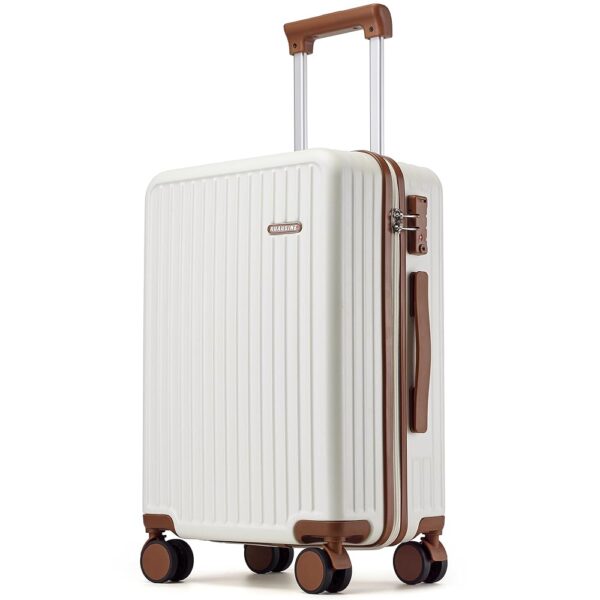
The Ruausine RX002 is a hard shell spinner with a TSA lock, sold as a small carry-on in white. The listing makes a specific and checkable claim about its size, and its own specification block contradicts that claim on all three axes. That is the finding a buyer needs first, because on a carry-on the size is the purchase.
The size claim, and what the same page measures
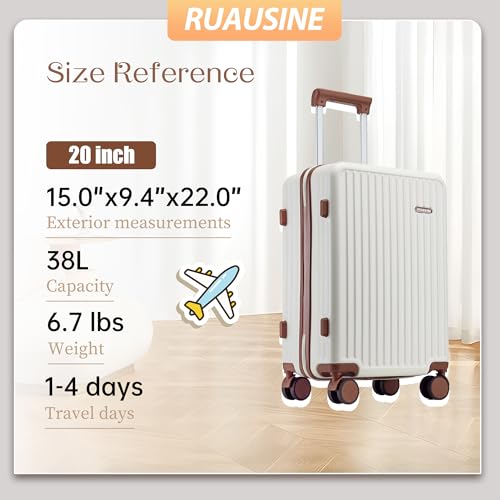
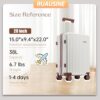
The second bullet states that the case measures 22 by 14 by 9 inches and is therefore sized to meet carry on requirements. The specification block on the same listing gives 14.96 by 9.45 by 22.44 inches. Rearranged into the same order, that is 22.44 by 14.96 by 9.45 inches: nearly half an inch over on height, almost a full inch over on width, and just under half an inch over on depth.
So the 22 by 14 by 9 figure in the bullet is not a measurement of this bag. It is the conventional United States domestic carry-on allowance being restated as though it were a specification, and the bag the same listing describes is larger than it on every axis. We are naming the contradiction rather than choosing between the numbers, but a buyer should note that the specification block is the field a data pipeline populates from the product record, while the bullet is advertising copy.
Neither set is labeled as including or excluding the wheels and the retracted handle housing, which is the other detail that decides whether a bag clears a frame. On a four wheel spinner the casters typically add one to two inches to standing height. If the 22.44 inch figure excludes them, the measured height is worse still. Measure the assembled case from the floor to the top of the retracted handle when it arrives.
Why we will not repeat the approval language
The product title begins with the words Carry on Luggage Airline Approved, and the fifth bullet says the case is approved by airlines and will pass through airport security checks smoothly. Both are claims made by the maker and we are attributing them rather than repeating them in our own voice.
There is no general airline approval for luggage. Every carrier publishes its own cabin allowance, they differ from one another, budget and regional operators are frequently stricter than the mainline convention, and international carriers commonly enforce a cabin bag weight limit alongside the size limit. Given that the published dimensions exceed the common convention on all three axes, this is a case to check against your own airline before you count on carrying it on.
The lock and the size are being conflated
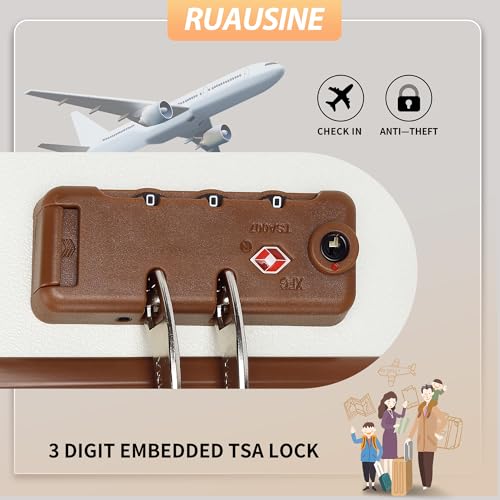
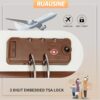
The fifth bullet is worth reading twice, because it runs two unrelated things together. TSA approved describes the lock: it means a screener can open it with a master key rather than cutting it off. It has nothing whatever to do with whether the bag fits an overhead bin, and passing a security screening is not the same event as passing a gate sizer. A reader who takes that bullet at face value would come away believing the size has been approved by someone, and it has not.
On the lock itself: a TSA lock keeps the case shut and lets a screener inspect without damage, which is a real function. It opens to a universal key held by a great many people, and on a zippered case the zipper can be split with a ballpoint pen and pressed closed again. It is a deterrent, not security, and nothing you would mind losing belongs in a bag you may be forced to gate check.
Shell, wheels and handle
The first bullet describes the shell only as high quality hardside material. No polymer is named anywhere on the listing. That is a real gap rather than a quibble, because the two mainstream hard shell plastics behave very differently. Polycarbonate flexes under load and returns, which is why it survives being at the bottom of a stack. ABS is cheaper, lighter to mold and more brittle, so it is likelier to crack at a corner under a hard impact rather than flex and recover. A listing that says only hardside has told you the case is rigid and nothing about how it will age.
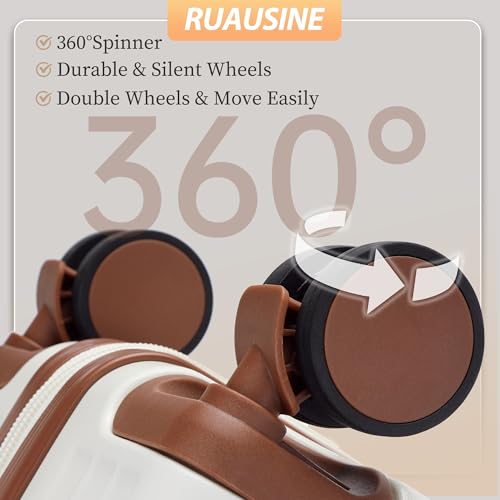
Mobility comes from spinner wheels with 360 degree rotation. Spinners are effortless on terminal flooring and poor on cobbles, gravel and curbs, where a caster catches and takes a side load it was not built for. Exposed casters are the most common physical failure on any wheeled bag and they contribute to the standing height a sizer measures. No wheel count is given, no diameter, and no mounting detail.
The handle is not described at all. There is no stage count, no material, no height and no load rating. Between the unnamed shell, the undocumented wheels and the absent handle specification, the three components that determine how this case ages are all undescribed.
Capacity, weight and what is missing
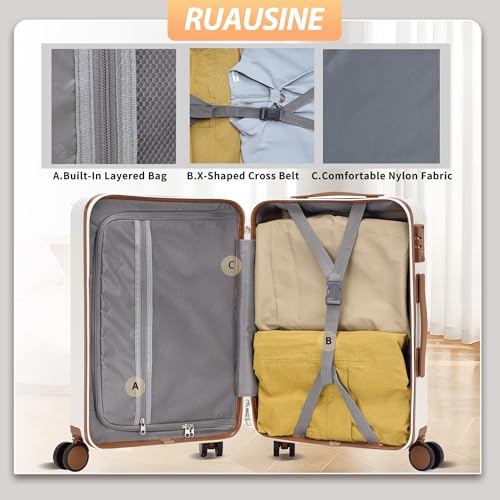
Capacity is published as 35 liters, in the capacity field only, with no capacity total field to cross check it against. Against an external box of 22.44 by 14.96 by 9.45 inches, which is roughly 3,172 cubic inches or about 52 liters, a 35 liter interior is comfortably plausible once you subtract shell walls, wheel wells and the handle housing. So the figure survives a sanity check, which is worth saying on a catalog where many do not.
Weight is published as 6.16 pounds in one field and 2.8 kilograms in another, which is 6.17 pounds. Those agree, and for a hard shell case of this size 6.16 pounds is genuinely light and is the strongest number on the page. Empty weight counts twice on a cabin bag, once against any enforced weight allowance and once against your own arms at the bin.
Warranty, the record, and the alternatives
No warranty is published. No term, no coverage description, no exclusions. With the wheels and handle also undocumented, there is no stated commitment covering the parts most likely to fail. Airline handling damage is the damage luggage actually suffers and it is routinely excluded even where written warranties exist, so with none here the realistic fallback is the retailer return window.
The feedback record is very thin: 22 ratings at an average of 4.4 out of 5, with the case ranked 218th in Carry-On Luggage and 156,259th in Clothing, Shoes and Jewelry. Twenty two ratings tells you the bag arrives intact and very little else. Manufacturer is given as Ruausine, model RX002, country of origin China.
For alternatives that publish more, the Tilymol TLM102 names its polymer and states that its dimensions already include the wheels, the ECOHUB hardside carry-on and the LUGGEX 20 inch cover the same brief, and the Coolife hardside carry-on has a far deeper feedback pool. The wider field sits in the carry-on luggage category and the carry-ons category.
Who should buy it, and who should not
Buy it if you want a light rigid case at this size, you are content to check it when a carrier measures, and you accept that the shell material, the wheels and the handle are all undescribed. Do not buy it on the strength of the 22 by 14 by 9 figure in the bullets, because the specification block on the same page puts the case over that on every axis. Do not read the TSA lock as an approval of the size, and do not expect a warranty, because none is published.